
This strategic decision, announced by the port's general director, Jamal Aliyev, aims to overcome the territorial deficit and take the development of the port's infrastructure to a new level. The relocation of storage and logistics facilities outside the cramped coastal area, towards the village of Shamkhal, not only optimizes the company's internal logistics but also provides a significant boost to related industries, particularly those specializing in industrial refrigeration equipment.
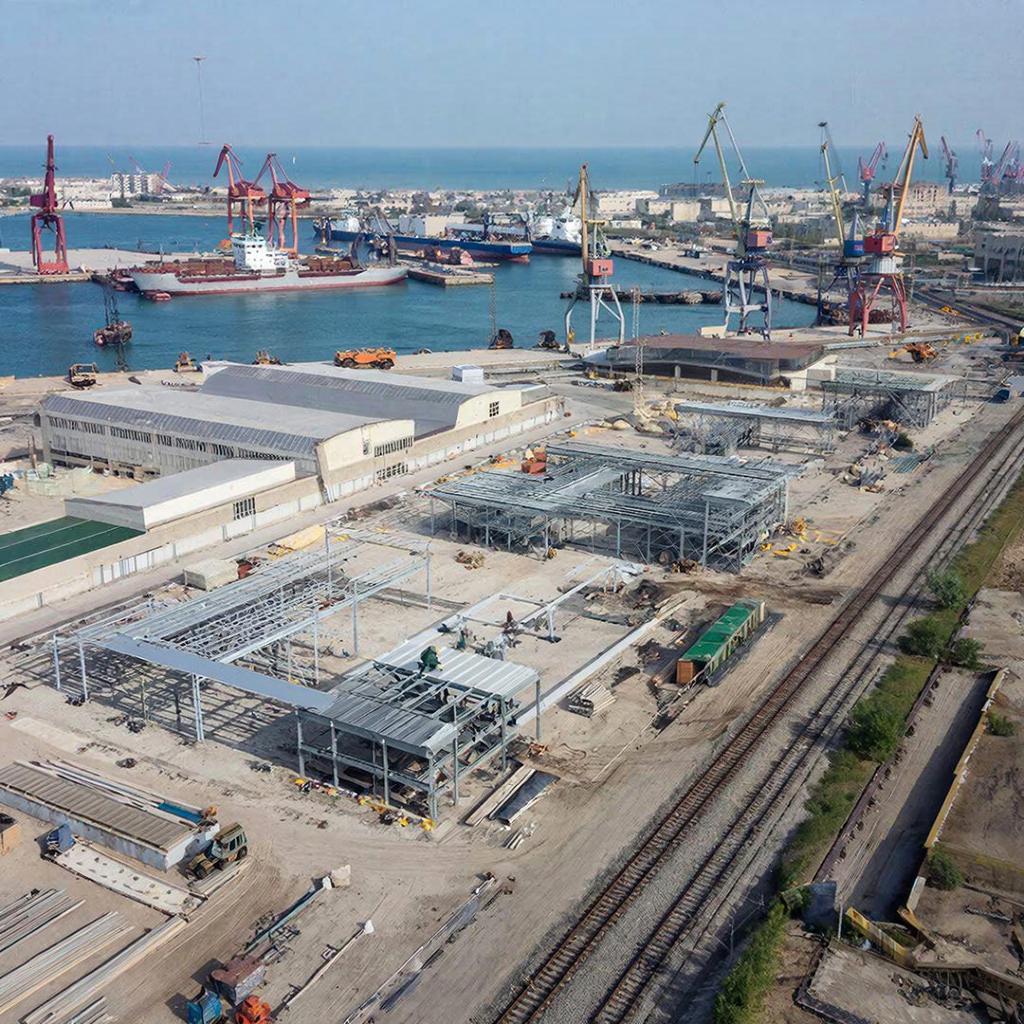
This construction project opens up a large and promising market for these companies. The creation of modern storage facilities in the logistics center will inevitably involve the organization of areas for storing perishable goods. The increase in cargo turnover at the port, which is the primary goal of the project, will lead to an increase in the volume of imported and exported food products, pharmaceuticals, and chemicals that require specific temperature conditions. As a result, there will be a direct need to equip the new facilities with high-tech refrigeration and freezing chambers, as well as to establish sophisticated climate control systems throughout the terminal. For suppliers and installers, this means large contracts for the supply of equipment, its installation, commissioning, and subsequent service.

Such large-scale logistics projects use a wide range of industrial refrigeration equipment, each of which performs critical functions.
Industrial refrigeration chambers and freezing tunnels. These are the basis of any category A warehouse. They are used for long-term storage of large quantities of goods. In the logistics center of the Makhachkala port, they will be used for storing fish and meat products, fruits, vegetables, and semi-finished goods.
Central refrigeration systems (chiller) and cold supply systems. For a large complex consisting of many chambers and warehouses, a centralized system is often used. It provides cold to all consumers from a single energy-efficient source.
Refrigerated display cases and coolers for temporary storage and customs inspection areas. Logistics centers often have areas for cargo inspection.
Monitoring and automation systems. An integral part of a modern facility. They provide continuous temperature monitoring in all areas, alerting to deviations, and managing the operation of compressors and fans, while maintaining a data log, which is particularly important for compliance with sanitary standards and transportation conditions (such as FSSC 22000 and GDP for pharmaceuticals).
Refrigeration equipment for refrigerated containers (RFK). The logistics center will be responsible for servicing and preparing refrigerated containers before they are shipped by sea or rail. This requires the use of fixed connection stations (reefer points), which provide power to the containers and allow for temperature control during their stay.
Thus, the construction of a logistics hub for the port of Makhachkala is not just about building walls and access roads. It is about creating a high-tech organism where industrial refrigeration becomes one of the vital systems that ensure the safety of cargo, expand the range of products being transshipped, and, as a result, increase the overall economic efficiency and competitiveness of the entire port cluster in the Caspian Sea.




In December 2025, Copeland—a global leader in compressor manufacturing—unveiled a new development: a CO₂ scroll compressor featuring Dynamic Vapor Injection (DVI) technology. This milestone marked a significant step in the evolution of industrial refrigeration equipment, as the combination of the natural refrigerant CO₂ and an advanced vapor injection system opens up new possibilities for enhancing energy efficiency, reducing operating costs, and meeting environmental regulations.
 Выберите размер контейнера: Температурный режим: Новый или Б/У: | Прайс-лист на рефрижераторные контейнеры Вы выбрали: 40 футовые, низкотемпературные, новые 
| ||||||||||||||||||||||||||||||||||||||||||||||||||||




 Telegram

