
The agro-industrial landscape of the Voronezh region is preparing for a qualitative transformation. In the Borisoglebsky urban district, in the village of Tretyaki, an agricultural production cooperative led by entrepreneur Gennady Shiryaev has initiated an ambitious investment project. The construction of a new poultry farm with a capacity of 1.1 million birds marks a significant doubling of the company's production capacity. With an investment budget of 2 billion rubles and a planned production capacity of 1 million eggs per day, the project aims to become a key contributor to the region's food security. The project is currently in the design phase, but it is already clear that the implementation of this initiative will require the introduction of complex engineering systems, with industrial refrigeration equipment taking center stage.
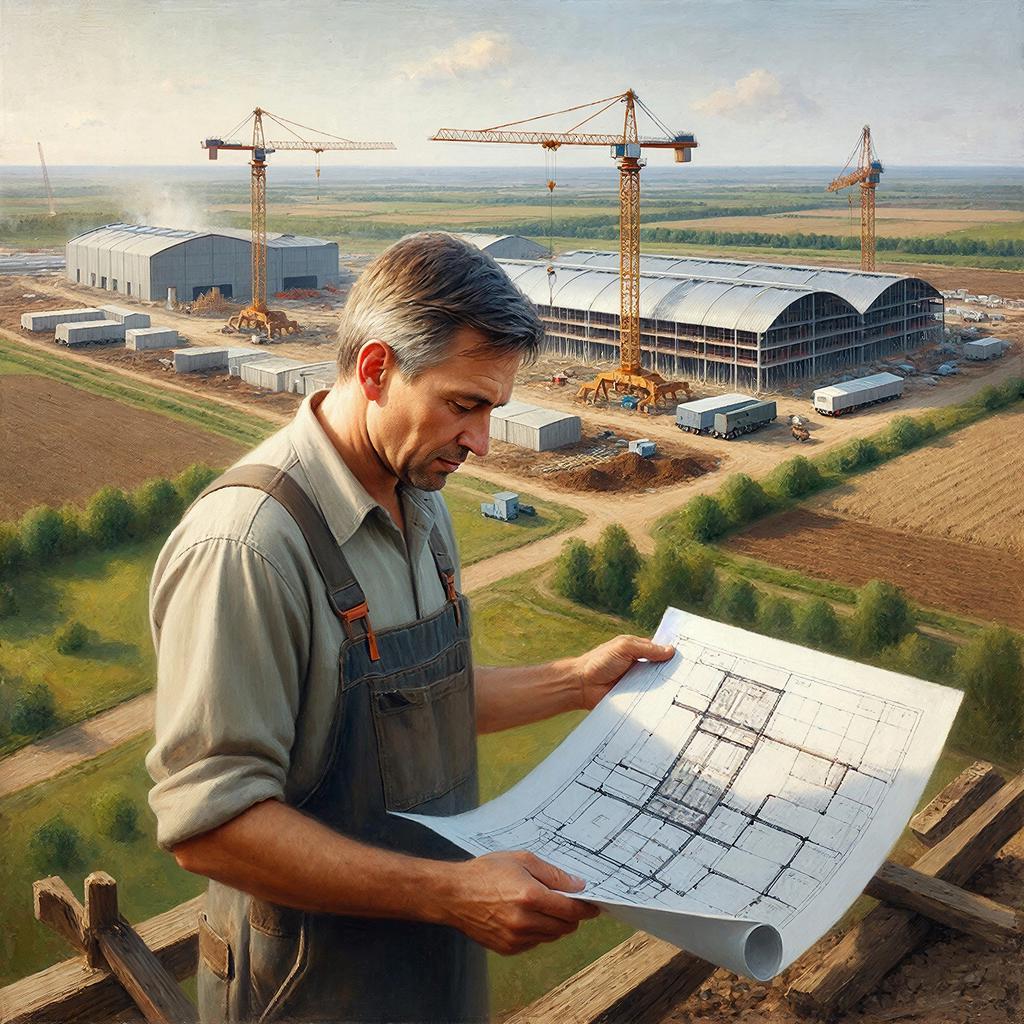
For manufacturers and integrators of climate systems, this project represents an opportunity to enter a large-scale sales market. The construction of a facility with a capacity comparable to that of an existing production facility creates a high demand for comprehensive solutions for the storage and logistics of perishable raw materials. Companies specializing in industrial refrigeration have the opportunity not only to supply equipment but also to provide long-term technical support for the facility. Investors in this segment have strict requirements for energy efficiency, fault tolerance, and the ability to automate systems, which drives the market to update its product range and introduce innovative temperature control technologies.

The operation of a poultry farm of this scale is impossible without ensuring a continuous cold chain. The technological process requires strict adherence to the temperature range for commercial eggs (usually between +5 and +12 °C), which directly affects the preservation of product quality and reduces the percentage of natural loss. The following industrial equipment is most commonly used in projects of this type:
Thus, the expansion of the Tretyakovskaya Agricultural Production Company is not only a significant step for the regional agricultural sector, but also a serious challenge for refrigeration engineers. The successful completion of the project will serve as an indicator of the technological maturity of the entire industry, confirming that modern poultry farming standards are unthinkable without highly efficient climate control equipment. For suppliers, this contract represents a long-term partnership that requires high levels of professionalism, responsibility, and a commitment to creating solutions that can operate 24/7 for decades.




In December 2025, Copeland—a global leader in compressor manufacturing—unveiled a new development: a CO₂ scroll compressor featuring Dynamic Vapor Injection (DVI) technology. This milestone marked a significant step in the evolution of industrial refrigeration equipment, as the combination of the natural refrigerant CO₂ and an advanced vapor injection system opens up new possibilities for enhancing energy efficiency, reducing operating costs, and meeting environmental regulations.
 Выберите размер контейнера: Температурный режим: Новый или Б/У: | Прайс-лист на рефрижераторные контейнеры Вы выбрали: 40 футовые, низкотемпературные, новые 
| ||||||||||||||||||||||||||||||||||||||||||||||||||||




 Telegram

