
The Royal Swedish Academy of Sciences awarded the prize to three researchers: Susumu Kitagawa from Kyoto University (Japan), Richard Robson from the University of Melbourne (Australia), and Omar M. Yagi from the University of California, Berkeley (USA). The award was given for the creation of metal-organic framework structures.
This fundamental discovery has already been put into practice in the field of refrigeration technology, paving the way for the implementation of cost-effective and environmentally friendly solutions.

The essence of metal-organic frameworks.
Metal-organic frameworks (MOFs) are an innovative class of porous materials that can be compared to "molecular sponges." Their architecture is formed by metal ions connected by organic bridge molecules. This results in a well-ordered crystalline structure with numerous microscopic cavities and channels.
The main value of IOCs lies in their ability to be purposefully designed. Scientists can combine different components to tailor the size, shape, and chemical activity of the pores. This allows them to selectively capture, store, and separate specific gas molecules.
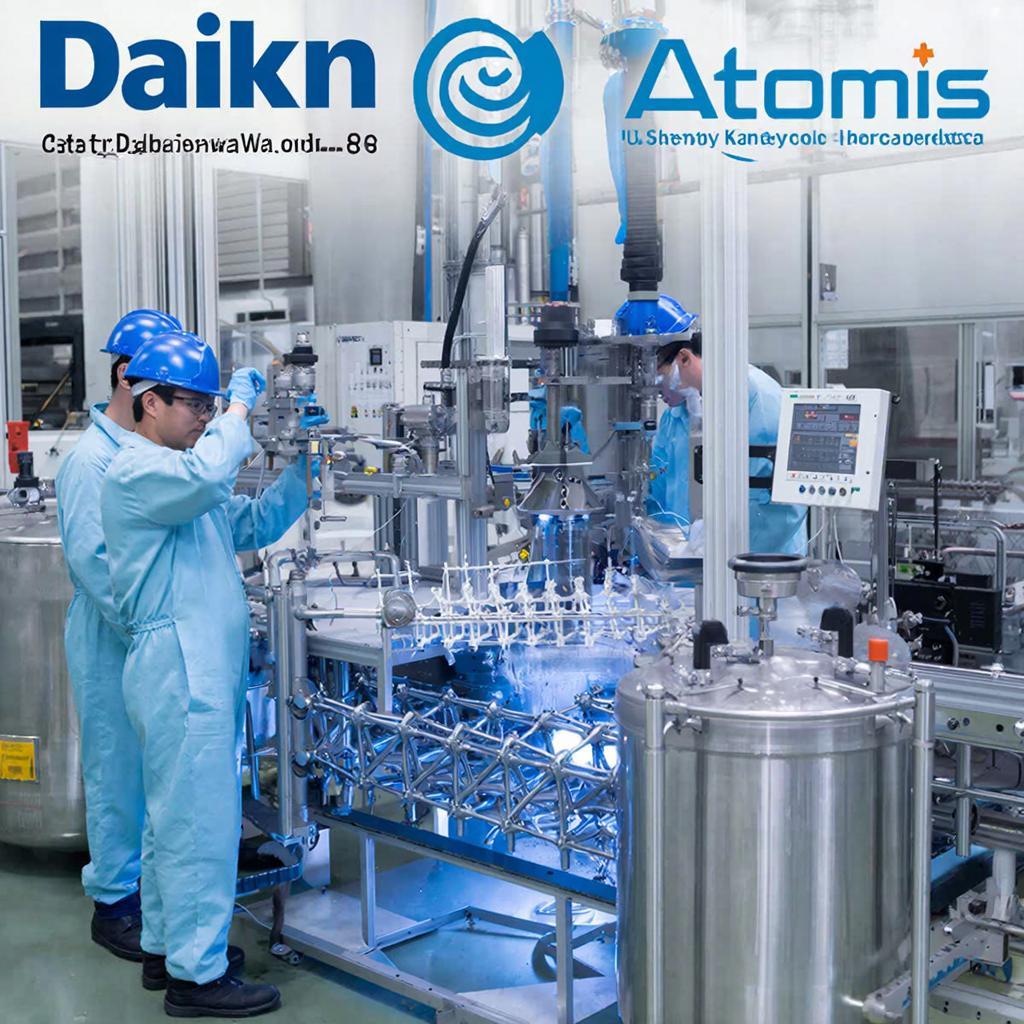
Climate-related applications: partnership with Daikin and refrigerant recovery.
The connection between this award and the refrigeration industry is provided by the work of the recipient, Susumu Kitagawa. He is the CEO of Atomis, a Japanese startup that focuses on the commercialization of IOC-based technologies.
These works are fully in line with Daikin's environmental policy, which previously announced a R-410A refrigerant recycling program aimed at conserving resources and significantly reducing carbon emissions.
Importance for the industry.
The awarding of the Nobel Prize for MOFs highlights the significant potential of this technology to address current challenges in the HVACR field. The introduction of metal-organic frameworks allows for:
Thus, a fundamental scientific achievement that has been awarded the highest honor is already serving the practical goals of engineers and manufacturers, defining new directions for progress in the entire industry.




In December 2025, Copeland—a global leader in compressor manufacturing—unveiled a new development: a CO₂ scroll compressor featuring Dynamic Vapor Injection (DVI) technology. This milestone marked a significant step in the evolution of industrial refrigeration equipment, as the combination of the natural refrigerant CO₂ and an advanced vapor injection system opens up new possibilities for enhancing energy efficiency, reducing operating costs, and meeting environmental regulations.
 Выберите размер контейнера: Температурный режим: Новый или Б/У: | Прайс-лист на рефрижераторные контейнеры Вы выбрали: 40 футовые, низкотемпературные, новые 
| ||||||||||||||||||||||||||||||||||||||||||||||||||||




 Telegram

