
The Lugansk People's Republic is on the verge of a logistics transformation: The construction of modern transport and logistics centers and warehouse complexes opens up new horizons for the development of industrial refrigeration equipment
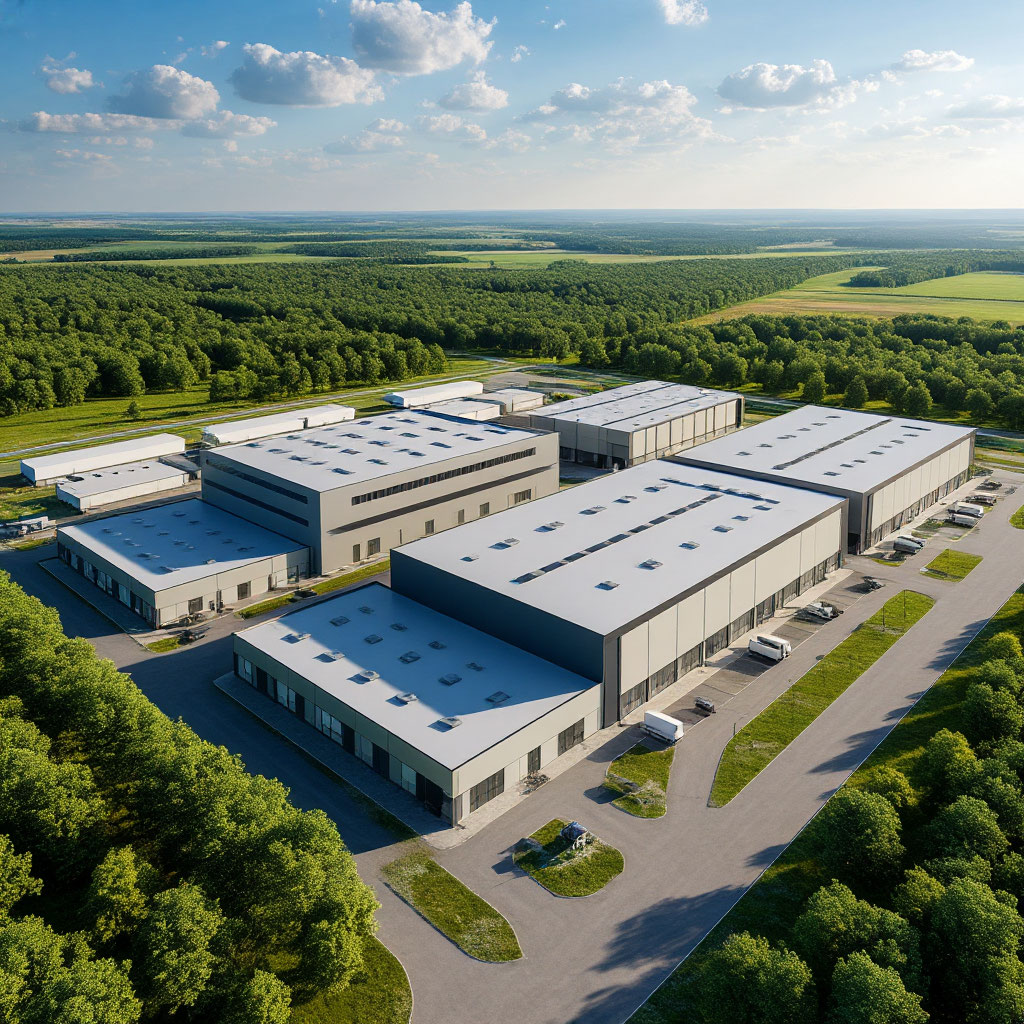
The Lugansk People's Republic (LPR) is on the verge of a landmark event that could radically change the region's logistics map. The large-scale project to build two modern transport and logistics centers (TLCs) and associated warehouse infrastructure with a total area of 230,200 square meters is not just an investment in infrastructure but a strategic step aimed at integrating the republic's economy into the Russian Federation and stimulating the development of various industries, including the agro-industrial complex and, most importantly, the industrial refrigeration equipment sector. In addition to strengthening economic ties and increasing investment attractiveness, this project has the potential for significant growth and development of companies specializing in the production, supply, and maintenance of industrial refrigeration equipment.
Impact on industrial refrigeration companies: A new market, new opportunities
The construction of modern warehouse complexes, especially those designed for storing agricultural products, creates a huge demand for high-tech industrial refrigeration equipment. This demand will boost competition and stimulate innovation in the industry. Companies specializing in industrial refrigeration equipment will have the opportunity to expand their market by offering modern and energy-efficient solutions for providing optimal storage conditions for various types of products. This will not only increase sales volumes, but also allow them to strengthen their market position by establishing long-term partnerships with warehouse and logistics center owners. In addition, there will be a need for specialists in the design, installation, and maintenance of refrigeration systems, which will lead to the creation of new jobs and the development of human resources in the region.
Industrial Refrigeration Equipment for Warehouses: The Key to Product Preservation and Quality
Modern warehouse complexes designed for storing agricultural products and other goods are unthinkable without advanced industrial refrigeration systems. These systems ensure optimal temperature and humidity control, preventing product spoilage and maintaining its quality over time. The choice of specific equipment depends on various factors, including the size of the warehouse, the type of stored product, and temperature requirements.
Functions and applications of industrial refrigeration equipment in warehouses:
The main function of industrial refrigeration equipment in warehouses is to maintain optimal storage conditions for various types of products. The specific tasks solved by refrigeration equipment include:
Challenges and development prospects
Along with the opportunities that are opening up, companies in the industrial refrigeration equipment industry are also facing certain challenges. The competition in the market is becoming increasingly fierce, requiring continuous product improvement and enhanced service quality. Environmental considerations must also be taken into account, with a focus on using environmentally friendly refrigerants. Additionally, the implementation of innovative technologies, such as monitoring and control systems, is crucial for optimizing refrigeration equipment performance and reducing energy consumption. Successfully addressing these challenges will not only allow companies operating in the industrial refrigeration equipment sector to strengthen their market position, but also make a significant contribution to the development of the LPR economy and ensuring the region's food security. The implementation of energy-efficient technologies and the use of environmentally friendly refrigerants such as ammonia or CO2 will be crucial for the sustainable development of the industry.




In December 2025, Copeland—a global leader in compressor manufacturing—unveiled a new development: a CO₂ scroll compressor featuring Dynamic Vapor Injection (DVI) technology. This milestone marked a significant step in the evolution of industrial refrigeration equipment, as the combination of the natural refrigerant CO₂ and an advanced vapor injection system opens up new possibilities for enhancing energy efficiency, reducing operating costs, and meeting environmental regulations.
 Выберите размер контейнера: Температурный режим: Новый или Б/У: | Прайс-лист на рефрижераторные контейнеры Вы выбрали: 40 футовые, низкотемпературные, новые 
| ||||||||||||||||||||||||||||||||||||||||||||||||||||




 Telegram

