
One of the largest multinational food companies in the Middle East, Solico Group, has announced its intention to invest in the construction of a modern cheese factory in the Almaty region of Kazakhstan. The project, which aims to produce up to 100 tons of cheese per day, including cream and brine cheeses, mozzarella, and other premium products, not only establishes a new center for the development of the region's dairy industry but also creates significant opportunities for related industries, particularly for manufacturers and suppliers of industrial refrigeration equipment.
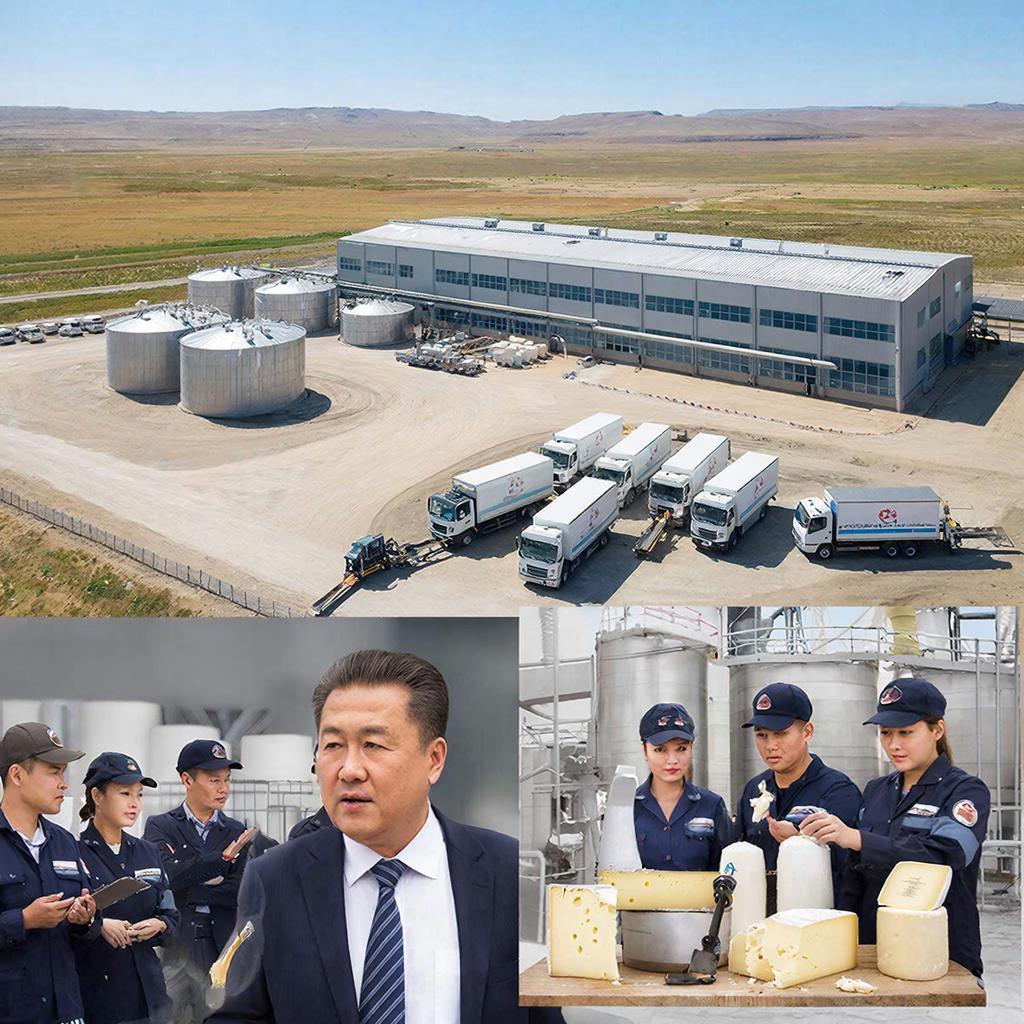
The implementation of such a large-scale project has a direct impact on industrial refrigeration equipment companies in several key ways. Firstly, it directly contributes to market growth, as the construction of the plant requires a comprehensive refrigeration technology chain, from the reception and storage of raw materials to the maturation, storage, and shipment of finished products. This translates into significant contracts for the supply of specialized equipment. Secondly, the project serves as a reference point, demonstrating the highest standards. Participating in such a project enhances the reputation of the equipment supplier and opens up opportunities for further collaboration in the rapidly growing Central Asian market. Thirdly, the localization of Solico Group's production stimulates the development of service and logistics infrastructure around refrigeration equipment, creating new long-term business models for service companies.
A wide range of industrial refrigeration equipment is used to ensure the technological process at such a cheese factory, each of which performs strictly defined functions.
Industrial refrigeration chambers (storages) for cheese ripening and storage. These are the main and most voluminous pieces of equipment. They ensure the maintenance of strictly defined temperature regimes (usually in the range of +2°C to +12°C, depending on the type of cheese) and humidity levels (85-95%). Key features include large capacity (up to several hundred tons), multi-section design for different types of products, automatic microclimate control systems, energy-efficient compressor units (often based on ammonia or freon), and reinforced construction for high loads.
Shock cooling chambers. They are used after certain production stages (such as molding) to rapidly reduce the product temperature to the required level, which is crucial for stopping the growth of undesired microorganisms and initiating the proper ripening process. Features: High cooling capacity, allowing for rapid temperature reduction from +30-35°C to +5-10°C, precise control, and air circulation.
Refrigeration systems for milk tanks (milk reception and storage). They provide cooling of incoming raw materials (milk) to +4°C immediately after reception and maintain this temperature throughout the entire processing period. They use powerful tanks with integrated refrigeration systems or external coolers with precise temperature control.
Refrigeration units for processing lines (for example, for the production of mozzarella). Cooling modules integrated into production lines that provide precise temperature control during the production process (for example, during washing and forming of cheese heads). Their characteristics include integration with the line, compactness, resistance to humid environments, and precision (±0.5°C).
Refrigerated warehouses for finished products and shipping rooms. They are designed for final storage and preparation for shipment. The equipment here should provide not only a stable temperature regime, but also convenient access for loading, often including a conveyor system or stackers. They are characterized by large volumes, sorting areas, and powerful temperature control systems, even with frequent gate openings.
Central chillers and compressor stations. This is the "heart" of the system, providing cold to all other components. Large factories use powerful centralized stations with multiple compressor units (often screw or piston compressors) that use eco-friendly refrigerants, with automatic control and redundancy systems to ensure uninterrupted operation.
Thus, Solico Group's investment in Kazakhstan becomes not only a significant event for the food industry, but also a powerful driver for the high-tech sector of industrial refrigeration equipment, creating a sustainable market for advanced, energy-efficient, and automated solutions in the region.




In December 2025, Copeland—a global leader in compressor manufacturing—unveiled a new development: a CO₂ scroll compressor featuring Dynamic Vapor Injection (DVI) technology. This milestone marked a significant step in the evolution of industrial refrigeration equipment, as the combination of the natural refrigerant CO₂ and an advanced vapor injection system opens up new possibilities for enhancing energy efficiency, reducing operating costs, and meeting environmental regulations.
 Выберите размер контейнера: Температурный режим: Новый или Б/У: | Прайс-лист на рефрижераторные контейнеры Вы выбрали: 40 футовые, низкотемпературные, новые 
| ||||||||||||||||||||||||||||||||||||||||||||||||||||




 Telegram

