
The Government of the Russian Federation has initiated an unprecedented infrastructure project in the country's history in the field of leisure, having approved a programme for the construction of forty large water parks from Kaliningrad to Kamchatka. As noted by the Minister of Economic Development Maxim Reshetnikov, the facilities will be integrated into key resort clusters, existing amusement parks and new multifunctional water and wellness complexes. The geography of the programme, covering about seventy regions, including Moscow and Krasnodar Krai, demonstrates a strategic vision: the creation of a modern, all-season and affordable leisure industry within the country. This ambitious plan will undoubtedly become a driving force for domestic tourism and a point of attraction for families, but its implementation will also generate powerful waves of transformation in related industrial sectors. One of the key industries that will benefit from this program and drive growth for the next decade is the production and engineering of industrial refrigeration equipment.
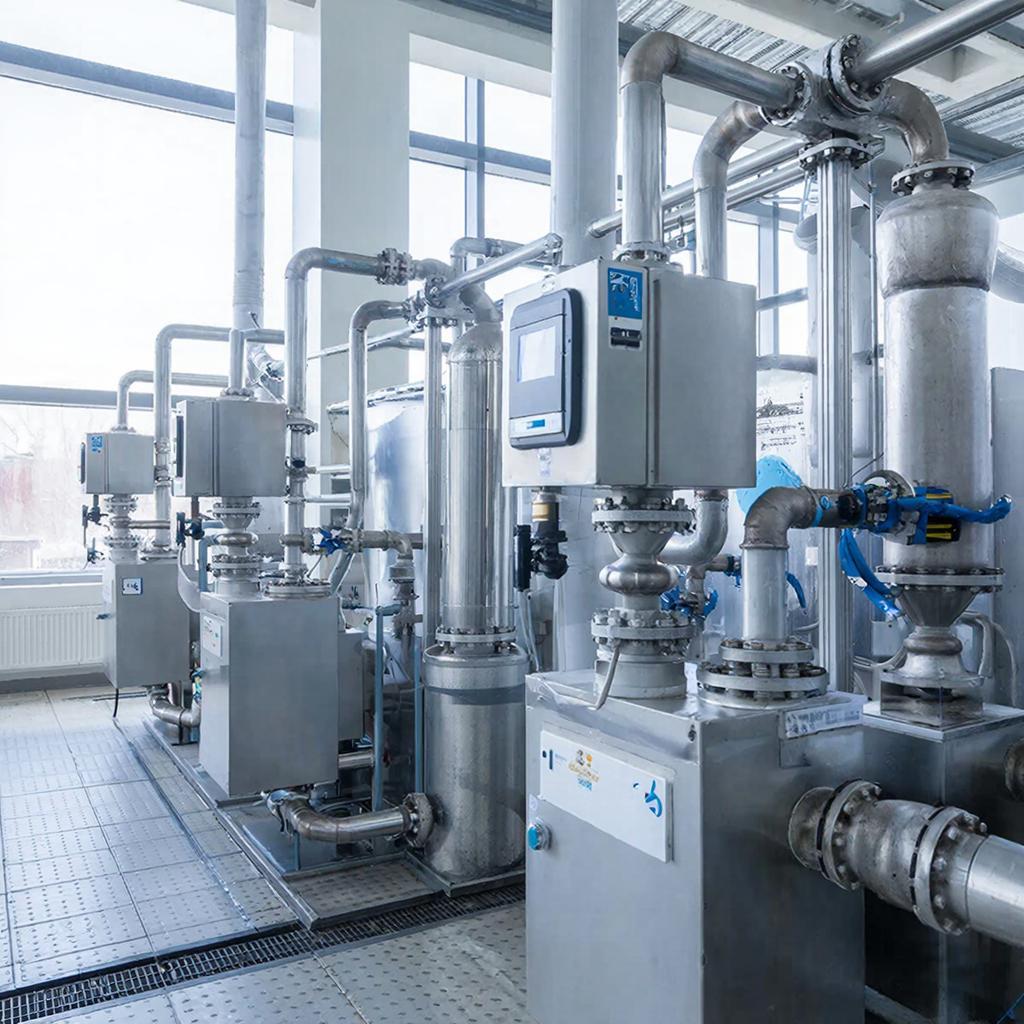
The construction of a modern water park is not just about building colorful slides and pools; it is about creating a complex biotechnical organism where the thermoregulation systems act as its cardiovascular system. Without a precise, reliable, and energy-efficient refrigeration system, it is impossible to ensure the comfort of visitors, the safety of operation, or the economic viability of the facility itself. Therefore, the forty new flagship projects represent forty high-end orders that will create a significant and qualitatively new demand, forcing the industry to transition from one-of-a-kind production to mass-produced yet highly customized solutions. For manufacturing companies, this means the need to scale up, deeply modernize production lines, and invest in research centers focused on energy efficiency and sustainability.
The functional refrigeration equipment in the water park permeates all its operational processes.
A special niche is occupied by equipment for creating specialized zones.
The food and food storage infrastructure requires its own equally important set of solutions. Here, the full range of trade and warehouse refrigeration equipment is used: from powerful prefabricated low-temperature chambers for freezing storage (20-100 m³, t = -25°C) and medium-temperature chambers for vegetables and dairy products (t = +2…+6°C) to a line of display cases, salad bars, and pastry cabinets for food courts. This equipment is subject to strict requirements regarding sanitary standards, noise levels (in recreational areas), and design that integrates into the overall space concept.
Thus, the government program acts not only as a source of large orders, but also as a catalyst for the systemic restructuring of the entire domestic refrigeration industry. It stimulates the consolidation of players and the emergence of strategic alliances between component manufacturers, engineering companies, and service networks. The success of this race will depend on the ability to offer not just a single unit, but an intelligent, "smart" climate control system for the entire water park, controlled from a single control panel, capable of predicting loads and preventing accidents. This is a step towards Industry 4.0, where refrigeration equipment becomes part of the facility's digital ecosystem. Ultimately, the rapid construction of water parks could lay the foundation for a new export potential for Russian engineering companies, which have honed their expertise through complex domestic projects and are ready to offer comprehensive, energy-efficient solutions to the world for facilities of any scale and climate zone.




In December 2025, Copeland—a global leader in compressor manufacturing—unveiled a new development: a CO₂ scroll compressor featuring Dynamic Vapor Injection (DVI) technology. This milestone marked a significant step in the evolution of industrial refrigeration equipment, as the combination of the natural refrigerant CO₂ and an advanced vapor injection system opens up new possibilities for enhancing energy efficiency, reducing operating costs, and meeting environmental regulations.
 Выберите размер контейнера: Температурный режим: Новый или Б/У: | Прайс-лист на рефрижераторные контейнеры Вы выбрали: 40 футовые, низкотемпературные, новые 
| ||||||||||||||||||||||||||||||||||||||||||||||||||||




 Telegram

