
The Tavros Group of Companies has announced a large-scale investment of more than 21 billion rubles in the development of the agro-industrial complex in the Leningrad Region. This ambitious project includes the construction of modern poultry farms for egg production and closed-loop pig farms. This decision will undoubtedly have a significant impact on the region's food security and create new job opportunities, but it will also serve as a powerful impetus for companies specializing in industrial refrigeration equipment.
The development of the modern agro-industrial complex is impossible to imagine without an effective cooling system. Industrial refrigeration units are a key element that ensures the safety and quality of products at all stages of the production chain, from the moment of slaughter and egg collection to transportation and storage. In the context of large-scale projects like the one presented by Tavros Group, the need for reliable and high-performance refrigeration equipment increases significantly.
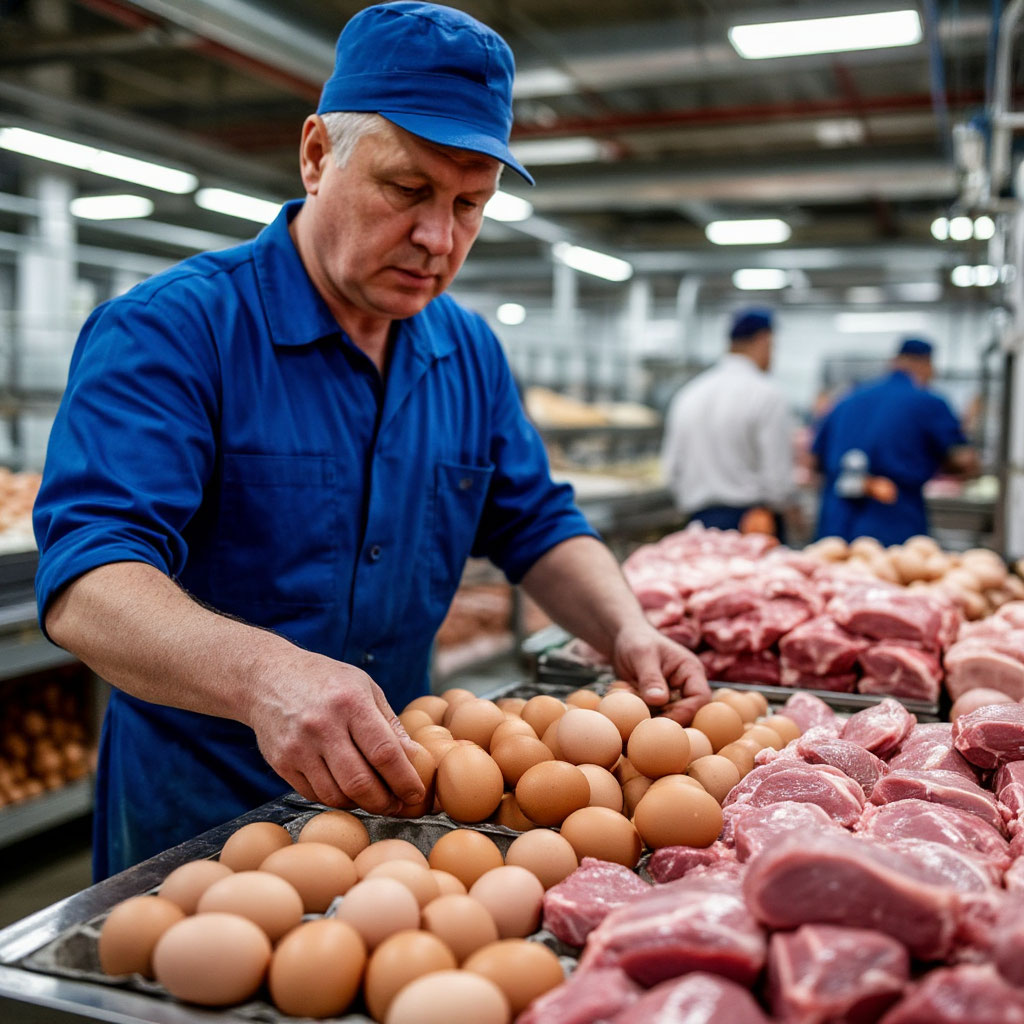
The construction of new poultry farms and pig complexes will require significant amounts of refrigeration equipment. Companies that provide design, supply, installation, and service for industrial refrigeration systems will have new opportunities to expand their business. Both large market players who can provide comprehensive solutions and small specialized firms that offer innovative technologies and personalized approaches to each project will benefit.
A wide range of industrial refrigeration equipment is used to ensure the smooth operation of poultry farms and pig complexes, as well as to maintain the high quality of products:
Shock freezing cold storage units: Necessary for fast freezing of meat after slaughter, which allows you to preserve its taste and nutritional properties for a long time. Shock freezing technology is important to prevent the formation of large ice crystals that can damage the structure of the product.
Chilled and frozen product storage chambers: Designed to store large quantities of meat and eggs at an optimal temperature. The volume and configuration of the chambers are calculated based on the production capacity of the facility and the planned storage volume.
Cooling systems for technological processes: These systems are used to maintain the required temperature in the rooms where meat is processed (slaughter, cutting, and packaging), as well as to cool the equipment used in these processes.
Ventilation and air conditioning systems: Provide comfortable working conditions for personnel and maintain the necessary microclimate in production and storage facilities.
Ice generators: They are used to produce ice, which is used for cooling products during transportation and storage, as well as for technological purposes.
Refrigeration units and central units: They are the "heart" of the entire refrigeration system, ensuring the circulation of refrigerant and maintaining the required temperature in chambers and rooms.
The functions of industrial refrigeration equipment in the agro-industrial complex are diverse and critical for ensuring high-quality and safe products:
Product preservation: The main function is to maintain an optimal temperature to slow down spoilage processes and preserve the freshness and nutritional value of meat and eggs.
Extended shelf life: Proper cooling and freezing can significantly extend the shelf life of products, which is important for ensuring supplies to remote regions and for smoothing out seasonal production fluctuations.
Improving product safety: Refrigeration equipment prevents the development of pathogenic microorganisms that can pose a health risk to consumers.
Compliance with sanitary standards: The use of modern refrigeration equipment allows enterprises to comply with strict sanitary requirements and regulations established for the production of food products.
Improved production efficiency: Optimized cooling systems can reduce product waste, lower energy consumption, and improve overall production efficiency.
Tavros Group's investments in the agro-industrial complex of the Leningrad Region are not only an important step in the development of regional agriculture, but also a powerful incentive for the development of the industrial refrigeration industry. Companies specializing in this field must be prepared for an increase in demand for their products and services, as well as for the introduction of innovative technologies that ensure maximum efficiency and environmental friendliness of refrigeration systems. Only in this way can they fully take advantage of the opportunities that are opening up due to large-scale investment projects in the Russian agro-industrial complex.




In December 2025, Copeland—a global leader in compressor manufacturing—unveiled a new development: a CO₂ scroll compressor featuring Dynamic Vapor Injection (DVI) technology. This milestone marked a significant step in the evolution of industrial refrigeration equipment, as the combination of the natural refrigerant CO₂ and an advanced vapor injection system opens up new possibilities for enhancing energy efficiency, reducing operating costs, and meeting environmental regulations.
 Выберите размер контейнера: Температурный режим: Новый или Б/У: | Прайс-лист на рефрижераторные контейнеры Вы выбрали: 40 футовые, низкотемпературные, новые 
| ||||||||||||||||||||||||||||||||||||||||||||||||||||




 Telegram

