
Strategic Development of Logistics in the Krasnodon District

Icon PreviewIcon PreviewTelegramIcon Preview

As part of the development of the master plan for the Krasnodon Municipal District of the Lugansk People's Republic, carried out by the Unified Institute for Spatial Planning (EISP) of the Russian Federation, a large-scale project has been proposed to create two transport and logistics centers (TLCs). Their total area will exceed 42 hectares. The first facility, with an area of 24.46 hectares, is planned to be located in the city of Krasnodon, near 60 Let SSSR Avenue and the Rodakovo-Lutugino-Izvarino railway line. The second one, with an area of 17.79 hectares, is located near the urban-type settlement of Severo-Gundorovsky, near a regional highway. These measures are aimed at significantly improving logistics connections with neighboring regions and increasing the share of cargo traffic passing through the district.
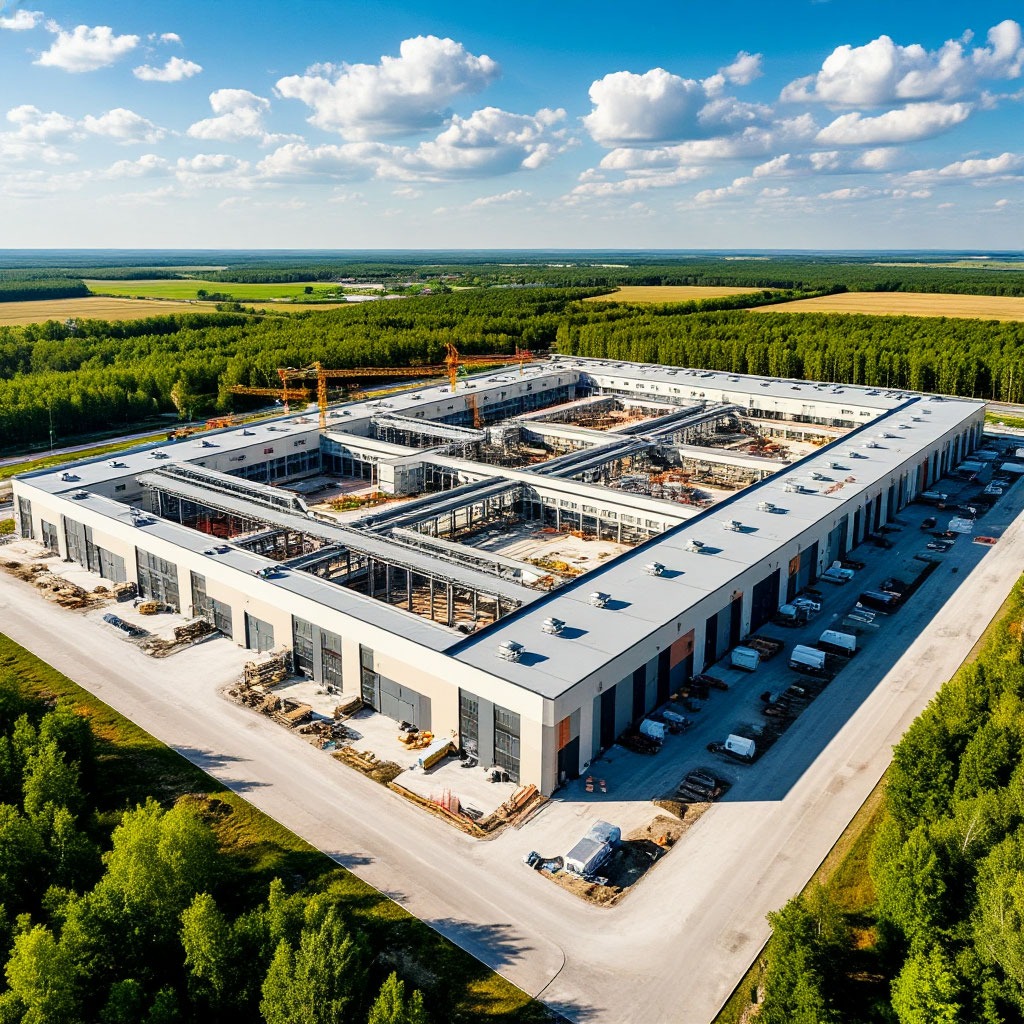
The implementation of this project will provide a powerful impetus for the development of many sectors of the economy, including companies specializing in industrial refrigeration equipment. The creation of modern logistics hubs will inevitably require the organization of a full cycle of storage and processing of goods, a significant portion of which consists of perishable food products, pharmaceuticals, and other goods that require strict temperature control.

Impact on refrigeration equipment suppliers

There are significant opportunities for refrigeration solution manufacturers and integrators. The construction of two logistics centers involves equipping numerous facilities:

  1. Large warehouse complexes. Design and installation of high-performance storage systems, including refrigeration and freezing chambers of various capacities, will be required.
  2. Cross-docking areas. Short-term storage and cargo reorganization areas will also require local refrigerated spaces to minimize transit losses.
  3. Customs and logistics terminals. The processing of imported and exported refrigerated cargo will require the creation of special climate-controlled inspection zones.
  4. Service centers. There will be a steady demand for installation, commissioning, and maintenance services for complex equipment.

This will create a stable market for both powerful stationary equipment and mobile solutions. Competition between suppliers will be based on the reliability, energy efficiency, and total cost of ownership of the systems, which will drive technological development in the sector.

Industrial refrigeration equipment and its functions

Logistics centers of this scale use a wide range of specialized refrigeration equipment, each of which performs critical functions.

  1. Industrial refrigeration chambers (prefabricated or sandwich panels).

    • Functions: Long-term and medium-term storage of large quantities of goods. They are the basis of warehouse refrigeration.
    • Application: Creation of isolated zones with a specified temperature (from +12°C to -25°C and below) for storing meat, fish, dairy products, vegetables, fruits, and frozen semi-finished products.
    • Specifications: Polyurethane foam (PU) panels with a thermal conductivity coefficient of 0.022-0.025 W/m·K, high density, and fire resistance. Automatic defrosting systems, multi-level temperature and humidity monitoring.
  2. Central and cascade refrigeration machines (chiller units) with a cold supply system.

    • Functions: Providing refrigerant to multiple consumers (refrigerators, display cases, and air conditioners) within a single building or complex.
    • Application: Used in large distribution centers. A centralized system is more energy-efficient and easier to maintain than multiple individual compressor units.
    • Specifications: Power from tens to hundreds of kW. Use of new generation refrigerants (R513A, R448A, R449A) with low global warming potential (GWP). Full automation, possibility of heat recovery.
  3. Refrigerated pallet storage warehouses (cooled rack systems).

    • Functions: High-density storage of palletized refrigerated cargo, ensuring uniform circulation of cold air.
    • Application: For goods supplied and shipped in large quantities on pallets.
    • Specifications: Specialized racks designed to organize air flows. A system of supply and exhaust ducts with fans controlled by temperature sensors in different warehouse areas.
  4. Pre-chambers (airlocks) and climate-controlled dock shelters.

    • Functions: Minimize cold loss and prevent condensation during loading and unloading.
    • Application: Installed at the points of acceptance and shipment, between warehouses with different temperature conditions.
    • Specifications: Sealed insulated structures with fast-acting gates. Equipped with their own refrigeration units or heat curtains to maintain the specified parameters.
  5. Microclimate monitoring and control systems.

    • Functions: 24/7 temperature, humidity, and equipment status monitoring, remote control, and emergency alerts.
    • Application: Integrated into all refrigeration systems of the logistics center. Required for working with pharmaceuticals and premium food products according to GDP/GMP standards.
    • Features: Distributed sensor network, data visualization software, and reporting and logging capabilities to ensure compliance with storage conditions.

Thus, the construction of transport and logistics centers in the Krasnodonsky District will lay the foundation for the creation of a modern, technologically advanced supply chain. This will open up long-term opportunities for refrigeration solution providers, not only by promoting the development of logistics infrastructure, but also by implementing advanced standards for the storage and transportation of temperature-sensitive cargo throughout the southwestern region of Russia.


ADVANTAGES
OF WORKING
WITH US
YOU COOPERATE
WITH ONE
COMPANY
You do not need to spend your time on engagement and negotiations with different contractors and suppliers.
EVERYTHING HAPPENS
IN TIME AND EXACTLY
ACCORDING TO THE PLAN
A long-term operational experience and collaborations guarantee delivery to the customer and installation right on time.
WE SAVE YOUR MONEY
IN A CRISIS WITHOUT
SACRIFICING QUALITY
We have reasonable prices, and we produce some types of equipment by ourselves, offering you the best prices.
Over 10 years of activity, hundreds of Russian companies, from large corporations to small cafes, have become clients of the company.
Copeland launches CO₂ compressor with DVI technology

In December 2025, Copeland—a global leader in compressor manufacturing—unveiled a new development: a CO₂ scroll compressor featuring Dynamic Vapor Injection (DVI) technology. This milestone marked a significant step in the evolution of industrial refrigeration equipment, as the combination of the natural refrigerant CO₂ and an advanced vapor injection system opens up new possibilities for enhancing energy efficiency, reducing operating costs, and meeting environmental regulations.

16
sep 2026






