
In Russia, there is a concentration of data processing centers (DPCs) in the Moscow region, which accounts for about 75% of all capacities. Their total energy consumption is estimated at 1 GW.
According to forecasts, taking into account the construction of new data centers, the total power consumption may double by 2030, and by 2035, Moscow's data centers will use at least 5 GW. This will put significant pressure on the capital's electricity grid, where energy shortages are expected.
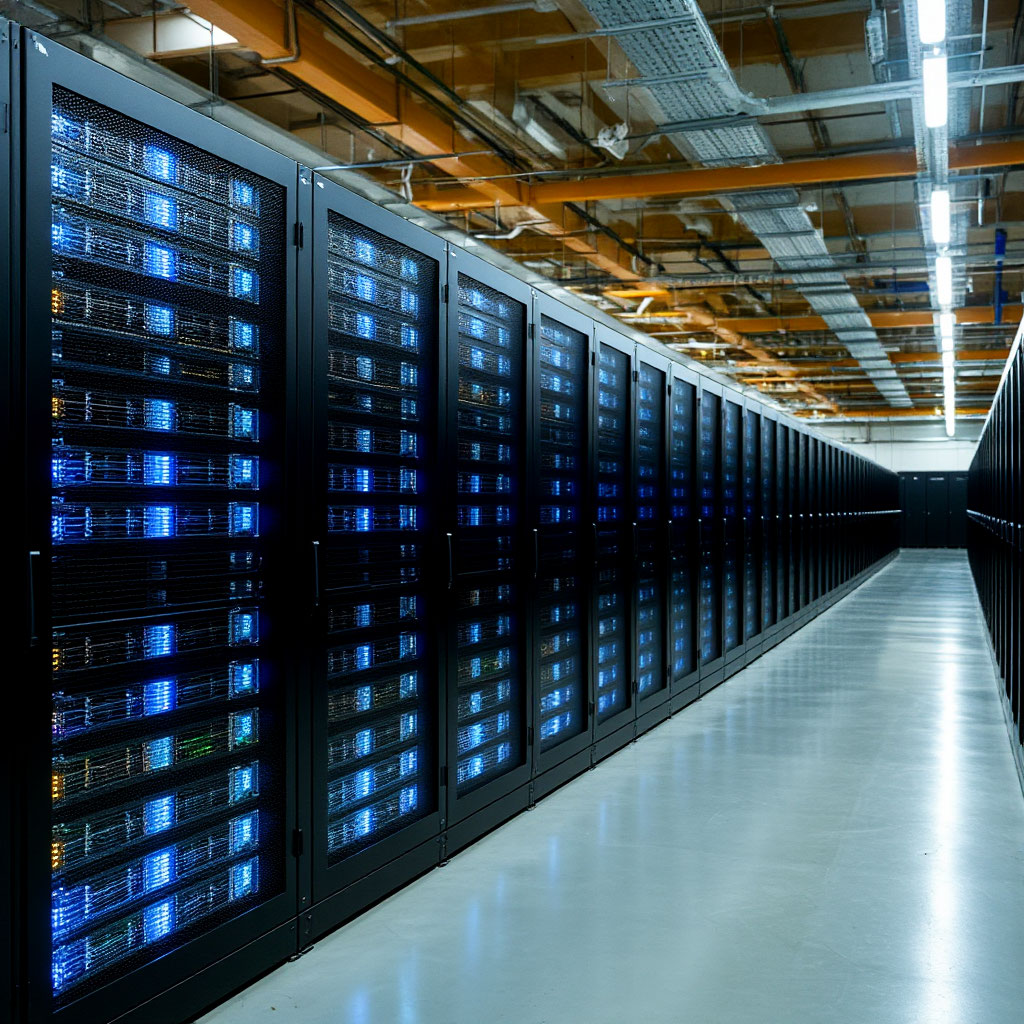
Analysts predict that the future development of data centers will take place in the regions, due in particular to an increase in their capacity per unit area.
Ilya Mikhailov, Director of Data Centers at Selectel, notes that it is becoming increasingly difficult to find a site within the Moscow Ring Road that is suitable for building a data center without restrictions on capacity, area, or height. Therefore, the area around the Central Ring Road is a promising area for the development of such facilities.
Selectel is actively working on increasing the performance of its existing data centers and plans to launch the first phase of the Yurlovsky data center in Moscow (Tier IV). This data center will be able to accommodate 2,000 racks and will have a capacity of 20 MW.
The construction of new data centers and the expansion of existing data centers, such as the planned Selectel "Yurlovsky" data center, has a significant impact on companies specializing in industrial refrigeration equipment. As data center capacity increases, so do the requirements for cooling systems, as these systems are responsible for maintaining stable temperatures to ensure the smooth operation of computing equipment. Consequently, there is a growing demand for the design, supply, installation, and maintenance of high-efficiency refrigeration systems that can handle significant amounts of heat. Companies with experience and expertise in this field are gaining new opportunities to expand their operations and participate in large-scale projects.
In data centers, a whole range of industrial refrigeration equipment is used to maintain an optimal temperature regime, prevent overheating of equipment, and ensure its reliable operation. The key components include chillers, which are refrigeration machines that cool water or glycol, which are then circulated in the cooling circuits of the servers. Dry coolers, or dry cooling towers, are used to dissipate heat from the chillers into the atmosphere, especially in regions with limited water resources. Precision air conditioners provide precise temperature and humidity control in the server rooms, preventing condensation and corrosion of the equipment.
The function of industrial refrigeration equipment in data centers is not only to remove heat, but also to ensure the stability of microclimate parameters, which directly affects the performance and lifespan of servers. Precision air conditioners, for example, maintain the set temperature with an accuracy of a degree and control the humidity level, which is especially important for sensitive electronics. Chillers and dry coolers, on the other hand, provide continuous cooling of the circulating fluid, maintaining a stable temperature in the server cooling system.
The application of industrial refrigeration equipment in data centers covers various aspects. It is designed to cool servers, network equipment, uninterruptible power supplies, and other infrastructure components. Additionally, it is used for air conditioning in technical rooms, corridors, and office areas of the data center. The choice of specific refrigeration equipment type and capacity depends on various factors, including the overall heat load, equipment density, climate conditions, and fault tolerance requirements.
With the growing demand for computing power and increasing equipment density in data centers, there is also an increasing demand for innovative cooling solutions. Companies that offer energy-efficient chillers using next-generation refrigerants, freecooling systems (using outdoor air for cooling), liquid cooling for servers, and other advanced technologies are gaining a competitive advantage and opportunities to secure long-term contracts with data center operators. Being able to adapt to changing market demands and innovate is becoming a key factor in the success of industrial refrigeration companies.




In December 2025, Copeland—a global leader in compressor manufacturing—unveiled a new development: a CO₂ scroll compressor featuring Dynamic Vapor Injection (DVI) technology. This milestone marked a significant step in the evolution of industrial refrigeration equipment, as the combination of the natural refrigerant CO₂ and an advanced vapor injection system opens up new possibilities for enhancing energy efficiency, reducing operating costs, and meeting environmental regulations.
 Выберите размер контейнера: Температурный режим: Новый или Б/У: | Прайс-лист на рефрижераторные контейнеры Вы выбрали: 40 футовые, низкотемпературные, новые 
| ||||||||||||||||||||||||||||||||||||||||||||||||||||




 Telegram

