
The Olympic Village in Sochi, a witness to the glorious events of 2014, is preparing for a new life. Atlas Development has announced a large-scale renovation and construction project for a resort complex with an impressive investment of 36 billion rubles. This ambitious project, which includes the redevelopment of existing hotel buildings and the construction of a modern thermal complex, will not only breathe new life into the Olympic legacy but also have a significant impact on related industries, including the industrial refrigeration equipment market.
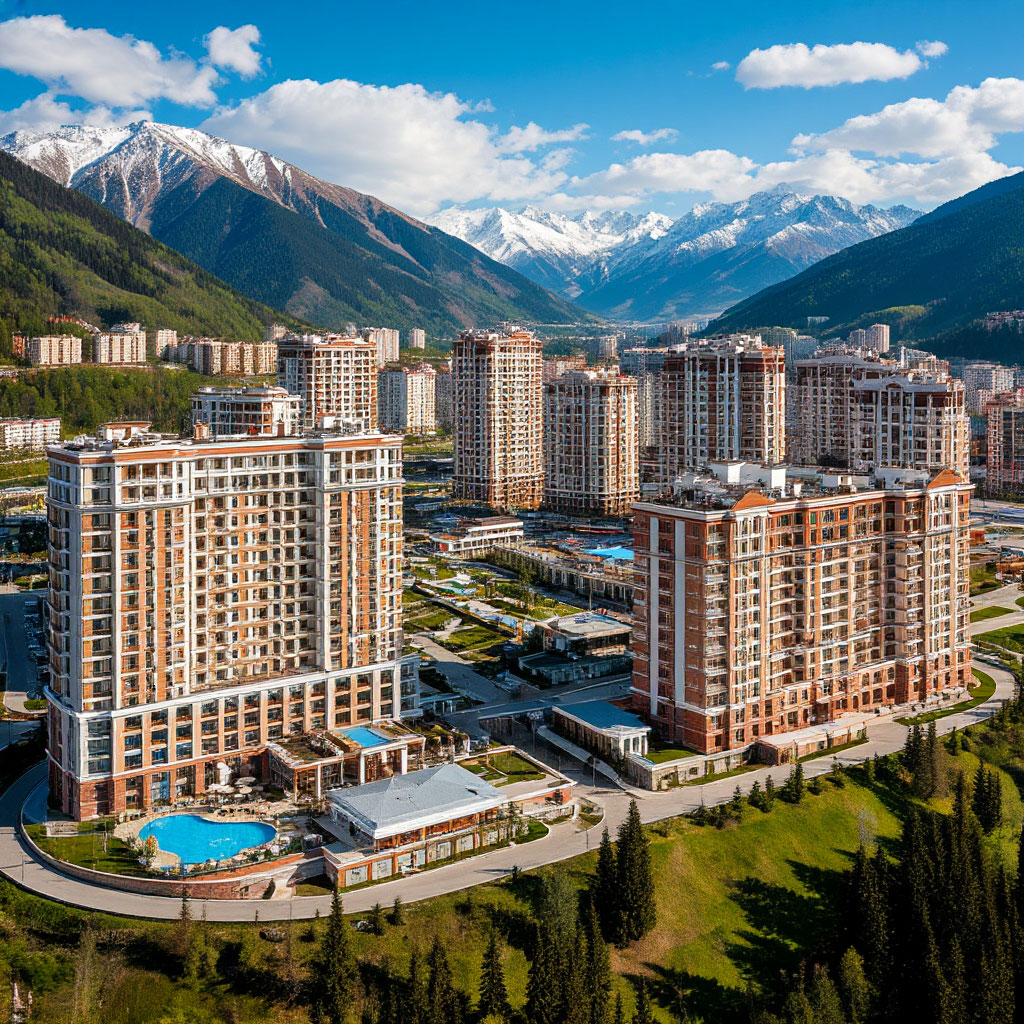
Located at an altitude of 1,100 m in the picturesque area of Krasnaya Polyana, near the Alley of Flags, the complex will cover a total area of 32,000 sq. m, of which 16,000 sq. m will be allocated for apartments with 272 rooms. The first two buildings are scheduled to be completed in the summer of 2026, and the full completion of the project is expected in 2028-2029, depending on market conditions. Such a large-scale project will certainly require significant amounts of industrial refrigeration equipment, which opens up new opportunities for companies specializing in this field.
The project will have a stimulating effect on companies engaged in the production and supply of industrial refrigeration equipment. After all, a modern resort complex, which combines hotel rooms, apartments and thermal areas, has high requirements for refrigeration systems. It is necessary to maintain an optimal temperature for food storage, cooling of drinks, ensuring the operation of air conditioning systems and creating comfortable conditions in thermal complexes.

Industrial Refrigeration Equipment for Resort Complexes:
The variety of tasks facing a modern resort complex requires the use of a wide range of industrial refrigeration equipment. Let's consider the main types and their applications:
Refrigerated food storage rooms: These are indispensable for maintaining the freshness and safety of food products used in the complex's restaurants, cafes, and bars.
Chillers: They are used to cool water or other liquids, which are then circulated in air conditioning systems and process equipment.
Freezers: Required for storing frozen foods and semi-finished products.
Compressor stations: They are the heart of the refrigeration system, ensuring the circulation of refrigerant and creating the necessary pressure.
Ice makers: Required for the production of ice used in bars, restaurants, and for cooling food.
Heat pumps: They can be used to generate both cold and heat simultaneously, significantly improving the system's energy efficiency.
The construction of a resort complex in the Olympic Village of Sochi is not only a significant project in the field of tourism and hospitality, but also a powerful incentive for the development of the industrial refrigeration industry. Companies that offer advanced and energy-efficient solutions in this field will have a unique opportunity to contribute to the creation of a modern and comfortable resort complex that will promote the development of the region and attract tourists. The use of the latest cooling technologies will minimize the environmental impact and ensure the sustainable development of the resort complex for many years to come.




In December 2025, Copeland—a global leader in compressor manufacturing—unveiled a new development: a CO₂ scroll compressor featuring Dynamic Vapor Injection (DVI) technology. This milestone marked a significant step in the evolution of industrial refrigeration equipment, as the combination of the natural refrigerant CO₂ and an advanced vapor injection system opens up new possibilities for enhancing energy efficiency, reducing operating costs, and meeting environmental regulations.
 Выберите размер контейнера: Температурный режим: Новый или Б/У: | Прайс-лист на рефрижераторные контейнеры Вы выбрали: 40 футовые, низкотемпературные, новые 
| ||||||||||||||||||||||||||||||||||||||||||||||||||||




 Telegram

