
In 2027, a new point of attraction will appear on the map of the Far East's logistics infrastructure: the Pyaterochka distribution center (DC) in Vladivostok. Announcing the project at the Eastern Economic Forum, the management of X5 Group emphasized the scale of their intentions: over the past 2.5 years, the company has consciously invested in the region, compensating for the exorbitant cost of logistics with affordable prices for customers. The opening of the center in Khabarovsk (November 20, 2026) was a trial balloon, and Vladivostok is taking over as a key hub for supplying 150 new stores that are expected to open in remote areas in 2026. Building such a facility is not just about concrete and shelving; it is a complex engineering system centered around industrial refrigeration systems.
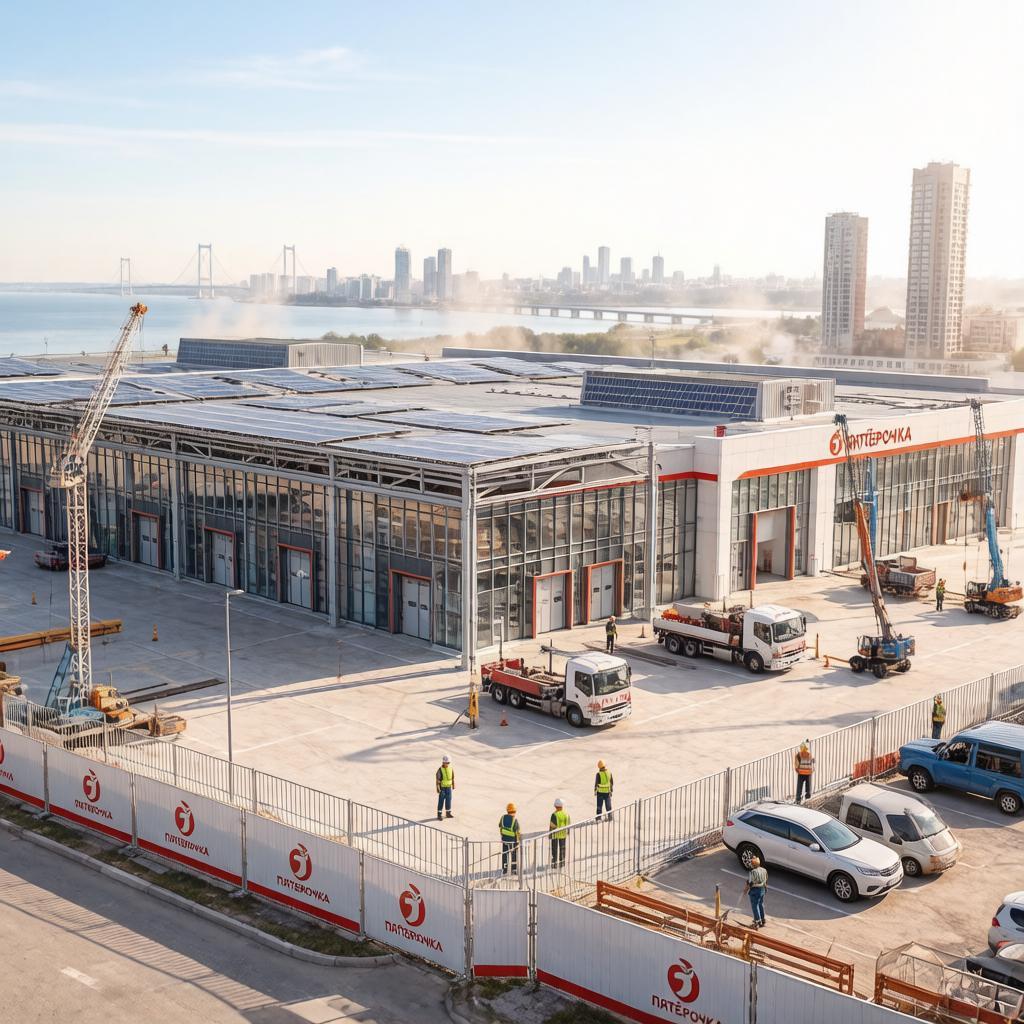
For companies that produce industrial refrigeration equipment, the announcement of the Vladivostok distribution center has been a signal to restructure their strategies. Firstly, the order capacity has increased dramatically: a single large distribution center can require refrigeration equipment worth between 150 and 400 million rubles. Secondly, the geography imposes strict requirements. Vladivostok has a monsoon climate with high humidity and temperature fluctuations. This forces manufacturers to move away from "boxed" solutions in favor of equipment that is resistant to corrosion and can operate in tropical heat in summer and extreme cold in winter. Thirdly, the high cost of logistics forces X5 to optimize every square meter: customers now need not just refrigeration units, but intelligent systems with remote monitoring that can reduce energy losses by 20-30%. Suppliers who can offer on-site service (in Vladivostok or Khabarovsk) will have priority access to tenders.
The RC project in Vladivostok is a classic example of a multi-temperature warehouse. It is divided into several functional zones, each of which requires a specific type of refrigeration equipment.
1. Ammonia or Freon Chillers (Central Refrigeration Stations) This is the "heart" of the system. These units produce cold centrally and distribute it throughout the building. Specifications: холодопроизводительность от 800 до 2000 кВт (для склада площадью 15 000–20 000 кв. м), работа на аммиаке (R717) для надежности или на фреоне R-507A для упрощения обслуживания. The function is to supply a coolant (glycol or freon) to the air coolers in all zones. In the conditions of Vladivostok, it is critical to have a "dry cooling tower" system that allows you to save water and operate at negative outdoor temperatures.
2. Air coolers (evaporators) Installed directly inside the chambers. The preservation of the product depends on their design. Characteristics: power from 10 to 100 kW, special fins with a polymer coating (to protect against salty sea air). For freezing chambers (-18°C and below) - with electric thawing (defrosting), for cooling chambers (0…+5°C) - with natural thawing or air. The function is to intensively blow air over the product, maintaining a temperature difference of no more than ±0.5°C throughout the rack, which is critical for long-term storage of fruits and meat.
3. Split systems for corridors and unloading areas The most vulnerable area is the docks (where trucks dock). Powerful curtains and mobile split systems are installed here. Specifications: up to 15-20 kW of power, the ability to operate in the "heat-cold" mode to protect against condensation in summer and freezing in winter. The function is to create a temperature barrier so that when the gates are opened, the cold does not escape outside, and the humid air does not turn into frost on the ceiling.
4. Compressor-condenser units (CCU) Installed outside the building (on the roof or on special platforms). In Vladivostok, they are exposed to typhoons. Characteristics: Screw compressors (more reliable for capacities over 100 kW) or piston (for medium loads). Required protection by the casing of class IP54 (full dust protection) and crankcase heating for starting at -30°C. Function - heat dissipation from compressors into the atmosphere. Modern projects often use heat recovery units, which heat the warehouse's living quarters for free.
5. Cold corridor systems (Controlled Loading Dock) This is an innovation that will become the standard for the new distribution center. Features: sealed sectional gates with thermal insulation, patented dock levelers that can withstand loads of up to 8 tons. The unloading area itself is isolated from the main warehouse, and the temperature inside is maintained at +5…+10°C. The function is to exclude direct contact between warm air and the product, reducing energy losses during loading and unloading operations by almost half.
6. Control automation (SCADA and PLC) Without this equipment, the cold is useless. Specifications: Controllers based on industrial protocols (Modbus, Ethernet/IP). Cloud support for control from a mobile device in Moscow. The function is to monitor the temperature in each chamber in real time, predict icing, and control the start-up of compressors based on their load (cascade mode). The system should automatically send a notification to the service team when the temperature rises above a critical threshold (for example, -16°C for ice cream).
The construction of the Pyaterochka distribution center in Vladivostok in 2027 will be a test of strength not only for X5's logistics, but also for the entire cold storage industry. The market is shifting from selling hardware to selling turnkey energy-efficient solutions. Manufacturers who can prove that their refrigeration units won't leak during a typhoon and that their chillers won't malfunction in 40-degree frost will secure billion-dollar contracts. For the Far East, this means the beginning of an era of high-quality food storage — without interruptions, without defrosting, and with prices that are kept down not by marking down the product, but by using smart cold.




In December 2025, Copeland—a global leader in compressor manufacturing—unveiled a new development: a CO₂ scroll compressor featuring Dynamic Vapor Injection (DVI) technology. This milestone marked a significant step in the evolution of industrial refrigeration equipment, as the combination of the natural refrigerant CO₂ and an advanced vapor injection system opens up new possibilities for enhancing energy efficiency, reducing operating costs, and meeting environmental regulations.
 Выберите размер контейнера: Температурный режим: Новый или Б/У: | Прайс-лист на рефрижераторные контейнеры Вы выбрали: 40 футовые, низкотемпературные, новые 
| ||||||||||||||||||||||||||||||||||||||||||||||||||||




 Telegram

