
Ozon continues to strengthen its position in the Russian e-commerce market by announcing the opening of three new universal warehouse complexes in strategically important regions: Yakutsk, Irkutsk, and Kaliningrad. This move signifies the marketplace's commitment to optimizing logistics chains, reducing delivery times, and expanding the range of products available to residents in these areas. In addition to the obvious benefits for consumers and sellers, the construction of these new warehouses has a significant impact on related industries, particularly companies specializing in industrial refrigeration equipment.
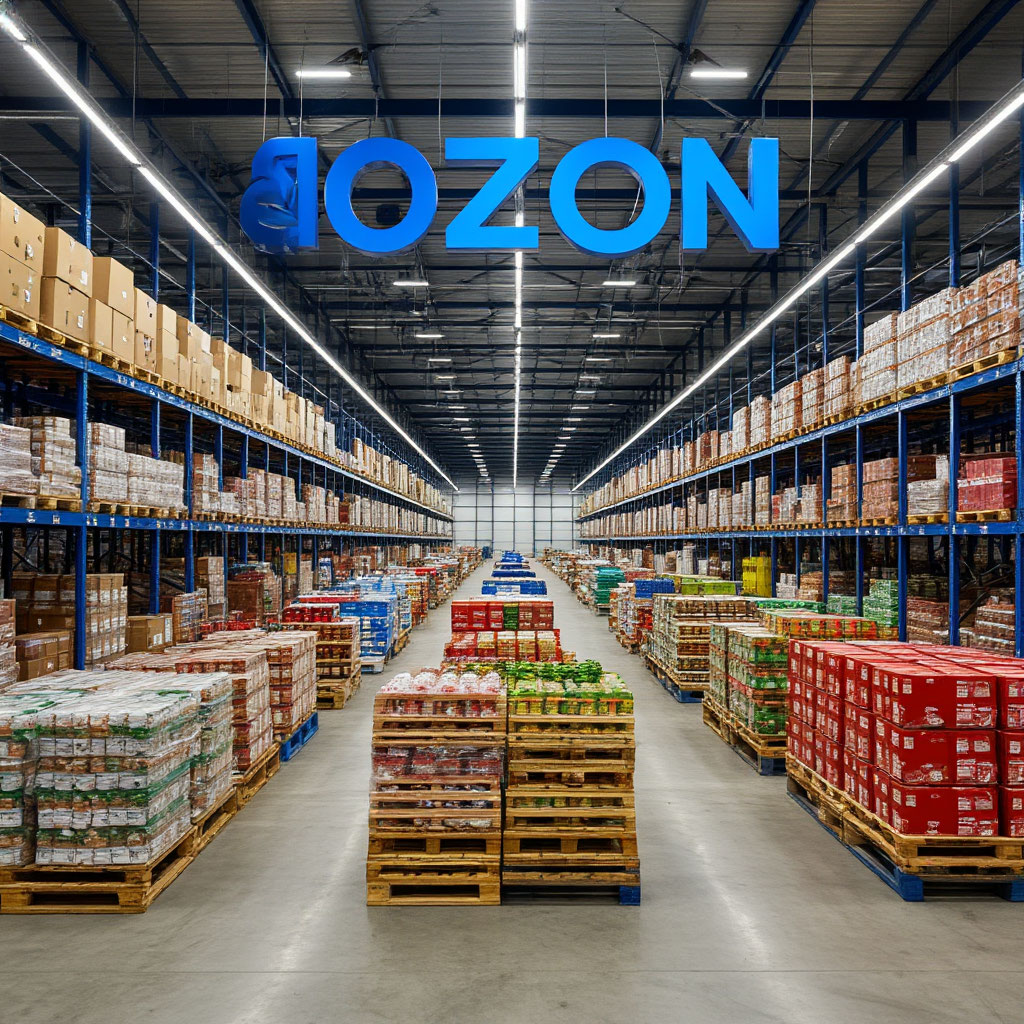
Ozon's universal warehouses, designed for storing both food and non-food products, have specific requirements for their refrigeration systems. Maintaining optimal temperature and humidity levels is crucial for preserving perishable goods, preventing spoilage of items that require specific storage conditions, and ensuring compliance with sanitary regulations. Therefore, integrating modern and reliable industrial refrigeration systems becomes an integral part of the successful operation of these new warehouse complexes.
Contribution to development and competition in the industrial refrigeration equipment market
The construction of three new Ozon warehouses is stimulating demand for a wide range of industrial refrigeration equipment, creating new opportunities for companies involved in the design, production, installation, and maintenance of such systems. Competition in the market is expected to increase, leading to the adoption of innovative technologies and the improvement of the quality of solutions offered. Companies that can provide the most energy-efficient, reliable, and environmentally friendly systems will have a significant competitive advantage.
Required industrial refrigeration equipment for Ozon's universal warehouses
To ensure proper storage of food and non-food products in Ozon's new warehouses, a wide range of industrial refrigeration equipment is required. Let's explore the main types and their characteristics:
Refrigerated chambers for food storage: Designed to maintain temperatures ranging from -25°C to +10°C, depending on the type of product being stored. Important features include airtightness, good thermal insulation, temperature and humidity control systems, and compliance with sanitary standards. Refrigeration units based on various types of compressors (piston, screw, and spiral) can be used.
Freezer rooms for storing frozen products: Provide temperatures of up to -25°C and below. It is important to ensure rapid and uniform freezing of products to maintain their quality. They require powerful refrigeration units and an efficient air circulation system.
Refrigerated display cases and counters: Used for displaying and short-term storage of refrigerated products. They must maintain the required temperature and humidity levels and have an attractive appearance.
Ventilation and air conditioning systems: They ensure that the storage areas for non-food products maintain a comfortable temperature and humidity level. It is important to ensure effective air filtration to prevent contamination of the products.
Refrigeration units and compressor-condenser units: They are the "heart" of any refrigeration system. The stability of the temperature regime in the warehouse depends on their reliability and efficiency.
Monitoring and control systems: Provide automatic monitoring of temperature, humidity, and other parameters in refrigerated rooms and warehouses. Allow for prompt response to any deviations from the norm and prevent product spoilage.

Conclusion:
The opening of new universal warehouses by Ozon in Yakutsk, Irkutsk and Kaliningrad is not only an important step in the development of e-commerce in Russia, but also a powerful impetus for the development of the market for industrial refrigeration equipment. Companies that can offer modern, reliable and energy-efficient solutions will have the opportunity to make a significant contribution to ensuring the uninterrupted operation of new warehouse complexes and, as a result, to the development of the regional economy. Competition in the market will certainly increase, which will lead to the introduction of innovative technologies and the improvement of the quality of the solutions offered. All market participants, including end consumers, will benefit from this.




In December 2025, Copeland—a global leader in compressor manufacturing—unveiled a new development: a CO₂ scroll compressor featuring Dynamic Vapor Injection (DVI) technology. This milestone marked a significant step in the evolution of industrial refrigeration equipment, as the combination of the natural refrigerant CO₂ and an advanced vapor injection system opens up new possibilities for enhancing energy efficiency, reducing operating costs, and meeting environmental regulations.
 Выберите размер контейнера: Температурный режим: Новый или Б/У: | Прайс-лист на рефрижераторные контейнеры Вы выбрали: 40 футовые, низкотемпературные, новые 
| ||||||||||||||||||||||||||||||||||||||||||||||||||||




 Telegram

