
In today's world, artificial intelligence (AI) has become a cornerstone of economic development and technological progress. Processing the vast amounts of data required for AI training and operation requires powerful computing resources, which are concentrated in Data Processing Centers (DPCs). Recognizing this need, the government of the Nizhny Novgorod region is taking decisive steps to transform the region into a key hub for AI development in Russia.
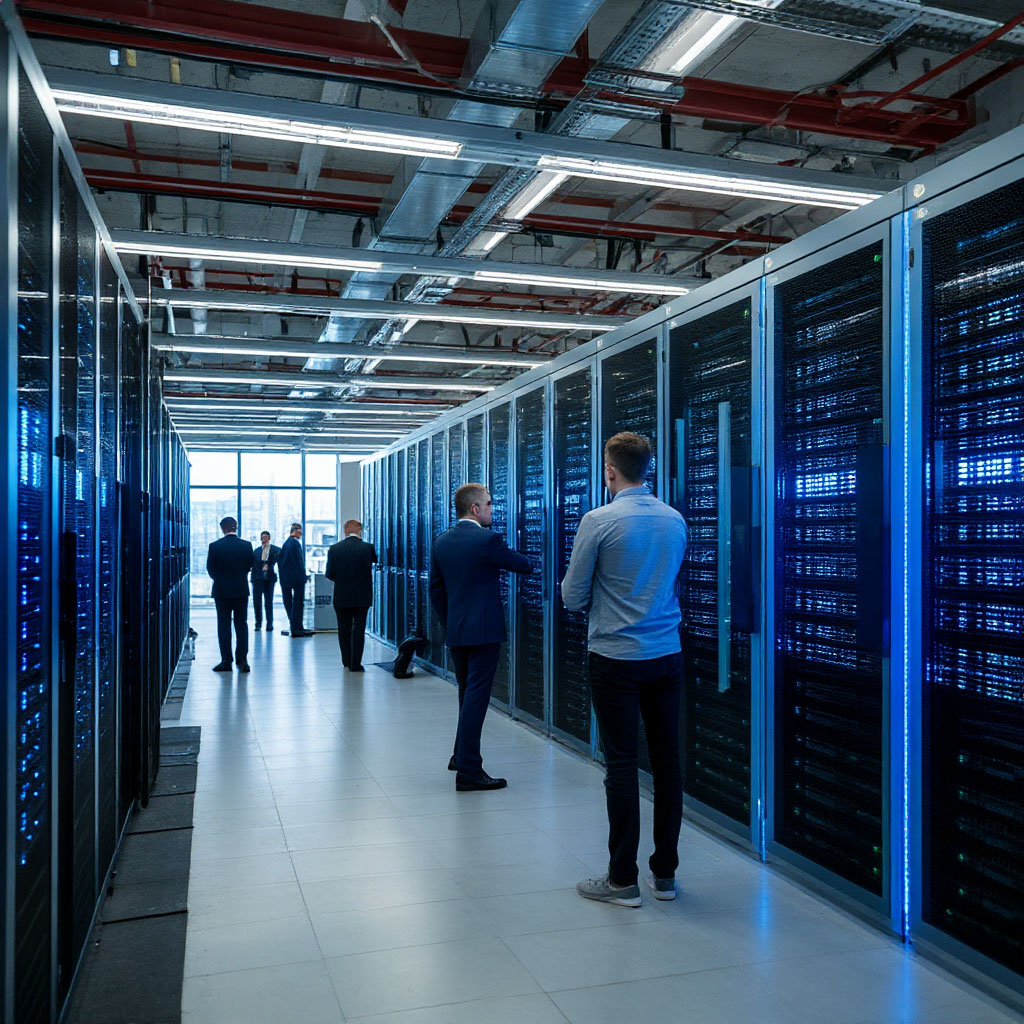
The Governor of the Nizhny Novgorod Region has introduced a bill aimed at stimulating the construction of data centers in the region. The proposed tax incentives for businesses investing in these centers are designed to attract significant investment and drive explosive growth in computing power. This decision will not only strengthen the region's position as a leading IT hub but also create new opportunities for innovative companies seeking to develop and implement AI-based solutions.
The large-scale construction of data centers in the Nizhny Novgorod region will have a significant impact on various industries, including the industrial refrigeration equipment market. Data centers are inherently energy-intensive facilities that generate large amounts of heat during the operation of servers and other computing equipment. Efficient heat dissipation is a critical task that ensures the stable operation and longevity of the equipment, as well as prevents failures and downtime.
This is where industrial refrigeration equipment comes into play. To ensure optimal temperature conditions in data centers, it is essential to use high-performance and reliable cooling systems that can operate continuously and maintain stable temperatures within the recommended range specified by the equipment manufacturers. As the number of data centers in the region increases, so does the demand for such equipment, creating new opportunities for specialized companies.

A wide range of industrial refrigeration equipment is used to cool data centers, each type having its own features and advantages. Let's explore the main ones:
Chillers: This is perhaps the most common type of equipment used to cool data centers. Chillers cool water or glycol solution, which is then circulated through a piping system to remove heat from the servers. There are two types of chillers: air-cooled and water-cooled.
Precision Air Conditioning Systems (CRAC and CRAH): CRAC (Computer Room Air Conditioner) and CRAH (Computer Room Air Handler) are systems designed to maintain precise temperature and humidity levels in server rooms. They are typically installed directly in the data center and provide targeted cooling for the equipment.
Freecooling systems: These are systems that use the natural cold of the environment (air or water) to cool the data center. Freecooling can significantly reduce energy consumption and operating costs, especially in regions with cold climates.
Direct Liquid Cooling (DLC) Systems: This is an advanced technology in which the cooling liquid directly contacts the heating components of servers, such as processors and graphics accelerators. DLC provides more efficient heat dissipation, allowing you to increase the density of equipment placement and reduce power consumption.
The construction of new data centers in the Nizhny Novgorod region will serve as a catalyst for the development of the industrial refrigeration equipment industry. Companies specializing in the design, production, and maintenance of these systems will have the opportunity to expand their businesses and implement innovative solutions that meet the requirements of the new generation of data centers. This, in turn, will contribute to the further development of the region as a leader in the fields of artificial intelligence and information technology.




In December 2025, Copeland—a global leader in compressor manufacturing—unveiled a new development: a CO₂ scroll compressor featuring Dynamic Vapor Injection (DVI) technology. This milestone marked a significant step in the evolution of industrial refrigeration equipment, as the combination of the natural refrigerant CO₂ and an advanced vapor injection system opens up new possibilities for enhancing energy efficiency, reducing operating costs, and meeting environmental regulations.
 Выберите размер контейнера: Температурный режим: Новый или Б/У: | Прайс-лист на рефрижераторные контейнеры Вы выбрали: 40 футовые, низкотемпературные, новые 
| ||||||||||||||||||||||||||||||||||||||||||||||||||||




 Telegram

