
Lukoil has announced the start of a large-scale project to build a modern Data Processing Center (DPC) in the Tver region. This strategic move will not only strengthen the company's digital infrastructure but also create new opportunities for businesses specializing in industrial refrigeration equipment. The construction of a DPC of this scale places increased demands on cooling systems, which in turn creates a favorable environment for companies offering advanced solutions in this field.
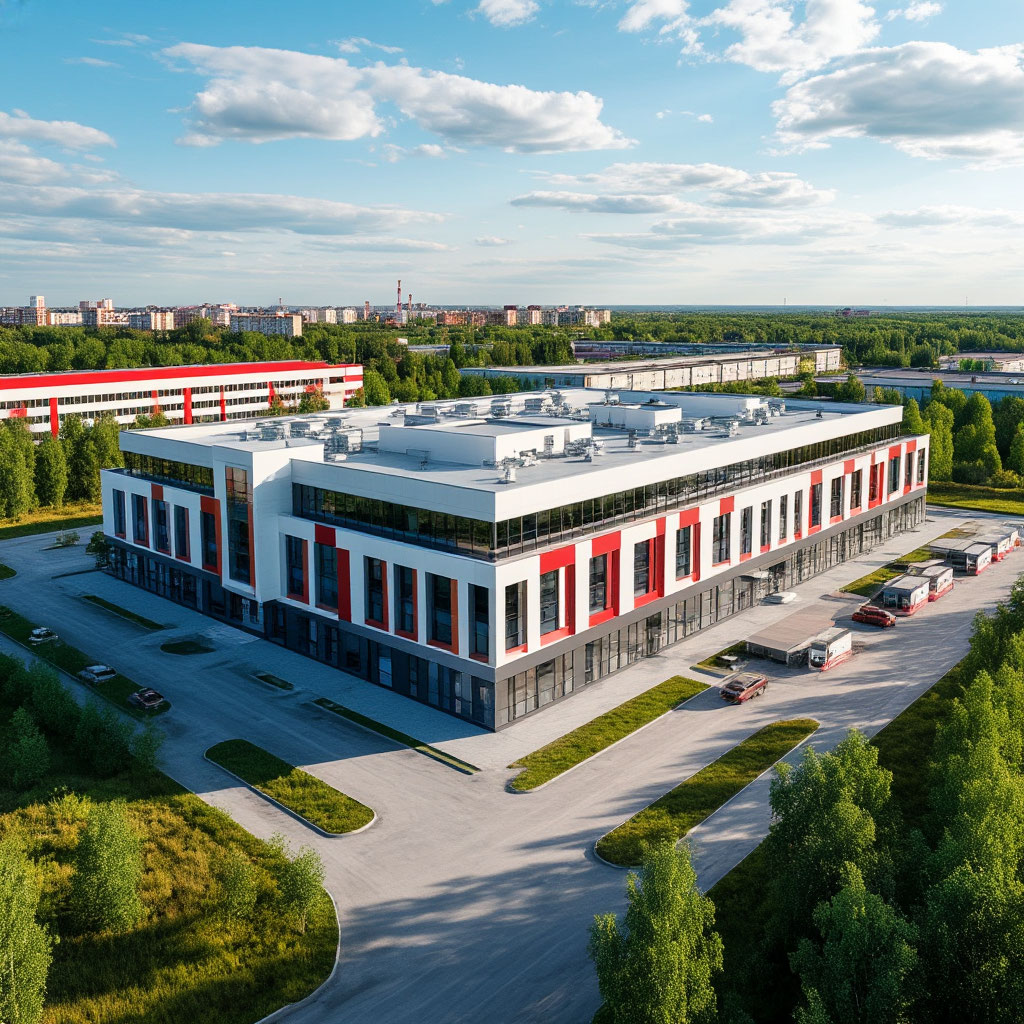
Modern data centers are complex systems that require strict temperature control to ensure stable operation and prevent equipment failure. Overheating of servers and other components can lead to reduced performance, malfunctions, and even permanent damage. Therefore, efficient cooling is crucial for the smooth operation of data centers. In this context, the role of industrial refrigeration equipment becomes critical.
Industrial Refrigeration Equipment for Data Centers: The Basis of Reliable Operation
The choice of the optimal refrigeration equipment for a data center depends on a variety of factors, including the size of the data center, its geographical location, climate conditions, and backup requirements. Let's explore the most common types of industrial refrigeration equipment used in data centers and their characteristics:
Chillers: This is perhaps the most common type of equipment used for cooling data centers. Chillers are refrigeration units designed to cool a liquid (usually water or glycol solution), which is then circulated through a piping system to remove heat from the equipment.
Precision Air Conditioners (CRAC/CRAH): These air conditioners are designed to maintain precise temperature and humidity levels in server rooms. They are highly reliable and can operate 24/7.
Free cooling systems: These systems use outdoor air to cool the data center, which can significantly reduce energy consumption. Free cooling is particularly effective in cold climates.
Direct Liquid Cooling (DLC) Systems: This is an advanced technology that circulates coolant (water or specialized coolant) directly through server components, dissipating heat more efficiently than air cooling.
Backup Cooling Systems: These are systems designed to ensure the uninterrupted operation of a data center in the event of a primary equipment failure. They may include backup chillers, generators, and other components.
LUKOIL and Prospects for the Industrial Refrigeration Industry
The construction of a data center by LUKOIL in the Tver region is a significant impetus for the development of the industrial refrigeration equipment industry. Companies specializing in the design, production, and maintenance of such equipment have new opportunities to participate in this large-scale project. LUKOIL is likely to be interested in using the most advanced and energy-efficient solutions, which will stimulate innovation and the development of new technologies in the field of data center cooling.
The impact of this project will extend beyond the Tver region. The successful implementation of the data center project could serve as an example for other companies planning to build similar facilities, leading to a further increase in demand for industrial refrigeration equipment. As a result, the market will become more competitive, requiring manufacturers and suppliers to offer not only high-quality equipment but also comprehensive solutions that include design, installation, commissioning, and service.
Thus, LUKOIL's investment in the construction of a data center in the Tver region is not only an important step for the development of the company's digital infrastructure, but also a powerful driver for the development of the industrial refrigeration equipment industry, stimulating innovation and opening up new opportunities for businesses in this field. This initiative promises positive changes for the region's economy and contributes to technological progress as a whole.




In December 2025, Copeland—a global leader in compressor manufacturing—unveiled a new development: a CO₂ scroll compressor featuring Dynamic Vapor Injection (DVI) technology. This milestone marked a significant step in the evolution of industrial refrigeration equipment, as the combination of the natural refrigerant CO₂ and an advanced vapor injection system opens up new possibilities for enhancing energy efficiency, reducing operating costs, and meeting environmental regulations.
 Выберите размер контейнера: Температурный режим: Новый или Б/У: | Прайс-лист на рефрижераторные контейнеры Вы выбрали: 40 футовые, низкотемпературные, новые 
| ||||||||||||||||||||||||||||||||||||||||||||||||||||




 Telegram

