
Krasnoyarsk is preparing for the construction of a new Ice Palace, which, according to Dmitry Dmitriev, a member of the Legislative Assembly, will be located on Svetlova Street. An active search is currently underway for a contractor to design this important facility. The project is being commissioned by the Rassvet sports school, emphasizing its significance for the development of regional sports.
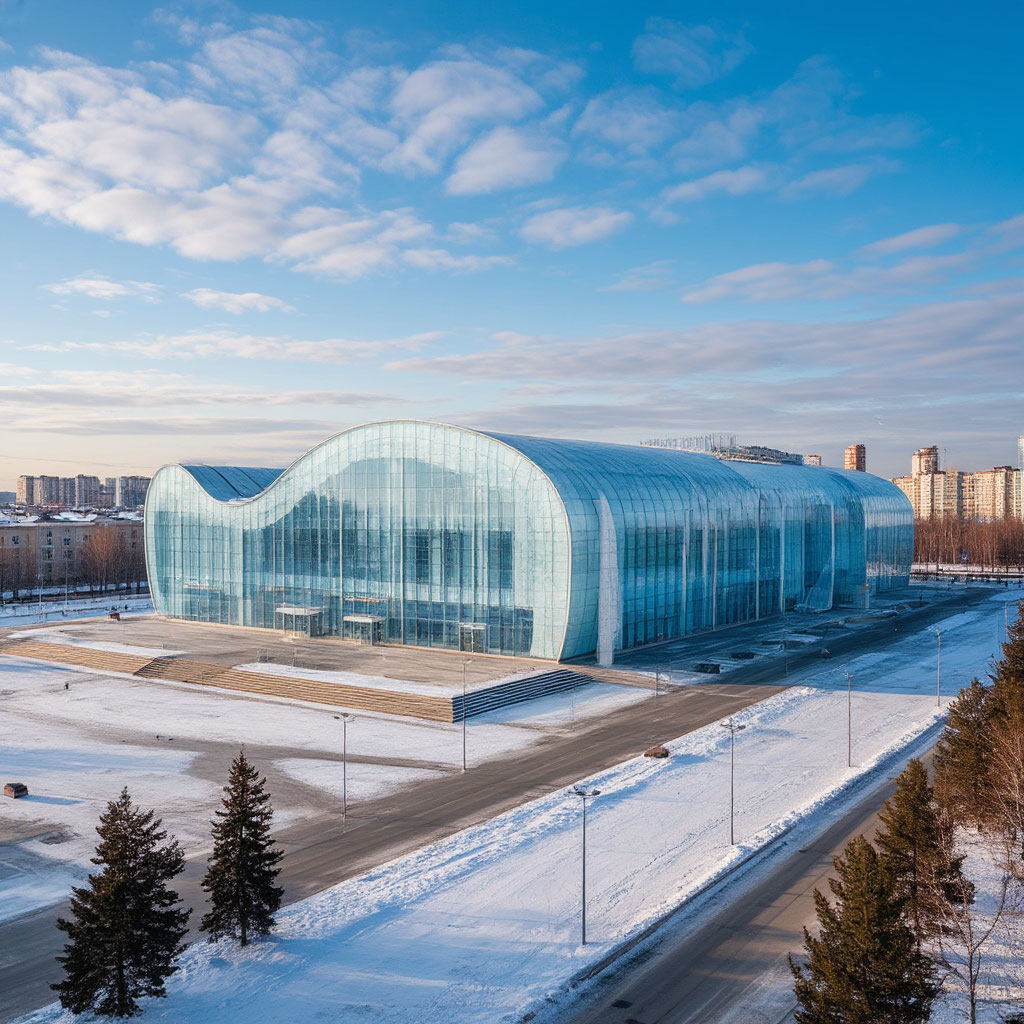
The selection of the contractor is scheduled for October 6, and the winner of the competition will have time until next autumn not only to complete the design work, but also to obtain a positive expert opinion. The initial contract value is 20 million rubles, which reflects the seriousness and scale of the upcoming work.
The construction of the Ice Palace in Krasnoyarsk will have a significant impact on companies involved in industrial refrigeration equipment. The emergence of a new sports facility of this scale will create demand for specialized equipment necessary to maintain the ice surface and maintain a comfortable temperature inside the building. This will open up new business opportunities and stimulate the development of the industry in the region.
Specialized industrial refrigeration equipment is required for the operation of an ice palace. The key elements are:
Refrigeration unit: The heart of an ice arena, providing the necessary temperature for ice formation and preservation. Ammonia or freon refrigeration units are commonly used. Characteristics: High refrigeration capacity (from hundreds of kilowatts to several megawatts), reliability, energy efficiency, and automatic control and monitoring systems.
Chiller (liquid cooler): Used to cool the coolant (usually an aqueous glycol or salt solution) that circulates through the pipes under the ice slab. Characteristics: high efficiency, precise temperature control, corrosion resistance, and frost protection systems.
Ice maker: Provides even freezing of ice by applying thin layers of water in succession. Features: adjustable ice thickness, even application, automatic cleaning and water preparation systems.
Heat recovery system: Allows you to use the heat generated by the refrigeration unit to heat other areas of the palace (such as locker rooms and stands) or to heat water. Features: high heat exchange efficiency, reduced energy consumption, and environmental friendliness.
Ventilation and air conditioning system: maintains a comfortable microclimate in the building, removes moisture, and prevents condensation on the ice surface and walls. Features: high performance, air filtration systems, humidity control, and low noise levels.
Monitoring and control system: Monitors all parameters of refrigeration equipment operation, provides automatic control of temperature, humidity and other parameters, and allows you to quickly identify and eliminate malfunctions. Features: intuitive interface, remote access, data collection and analysis, integration with other building management systems.
The use of these systems allows for the creation of ideal conditions for training and competitions, as well as ensuring the comfort of spectators. The design and installation of such equipment are subject to high requirements due to the need for reliability, safety, and energy efficiency. The construction of the Ice Palace in Krasnoyarsk will undoubtedly stimulate the development and implementation of new technologies in the field of industrial refrigeration.




In December 2025, Copeland—a global leader in compressor manufacturing—unveiled a new development: a CO₂ scroll compressor featuring Dynamic Vapor Injection (DVI) technology. This milestone marked a significant step in the evolution of industrial refrigeration equipment, as the combination of the natural refrigerant CO₂ and an advanced vapor injection system opens up new possibilities for enhancing energy efficiency, reducing operating costs, and meeting environmental regulations.
 Выберите размер контейнера: Температурный режим: Новый или Б/У: | Прайс-лист на рефрижераторные контейнеры Вы выбрали: 40 футовые, низкотемпературные, новые 
| ||||||||||||||||||||||||||||||||||||||||||||||||||||




 Telegram

