
The Kaluga Region is becoming a platform for the implementation of an ambitious agro-industrial project. The Rakwon Corporation from the DPRK intends to build a modern meat processing plant in the region. The plans were announced during a visit by a North Korean delegation led by General Director Kim Sen-ir. The goal is to strengthen interstate cooperation and launch an industrial production facility focused on meat processing.
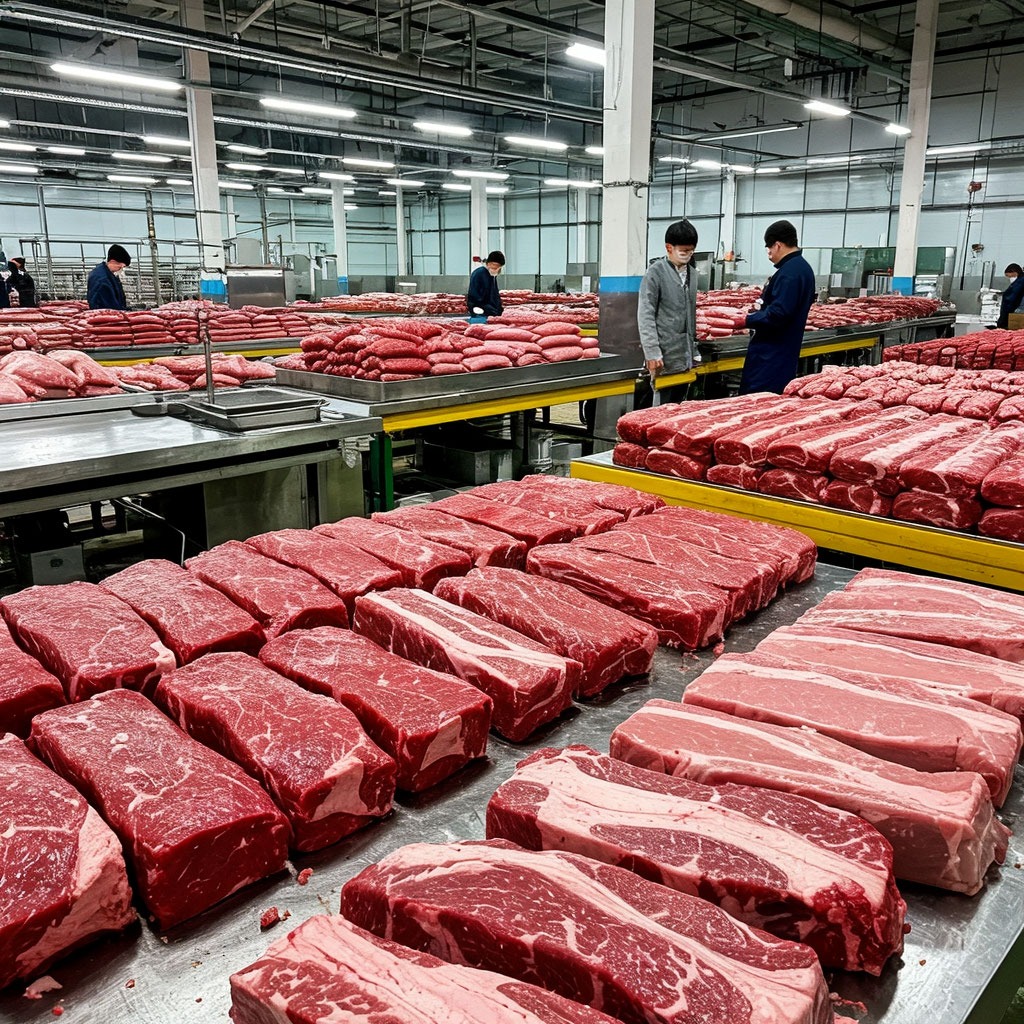
The regional government noted that the Kaluga region has a strong scientific and production potential in the agricultural sector, and this visit was an important step towards developing practical cooperation. The construction of the plant is not just an investment in production capacity. It is the launch of a chain that will inevitably affect related industries, including the industrial refrigeration equipment sector. Without a reliable cooling system, any meat processing plant cannot function properly, from receiving raw materials to storing finished products.
What industrial refrigeration equipment will be in demand at such a facility, and how will it affect the supplier companies?
1. Shock freezing systems (freezing tunnels and slab machines)
This is the basis. Immediately after slaughter and butchering, the meat must be quickly cooled to sub-zero temperatures. Shock freezing prevents the growth of bacteria and preserves the fiber structure.
2. Cooling and storage chambers (refrigerated warehouses)
After primary processing, the meat is sent to cooling chambers (for "ripening") or to freezing chambers.
3. Equipment for cooling technological processes
Meat processing requires maintaining the temperature not only of the product, but also of the premises.
4. Remote monitoring and automation systems
The modern Rakvon plant cannot operate without digital refrigeration control.
How will this affect companies that produce industrial refrigeration equipment?
The construction of such an object is the creation of a complete refrigeration cycle. For suppliers, this means a sharp increase in demand for comprehensive solutions:
Thus, the Rakvon project in the Kaluga region will become a catalyst for the entire regional B2B market of industrial refrigeration. Companies that can offer not just a single piece of equipment, but an integrated solution with high efficiency and low operating costs, will win the supply tenders. The launch of the plant is expected to create up to 300-400 jobs and increase the market capacity for industrial refrigeration equipment in the region by 15-20% over the next two years.




In December 2025, Copeland—a global leader in compressor manufacturing—unveiled a new development: a CO₂ scroll compressor featuring Dynamic Vapor Injection (DVI) technology. This milestone marked a significant step in the evolution of industrial refrigeration equipment, as the combination of the natural refrigerant CO₂ and an advanced vapor injection system opens up new possibilities for enhancing energy efficiency, reducing operating costs, and meeting environmental regulations.
 Выберите размер контейнера: Температурный режим: Новый или Б/У: | Прайс-лист на рефрижераторные контейнеры Вы выбрали: 40 футовые, низкотемпературные, новые 
| ||||||||||||||||||||||||||||||||||||||||||||||||||||




 Telegram

