
The Kaluga Region continues to strengthen its position as a center of sports activity. By the end of this year, the construction of the second phase of the hotel complex will be completed at the Kaluzhniky Sports Park, increasing the number of rooms by 32. However, the development of the park is not stopping there. Plans include the construction of a food service facility for guests, a rehabilitation center, and, most importantly for the development of winter sports, an indoor ice arena. Konstantin Kozhevnikov, General Director of Kaluzhniky LLC, announced this at a meeting of the regional government on September 8. The opening of a new ice rink will be a significant event for the region, opening up new opportunities for the development of ice hockey, figure skating, and other ice sports.
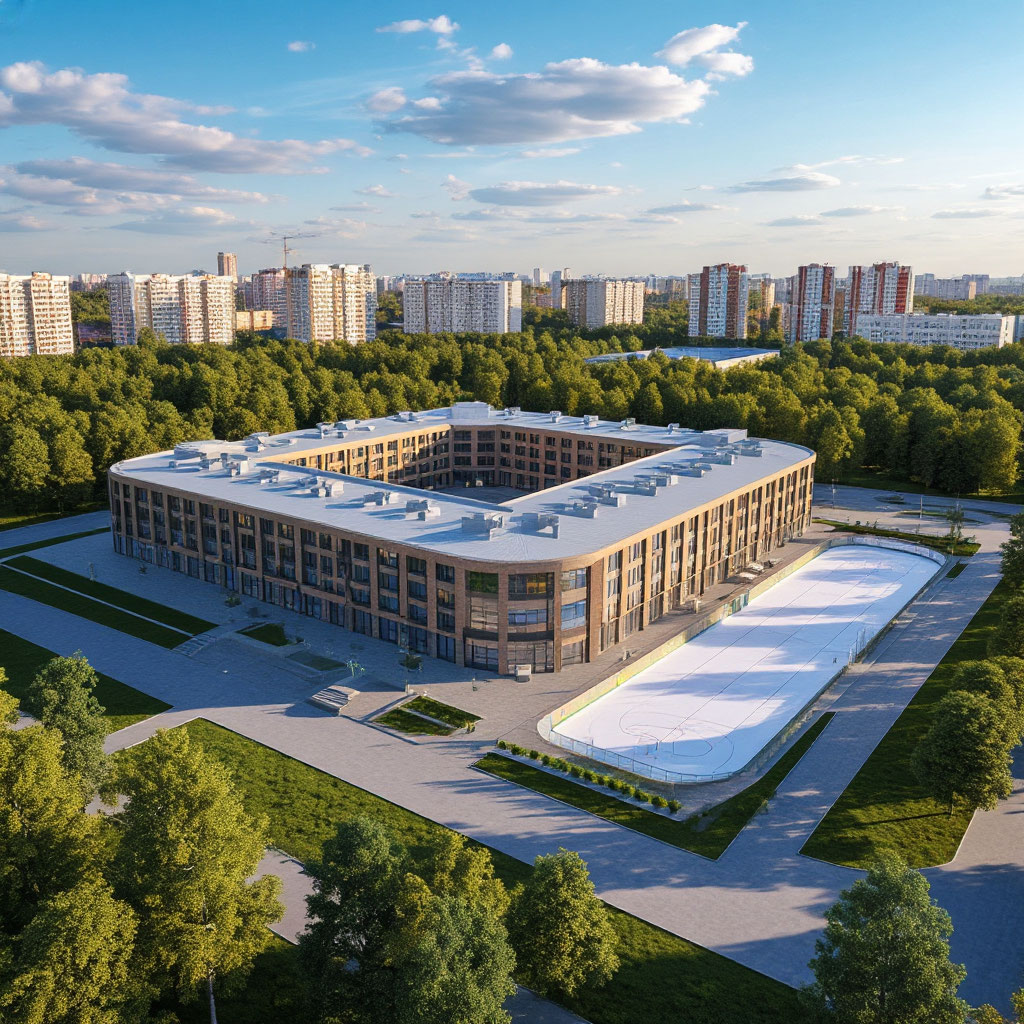
The new ice arena in Kaluzhniks is not only a joy for athletes and outdoor enthusiasts, but also an incentive for the development of related industries. One of the beneficiaries will be the industrial refrigeration equipment sector. The construction of such an object is a complex engineering project that requires the use of advanced technologies and high-quality equipment to ensure the stable and efficient operation of the ice surface.
The construction of the ice arena will undoubtedly have a positive impact on companies specializing in the supply, installation, and maintenance of industrial refrigeration equipment. The increase in the number of such facilities in the region means an expansion of the market and new opportunities for growth. We can expect an increase in demand for qualified professionals in this field, which in turn will contribute to the development of specialized education and the improvement of professional skills.
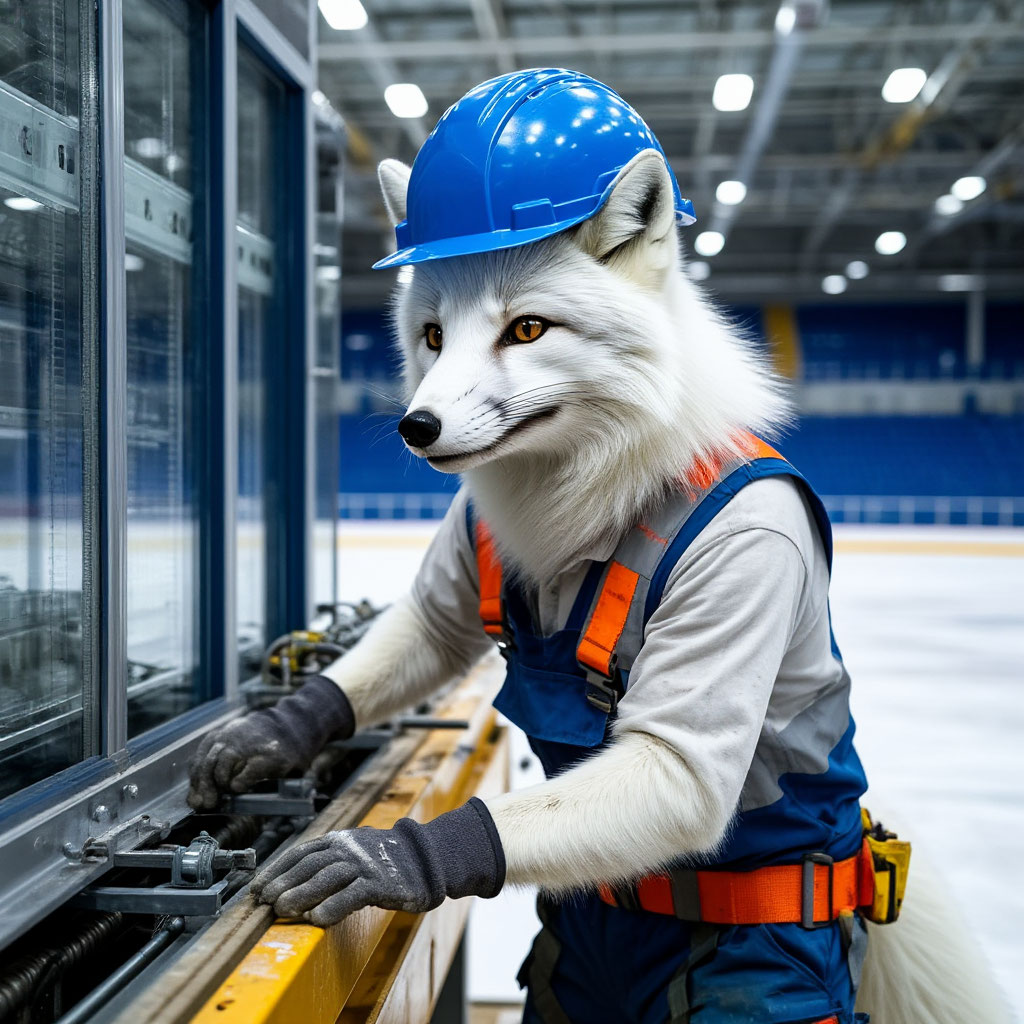
To ensure the functioning of an ice arena, a whole range of industrial refrigeration equipment is required. Here are just a few of its key elements, their functions, and characteristics:
Chiller-type refrigeration unit. This is the heart of any ice arena. The chiller is designed to cool the coolant (usually a glycol solution), which is circulated through a system of pipes under the ice slab. The cooled coolant removes heat from the slab, maintaining the ice temperature at the desired level (between -5 and -8 degrees Celsius).
The piping system under the ice slab. It is a complex network of pipes laid in the concrete base of the ice arena. These pipes circulate cooled heat transfer fluid.
Heat carrier circulation pump stations. They ensure continuous circulation of the cooled heat carrier through the pipeline system.
Air dehumidification system. Prevents condensation on the ice surface, which can degrade its quality.
Heat recovery systems. They allow you to use the heat generated by refrigeration equipment to heat the arena premises or for other purposes.
Automated control and monitoring system. Allows you to monitor all refrigeration equipment parameters in real time, promptly respond to any deviations from the norm, and optimize energy consumption.
The construction of an ice arena in Kaluzhniks is an important step in the development of the region's sports infrastructure. The use of modern industrial refrigeration equipment not only ensures high-quality ice surfaces but also contributes to the efficiency and sustainability of the facility. This project will undoubtedly serve as a catalyst for the growth of Kaluga-based companies specializing in the design, installation, and maintenance of such systems, creating new job opportunities and contributing to the economic development of the region.




In December 2025, Copeland—a global leader in compressor manufacturing—unveiled a new development: a CO₂ scroll compressor featuring Dynamic Vapor Injection (DVI) technology. This milestone marked a significant step in the evolution of industrial refrigeration equipment, as the combination of the natural refrigerant CO₂ and an advanced vapor injection system opens up new possibilities for enhancing energy efficiency, reducing operating costs, and meeting environmental regulations.
 Выберите размер контейнера: Температурный режим: Новый или Б/У: | Прайс-лист на рефрижераторные контейнеры Вы выбрали: 40 футовые, низкотемпературные, новые 
| ||||||||||||||||||||||||||||||||||||||||||||||||||||




 Telegram

