
Changing the established temperature conditions for storing frozen food products is a matter that requires careful analysis and comprehensive evaluation. Traditionally, a temperature of -18°C has been considered the gold standard for long-term storage of frozen food products, as it slows down biochemical reactions and microbial activity, thereby preserving the quality and safety of the products. However, in the context of changing economic realities and the desire to optimize energy consumption, the question arises as to whether it is acceptable to increase the freezing temperature to -15°C. Let's explore the arguments for and against this decision.quot; based on an expert assessment by the International Institute of Refrigeration (IIR).
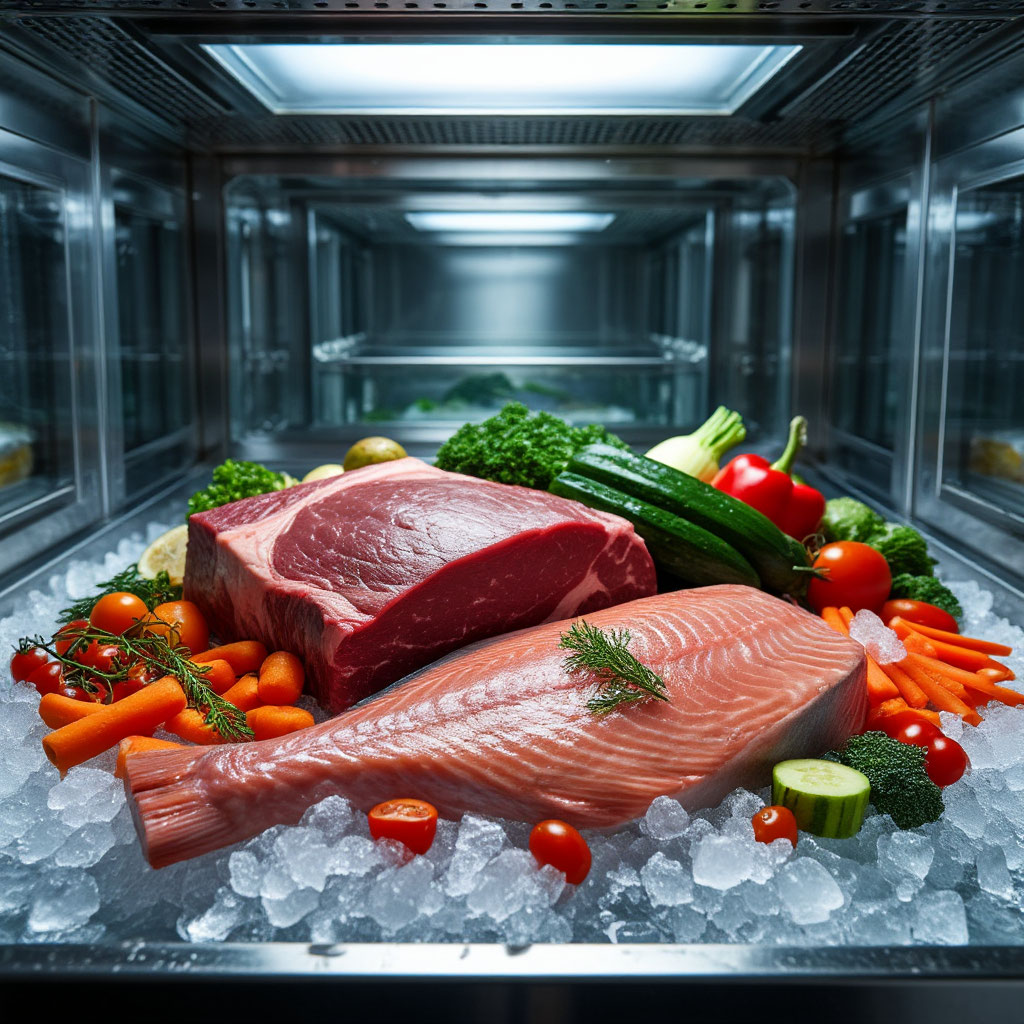
The main argument in favor of increasing the freezing temperature is the potential energy savings. Maintaining a lower temperature requires more energy for cooling and freezing. Increasing the temperature by just 3°C can lead to a significant reduction in the energy consumption of refrigeration equipment, which is particularly important for large food processing plants and retail chains. Reducing energy consumption not only reduces operational costs but also contributes to reducing greenhouse gas emissions, which aligns with current sustainability trends.
In addition, it is worth considering that modern freezing and packaging technologies have significantly improved compared to those available when the -18°C standard was established. Faster freezing and the use of barrier packaging materials help to minimize product quality loss even at slightly higher storage temperatures.
Despite the economic benefits, increasing the freezing temperature comes with certain risks to food quality and safety. At higher temperatures, the rate of biochemical reactions, such as lipid oxidation and enzymatic degradation, increases. This can lead to a deterioration in the taste, odor, texture, and nutritional value of food products. For example, fats may become rancid, vegetables may lose their color and firmness, and proteins may denature.
Moreover, an increase in temperature can promote the growth of certain microorganisms, although their activity is still significantly reduced at -15°C. However, if the temperature is not maintained properly or if the production process is not adequately hygienic, the risk of pathogenic microorganisms increasing increases. This is particularly true for products with high moisture and nutrient content, such as meat, fish, and dairy products.
Finally, changes in storage temperature can affect the shelf life of frozen products. If a product was originally designed to be stored at -18°C, an increase in temperature to -15°C can shorten the shelf life, which in turn can increase food waste.
The International Institute of Refrigeration (IIR) is a reputable organization dedicated to refrigeration engineering and technology. IIR experts recognize the need to strike a balance between energy efficiency and food safety. In their publications and recommendations, they emphasize that raising the freezing temperature to -15°C may be acceptable under certain conditions:
Increasing the freezing temperature from -18°C to -15°C is a complex issue that requires a balanced approach and scientific justification. While the economic benefits of reducing energy consumption are clear, it is important to consider the risks to food quality and safety. The IIR's expert assessment emphasizes that increasing the temperature may be acceptable under strict conditions and with careful risk analysis. Ultimately, the decision to increase the freezing temperature should be based on scientific evidence and the needs of consumers who want to consume high-quality and safe food products. It is important to remember that food safety should always be a priority.




In December 2025, Copeland—a global leader in compressor manufacturing—unveiled a new development: a CO₂ scroll compressor featuring Dynamic Vapor Injection (DVI) technology. This milestone marked a significant step in the evolution of industrial refrigeration equipment, as the combination of the natural refrigerant CO₂ and an advanced vapor injection system opens up new possibilities for enhancing energy efficiency, reducing operating costs, and meeting environmental regulations.
 Выберите размер контейнера: Температурный режим: Новый или Б/У: | Прайс-лист на рефрижераторные контейнеры Вы выбрали: 40 футовые, низкотемпературные, новые 
| ||||||||||||||||||||||||||||||||||||||||||||||||||||




 Telegram

