
Irkutsk, a city known for its rich industrial heritage and proximity to the unique Lake Baikal, is preparing to take the lead in the digital revolution. Cloud X plans to complete the construction of a massive data center, the Irkutsk Region Data Center No. 1, by 2030. The project, which has received a positive conclusion from the State Expert Council for Project Documentation and Engineering Surveys, promises to be one of the largest and most innovative in the country.
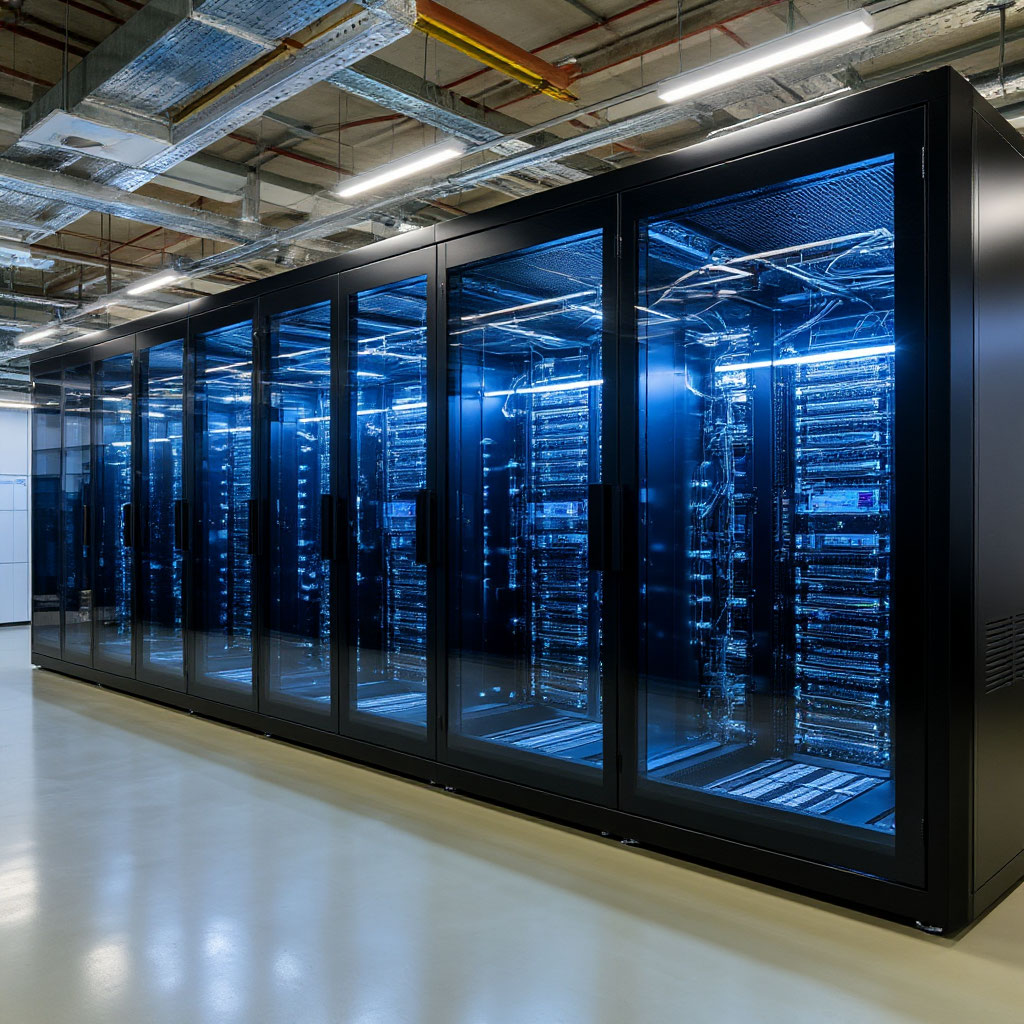
This project is not just another building with servers. It is Russia's first hyper-scalable data center, designed specifically with the needs of AI services and cloud services in mind. Such facilities have increased requirements for all engineering systems, from the structured cabling system to power supply and, of course, energy efficiency.
The construction of such a giant will have a significant impact on the region's economy, creating new jobs and stimulating the development of related industries. One of these industries is the production and maintenance of industrial refrigeration equipment. Data centers generate a significant amount of heat due to their high density of computing power. To ensure stable and reliable server operation, it is crucial to maintain an optimal temperature in the premises, which cannot be achieved without efficient cooling systems.
Industrial refrigeration equipment in data centers performs a vital function of maintaining the optimal temperature for the stable operation of server equipment. Overheating of components can lead to malfunctions, reduced performance, and even equipment failure, resulting in downtime and financial losses. Data center cooling systems must provide high reliability, energy efficiency, and scalability to meet the growing demands of the computing infrastructure.
There are several main types of industrial refrigeration equipment used in data centers, each with its own features and advantages:
Chillers: This is perhaps the most common type of refrigeration equipment in a data center. Chillers remove heat from water or glycol solution, which is circulated through the server cooling system. The cooled water is then delivered to the server racks, where it removes heat from the components. There are various types of chillers, including compression, absorption, and adsorption chillers. Specifications: Power from several kilowatts to several megawatts, high efficiency (COP up to 6.0 and higher for modern models), and the ability to use various refrigerants (including environmentally friendly ones).
Fan coils (fan доводчики): Fan coils are used for local cooling of certain areas in the data center, such as server racks or individual rows of equipment. They are small devices that contain a fan and a heat exchanger through which cooled water from the chiller is circulated. Features: Various sizes and capacities, easy installation and maintenance, and the ability to individually adjust the temperature in each area.
Direct-expansion (DX) cooling systems: In DX systems, the refrigerant is evaporated directly near the server equipment, providing more efficient and faster cooling compared to chiller systems. They are often used for cooling individual racks or small rooms. Features: High efficiency under high heat loads, compact size, and easier maintenance compared to chillers. However, DX systems require more careful monitoring of refrigerant leaks.
Free Cooling (Free Cooling): Free cooling uses natural sources of cold, such as outdoor air or water (for example, water from Lake Baikal, subject to environmental regulations), to cool a data center. During cold seasons, free cooling can significantly reduce cooling energy consumption by using cold air or water instead of running chiller compressors. Features: Significant reduction in energy costs, environmental friendliness, and dependence on climate conditions.
Immersion cooling: This is a relatively new technology in which server equipment is immersed directly in a dielectric fluid that removes heat. Immersion cooling provides very high power density and energy efficiency, but requires special equipment and fluids. Characteristics: Ultra-high power density, minimal energy consumption for cooling, high cost of implementation, the need to use specialized fluids.
The construction of a hyper-scalable data center in Irkutsk opens up huge opportunities for companies engaged in the production and maintenance of industrial refrigeration equipment. Firstly, it means a significant increase in demand for equipment and services. Secondly, it is an opportunity to introduce new, more efficient, and environmentally friendly cooling technologies. Thirdly, it is an incentive to develop your own production base and create new jobs in the region.
Companies that can offer innovative cooling solutions, energy efficiency, and environmental sustainability will have a significant competitive advantage in the market. It is important to consider the specific requirements of next-generation data center cooling, including high reliability, scalability, and integration with building management systems.
Thus, the construction of the Cloud X data center in Irkutsk is not only an important step in the development of the region's digital economy, but also a powerful impetus for the development of related industries, including the production of industrial refrigeration equipment. Companies that are ready for innovation and collaboration will be able to fully take advantage of the opportunities that lie ahead and contribute to the creation of a modern and efficient digital center in the heart of Siberia.




In December 2025, Copeland—a global leader in compressor manufacturing—unveiled a new development: a CO₂ scroll compressor featuring Dynamic Vapor Injection (DVI) technology. This milestone marked a significant step in the evolution of industrial refrigeration equipment, as the combination of the natural refrigerant CO₂ and an advanced vapor injection system opens up new possibilities for enhancing energy efficiency, reducing operating costs, and meeting environmental regulations.
 Выберите размер контейнера: Температурный режим: Новый или Б/У: | Прайс-лист на рефрижераторные контейнеры Вы выбрали: 40 футовые, низкотемпературные, новые 
| ||||||||||||||||||||||||||||||||||||||||||||||||||||




 Telegram

