
The decision by the Governor of the Vologda Region, Georgy Filimonov, to build a new ice arena and a sports and recreation center (SRC) in the village of Sheksna is not just another item on the region's social development agenda. It is a signal for a wide range of related industries, particularly for companies specializing in industrial refrigeration equipment. When the decision was announced at the City Council to allocate 600 million rubles for the ice arena and plan to submit an application to the Ministry of Sports in 2027, engineers and refrigeration suppliers began to consider the specifications.
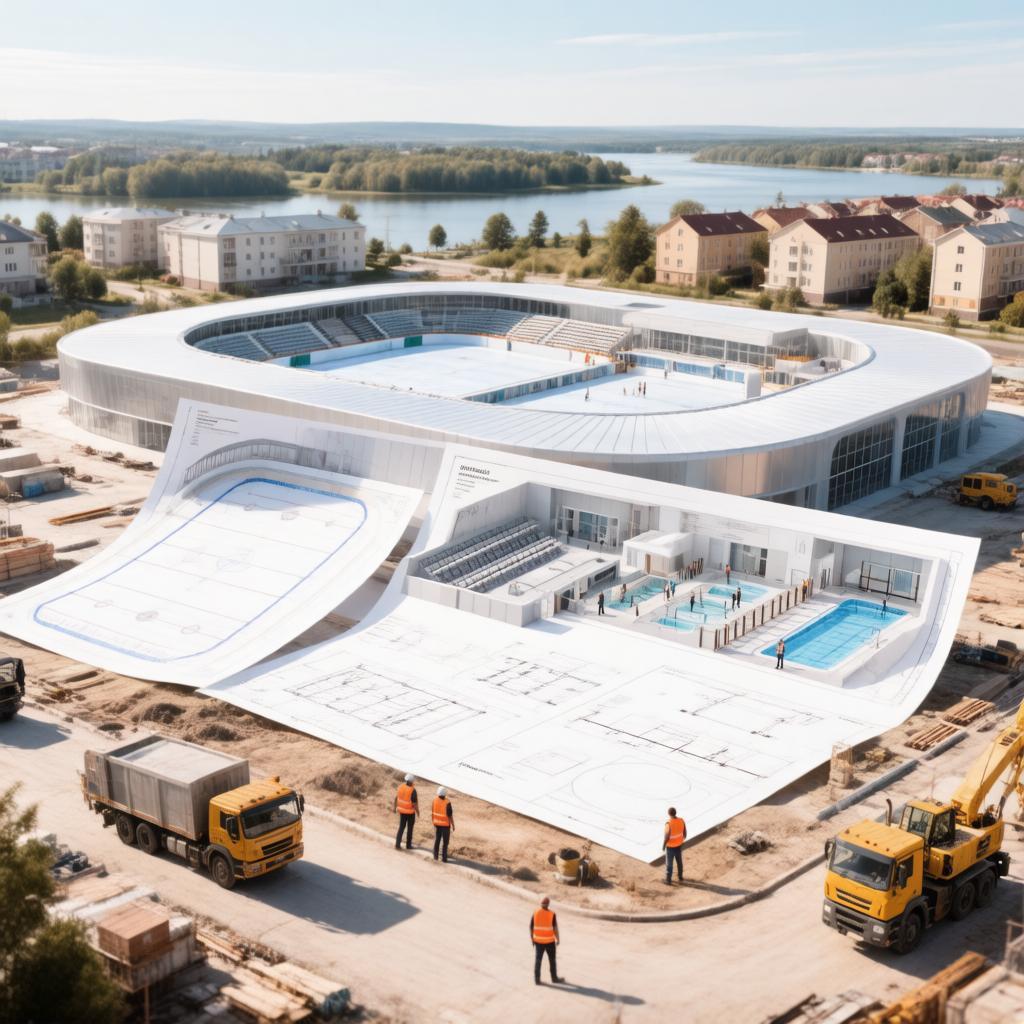
An ice arena is a high-tech facility where the quality of the ice determines everything, from the safety of hockey players to the commercial appeal of mass skating events. Unlike household freezers, an ice arena requires an industrial-grade system that can maintain a stable ice temperature between -5°C and -7°C, while the air temperature in the arena is set at +12°C for spectators and +8°C for athletes. Additionally, the facility must have humidity control to prevent fog and condensation. Without a powerful refrigeration system, an ice arena cannot function effectively.
The Sheksna project will require at least three key types of industrial equipment. The first and most important is screw compressor-based chillers. These are the heart of the system. Screw compressors (such as Bitzer, Mycom, or Russian equivalents) provide a cooling capacity of 200 to 600 kW, depending on the ice area. They work on refrigerants R-404A or R-507, although modern trends dictate the transition to more environmentally friendly R-134a or ammonia (R-717). The task of such a chiller is to cool the intermediate coolant (propylene glycol or a solution of calcium chloride), which is then circulated through the pipes embedded in the concrete slab of the skating rink. The temperature of the coolant supply is usually -12°C to -15°C. Without this unit, the ice will not freeze evenly, and the electricity bills (the arena consumes up to 500-700 kW at peak) may make the project unprofitable.
The second mandatory element is evaporative condensers. In the classic ice rink layout, the heat removed from the ice needs to be released into the atmosphere. Evaporative condensers (such as Evapco or GEA) are more efficient than dry cooling towers, especially in the temperate climate of the Vologda region. They use water and air to dissipate heat. The capacity of such a condenser should match the capacity of the chillers plus 15-20% of excess capacity. For the arena in Sheksna, this will probably be one or two units with a total heat load of about 700-800 kW. An important nuance is anti-icing in winter and protection of the body from corrosion, as the facility is located near the river, and the humidity in the region is high.
The third group is pump stations and coolant distribution systems. Ice is not just a cold slab. Polyethylene or stainless steel coils are laid throughout the ice rink, through which brine is circulated. Pumps must provide a constant flow with high accuracy: the difference in speed in different zones will lead to different thickness and hardness of the ice. The standard for a 60-meter area is from 30 to 50 m³/h of coolant. For the arena in Sheksna, two independent circuits are likely to be designed: one for the main field, and the other for the locker rooms and utility rooms, which also require cooling for the storage of uniforms (thermostats for drying skates and storing equipment at -10°C to -15°C are not considered industrial refrigeration units, but they are still necessary).

However, the construction of an ice arena is only part of the plan. In parallel, a new sports center will be built in Sheksna, and the existing one will be completely renovated. Industrial refrigeration is also relevant for sports centers, albeit on a smaller scale. If a swimming pool is planned in the sports center, then chillers will be required to cool the water in the ventilation (air dehumidifiers) and air conditioning systems. A modern sports center involves the integration of heat pumps, where the refrigeration system of the ice rink or swimming pool simultaneously generates heat for heating the locker rooms and warming the stands. This is especially interesting in Sheksna, as it involves budget financing, and energy efficiency will be one of the criteria for accepting the work.
For companies that supply industrial refrigeration equipment, such projects are a long-term contract with a high added value. It's not just about supplying the units. The design and estimate documentation (DES) for the arena must be completed by the end of the year. At this stage, the cold contractors are already advising the designers: they choose the type of refrigerant (taking into account the tightening requirements for ozone-depleting substances), calculate the heat inflows from solar radiation (the arena is likely to have a transparent roof) and from hundreds of spectators, who emit up to 100 W of heat each. A 10% error in the calculations can cause the ice to melt within an hour of mass skating.
In addition, Governor Georgy Filimonov has set the goal of making ice available to everyone. This means that the system must be as reliable as possible and require minimal human intervention. Modern industrial refrigeration units are equipped with programmable logic controllers (PLCs), which automatically adjust the load based on the time of day, the number of visitors, and the weather forecast. In the Vologda region, where winter lasts for 5-6 months, it is important for the arena to function as both an ice rink and a dry training facility with the ability to switch between modes. This is achieved by using heat pumps in conjunction with chillers, which are known as "reverse" systems.
The cost of 600 million rubles for the construction of the arena itself is an estimate that includes all the engineering systems. Industrial refrigeration accounts for 15% to 25% of the total cost, depending on the supplier. Given that the application to the Ministry of Sports is being submitted for 2027, now is the perfect time for refrigeration equipment manufacturers to step up their efforts: We participate in tenders for the development of design and construction documentation, offer standard solutions for municipal arenas (for example, container chillers that can be installed in 2 months), and prepare service teams in Cherepovets or Vologda, as Sheksna is located an hour away from the regional center.
Finally, the repair of existing FOKs is a separate market for refrigeration specialists. Old Soviet refrigeration machines often use ammonia, which requires special safety measures. Replacing them with modern freon (or ammonia-based systems with automation) can be beneficial for both energy efficiency and safety. For Sheksna, where the industrial base is historically strong (Sheksna Wood Panel Factory and other enterprises), there is a good opportunity to attract local refrigeration specialists by reducing logistics.
The outcome for the industrial refrigeration market is clear: the construction of an ice arena and a sports center in Sheksna is not a one-time event, but part of the region's systematic policy. If the project is implemented efficiently, it will serve as a reference for other municipalities in the Vologda Region, leading to an increase in demand for the design, supply, and installation of refrigeration equipment for sports facilities in the next 3-5 years. Companies that provide the optimal solution in terms of price and energy efficiency for Sheksna will have an advantage in future tenders throughout the North-Western Federal District.




In December 2025, Copeland—a global leader in compressor manufacturing—unveiled a new development: a CO₂ scroll compressor featuring Dynamic Vapor Injection (DVI) technology. This milestone marked a significant step in the evolution of industrial refrigeration equipment, as the combination of the natural refrigerant CO₂ and an advanced vapor injection system opens up new possibilities for enhancing energy efficiency, reducing operating costs, and meeting environmental regulations.
 Выберите размер контейнера: Температурный режим: Новый или Б/У: | Прайс-лист на рефрижераторные контейнеры Вы выбрали: 40 футовые, низкотемпературные, новые 
| ||||||||||||||||||||||||||||||||||||||||||||||||||||




 Telegram

