
The Vyborg district of St. Petersburg is preparing to become a center of attraction for sports enthusiasts: a modern sports complex with an ice arena will soon appear on Toreza Avenue. The project, approved by the Committee for Urban Planning and Architecture, promises to become a real highlight of the district and provide residents with ample opportunities for sports and outdoor activities. The ice field, 500-seat stands, dance halls, and other specialized spaces demonstrate the scale and versatility of the future complex.
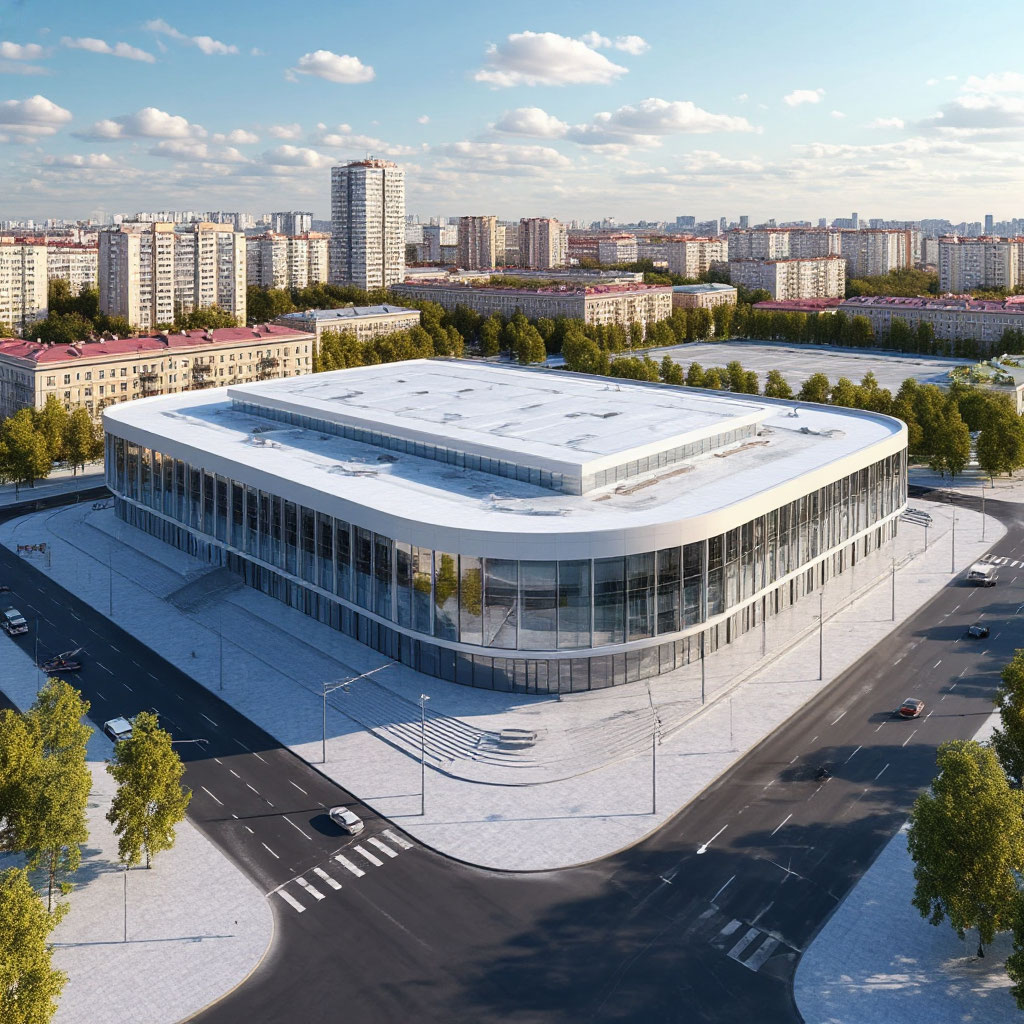
However, behind the glamour and spectacle of a new ice arena lies an entire industry that ensures its smooth operation. In particular, the construction and maintenance of such facilities have a significant impact on companies specializing in industrial refrigeration equipment. After all, creating and maintaining a high-quality ice surface is a complex process that requires reliable and efficient refrigeration.

Industrial Refrigeration Equipment for Ice Arenas: The Key to Perfect Ice
An ice arena is one of the most demanding consumers of industrial refrigeration. A complex of specialized equipment is used to create and maintain an ice surface that meets high quality standards. Let's consider the main components of this system:
Chillers: This is the heart of the refrigeration unit, which is responsible for cooling the coolant (usually glycol or ethylene glycol solution) that circulates in the pipes located under the ice plate. Absorption – type chillers, compression chillers, and screw chillers are the most common solutions.
Pump stations: They ensure the circulation of cooled coolant in a closed loop between the chiller and the ice slab cooling system.
Cold distribution system (ice slab): This is a network of pipes laid under the ice surface, through which cooled coolant circulates. This system is responsible for directly cooling the water and forming the ice cover.
Automatic control and monitoring system: Provides automatic maintenance of the optimal operating parameters of the refrigeration unit, such as the temperature of the coolant, flow rate, pressure, etc.
Heat recovery system: Allows you to use the heat generated by refrigeration equipment to heat the arena's rooms, warm water, or meet other needs. This significantly improves the energy efficiency of the facility.
Air Dehumidifiers: Condensation of moisture on the ice surface can lead to fog formation and deterioration of the ice quality. Air dehumidifiers maintain an optimal level of humidity in the arena premises.
The Impact of Ice Arena Construction on Industrial Refrigeration Companies
The construction of a new sports complex with an ice arena in the Vyborg district is an excellent opportunity for companies engaged in the supply, installation, and maintenance of industrial refrigeration equipment. The demand for:
Thus, the construction of an ice arena on Toreza Avenue will not only become a new sports center for residents of the Vyborg district, but will also give impetus to the development of the industrial refrigeration industry in St. Petersburg. This is an example of how the development of sports stimulates technological progress and creates new business opportunities.




In December 2025, Copeland—a global leader in compressor manufacturing—unveiled a new development: a CO₂ scroll compressor featuring Dynamic Vapor Injection (DVI) technology. This milestone marked a significant step in the evolution of industrial refrigeration equipment, as the combination of the natural refrigerant CO₂ and an advanced vapor injection system opens up new possibilities for enhancing energy efficiency, reducing operating costs, and meeting environmental regulations.
 Выберите размер контейнера: Температурный режим: Новый или Б/У: | Прайс-лист на рефрижераторные контейнеры Вы выбрали: 40 футовые, низкотемпературные, новые 
| ||||||||||||||||||||||||||||||||||||||||||||||||||||




 Telegram

