
Nizhny Novgorod is preparing for a large-scale transformation of its sports infrastructure. The planned construction of a sports and recreation center (SRC) on the site of the Vodnik stadium will not only become a new point of attraction for athletes and active lifestyle enthusiasts, but will also provide a significant boost to the development of the industrial refrigeration equipment market in the region. The modern sports complex, featuring an indoor ice arena, a year-round football field, and multifunctional areas, places high demands on cooling and climate control systems. The construction of such an object is a significant incentive for companies specializing in the design, supply, installation, and maintenance of industrial refrigeration systems.
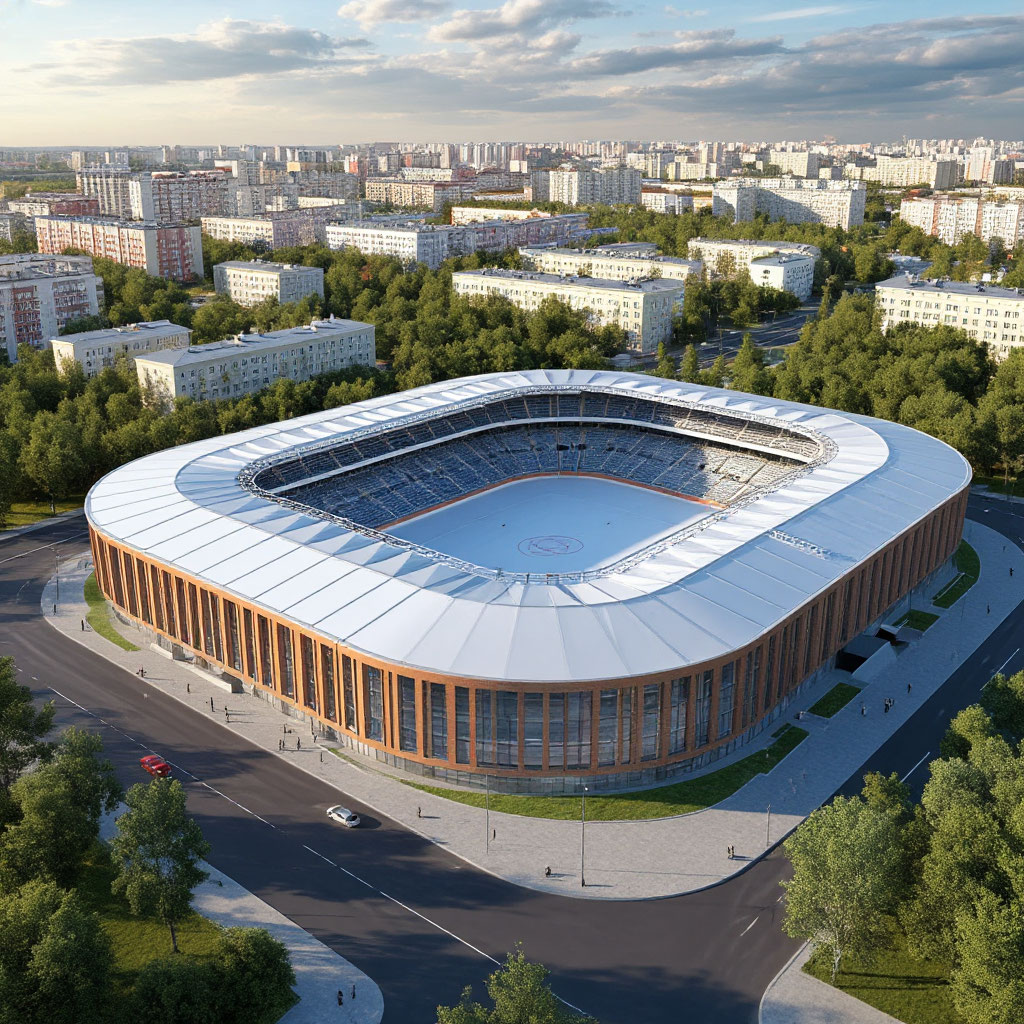
The construction of the FOK is a major project that requires a comprehensive approach to cold supply. The ice arena and the air conditioning system of the entire complex will have different cold requirements. This means that there will be an increased demand for specialized services and equipment. Local companies in the industrial cold supply industry will have the opportunity to participate in tenders for the supply and installation of equipment, as well as for further service support. This will undoubtedly increase competition, which will drive improvements in technology and the quality of services provided. In addition, the successful implementation of the project will create a positive image for the contractor companies, confirming their competence and experience in implementing large-scale projects.

The heart of the ice arena is the cooling system, which ensures that the ice is in perfect condition for training and competitions. It includes several key elements:
Refrigeration unit: The main element that generates cold. Ammonia (NH3), freon, or other modern refrigerants with low environmental impact can be used as refrigerants.
Ice slab cooling system (chiller): A system of pipelines located directly under the ice surface, through which cooled coolant is circulated.
Heat recovery system: Allows you to use the heat generated by the refrigeration unit for heating or hot water supply in the complex.
Automatic Control and Management System: Provides automatic operation of the entire cooling system, maintains the set parameters, and monitors the equipment status.
Air dehumidifiers: Prevent condensation on the ice surface and arena walls.
The implementation of the FOK construction project on the site of Vodnik is not only an investment in the development of sports, but also an opportunity for companies operating in the field of industrial refrigeration equipment to demonstrate their capabilities and contribute to the creation of a modern and comfortable sports facility. Proper design, the use of advanced technologies, and reliable service support are the key to the successful and long-lasting operation of the ice arena.




In December 2025, Copeland—a global leader in compressor manufacturing—unveiled a new development: a CO₂ scroll compressor featuring Dynamic Vapor Injection (DVI) technology. This milestone marked a significant step in the evolution of industrial refrigeration equipment, as the combination of the natural refrigerant CO₂ and an advanced vapor injection system opens up new possibilities for enhancing energy efficiency, reducing operating costs, and meeting environmental regulations.
 Выберите размер контейнера: Температурный режим: Новый или Б/У: | Прайс-лист на рефрижераторные контейнеры Вы выбрали: 40 футовые, низкотемпературные, новые 
| ||||||||||||||||||||||||||||||||||||||||||||||||||||




 Telegram

