
In 2026, the city of Kasimov in the Ryazan region will become home to a modern ice arena, which will undoubtedly become a center of attraction for sports enthusiasts and a growth point for the local economy. This important infrastructure project will not only provide opportunities for residents to engage in ice hockey and figure skating, but also have a significant impact on the industrial refrigeration equipment market.
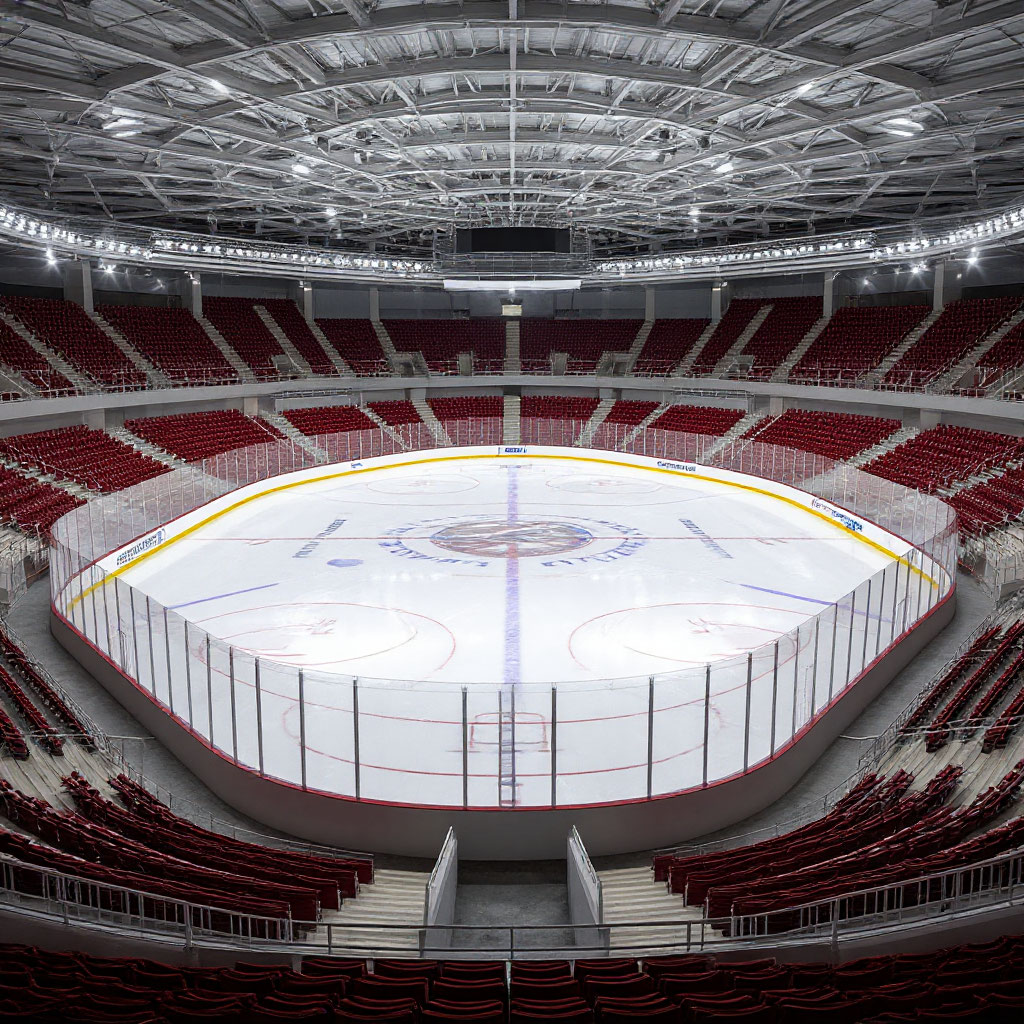
The construction of the ice arena will become a catalyst for the development of children's and youth sports in the region. The emergence of a modern venue will allow for high-level training and competitions, attracting talented athletes and promoting a healthy lifestyle. Additionally, the arena will serve as a venue for cultural and entertainment events, enhancing the city's appeal to tourists and investors.
However, in addition to the social and sports aspects, the construction of an ice arena also has important economic implications. This is particularly relevant for companies specializing in industrial refrigeration equipment. The quality of ice and, consequently, the safety and comfort of athletes and spectators, directly depend on the reliable and efficient operation of refrigeration systems.
To ensure the operation of an ice arena, specialized industrial refrigeration equipment is required that meets high requirements for performance, energy efficiency, and reliability. Let's explore the main types of equipment and their functions:
Chillers: These are the basis of the ice arena's cooling system. Chillers cool the coolant (usually a glycol solution or salt solution), which is then circulated through the pipes located beneath the ice slab.
Characteristics: The capacity of ice arena chillers varies depending on the size of the site, but usually ranges from several hundred kilowatts to several megawatts. Important parameters are the energy efficiency ratio (EER) or seasonal productivity ratio (SEER), the type of refrigerant used (environmentally friendly options such as ammonia or CO2 are preferred), and the availability of automatic control and monitoring systems.
Application: Maintaining a constant temperature of the coolant circulating under the ice slab.
Ice Generators: Although the ice in the arena is created by freezing water on the surface, ice generators are used to maintain the required thickness and quality of the ice, as well as to restore it after training or competitions.
Specifications: Ice generators for ice arenas are typically special systems that spray water onto the ice surface, freezing it into a thin layer. Important specifications include the capacity (the amount of ice that can be produced in a given time), the uniformity of water distribution, and the availability of water purification and filtration systems.
Application: Maintaining optimal ice thickness and quality.
Pump stations: Provide circulation of the coolant between the chillers and the cooling system under the ice slab.
Specifications: The pump capacity must match the capacity of the chillers and the size of the cooling system. Important parameters include pressure, flow rate, and the availability of frequency control systems to optimize energy consumption.
Application: Circulation of the coolant in the cooling system.
Automatic control and monitoring systems: Provide control and management of all refrigeration system components, as well as real-time monitoring of their operation.
Specifications: Modern control and monitoring systems allow you to track the coolant temperature, system pressure, and energy consumption, as well as identify and resolve malfunctions. It is important to have an intuitive interface and the ability to integrate with other building management systems.
Application: Ensuring optimal operation of the refrigeration system, reducing energy consumption, and preventing accidents.
Ventilation systems: They ensure the optimal microclimate in the ice arena by removing excess heat and moisture generated during the operation of refrigeration equipment.
Specifications: The performance of ventilation systems should correspond to the size of the room and the number of spectators. It is important to have filters for air purification, as well as heat recovery systems to reduce energy consumption.
Application: Maintaining comfortable conditions for athletes and spectators, and removing excess heat and moisture.

The construction of the ice arena in Kasimov opens up new opportunities for companies involved in industrial refrigeration equipment. There is a need for the supply, installation, maintenance, and repair of equipment, which creates competition and stimulates the development of the industry. Companies that offer innovative and energy-efficient solutions will have an advantage in the market.
Thus, the construction of an ice arena in Kasimov is not only an important step in the development of sports and culture in the region, but also a significant incentive for the development of the industrial sector, particularly for companies specializing in industrial refrigeration equipment. This project will be a new stage in the development of the city and will attract investments and create new jobs.




In December 2025, Copeland—a global leader in compressor manufacturing—unveiled a new development: a CO₂ scroll compressor featuring Dynamic Vapor Injection (DVI) technology. This milestone marked a significant step in the evolution of industrial refrigeration equipment, as the combination of the natural refrigerant CO₂ and an advanced vapor injection system opens up new possibilities for enhancing energy efficiency, reducing operating costs, and meeting environmental regulations.
 Выберите размер контейнера: Температурный режим: Новый или Б/У: | Прайс-лист на рефрижераторные контейнеры Вы выбрали: 40 футовые, низкотемпературные, новые 
| ||||||||||||||||||||||||||||||||||||||||||||||||||||




 Telegram

