
The Head of Crimea, Sergey Aksyonov, has announced plans to build a modern ice rink in Feodosia. This long-awaited project, which was discussed during a meeting with renowned figure skater Ilya Averbukh, is intended to be an important step in the development of winter sports and outdoor activities in the region. Construction is scheduled to begin in 2026, and design work is already underway. The construction of the ice arena will not only be a significant event for the residents of Feodosia and the entire Crimea, but it will also open up new opportunities for companies specializing in industrial refrigeration equipment.
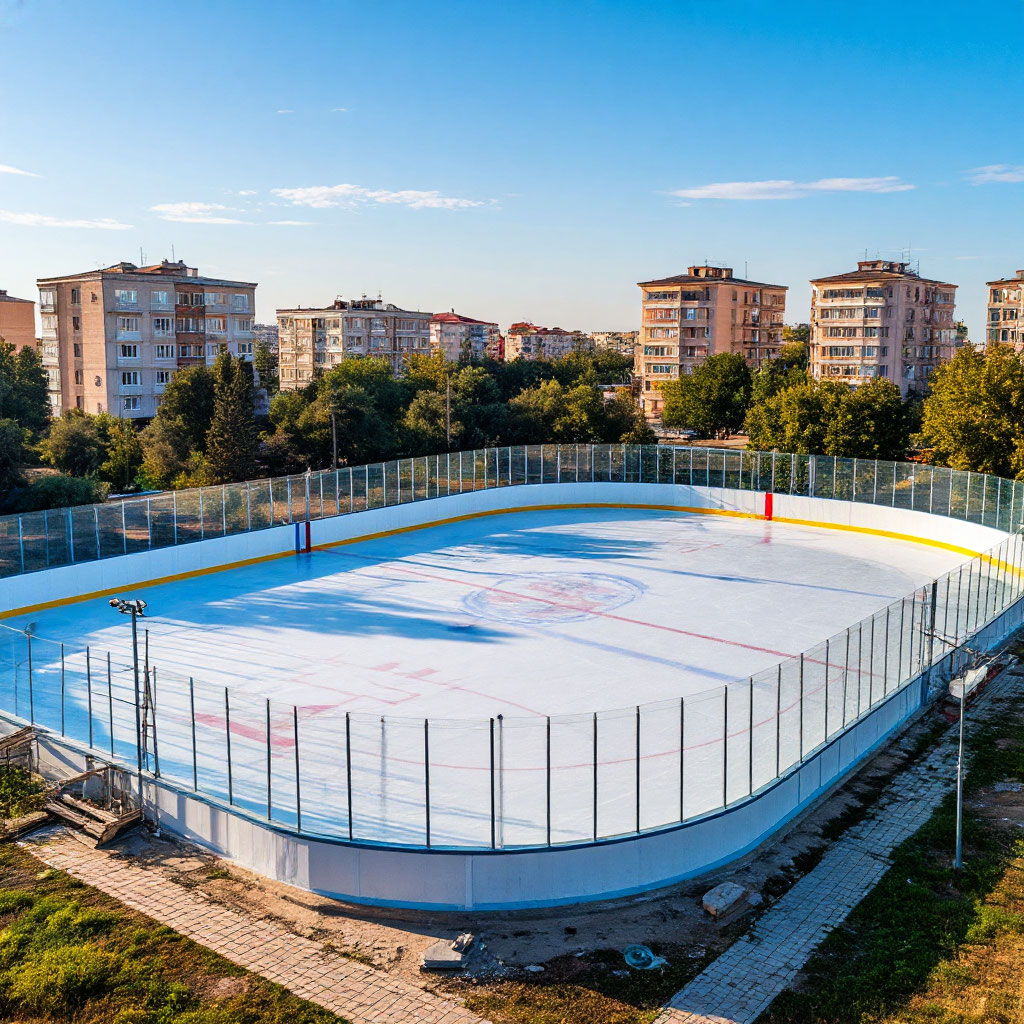
The construction of an ice rink is a complex technological process that requires the use of high-quality refrigeration equipment. Creating and maintaining an ice surface, ensuring a comfortable temperature in the hall and in the sub-stand areas, all of this is impossible without modern cooling systems. The commissioning of a new facility in Feodosia will undoubtedly have a positive impact on the workload of enterprises that produce and maintain industrial refrigeration equipment.
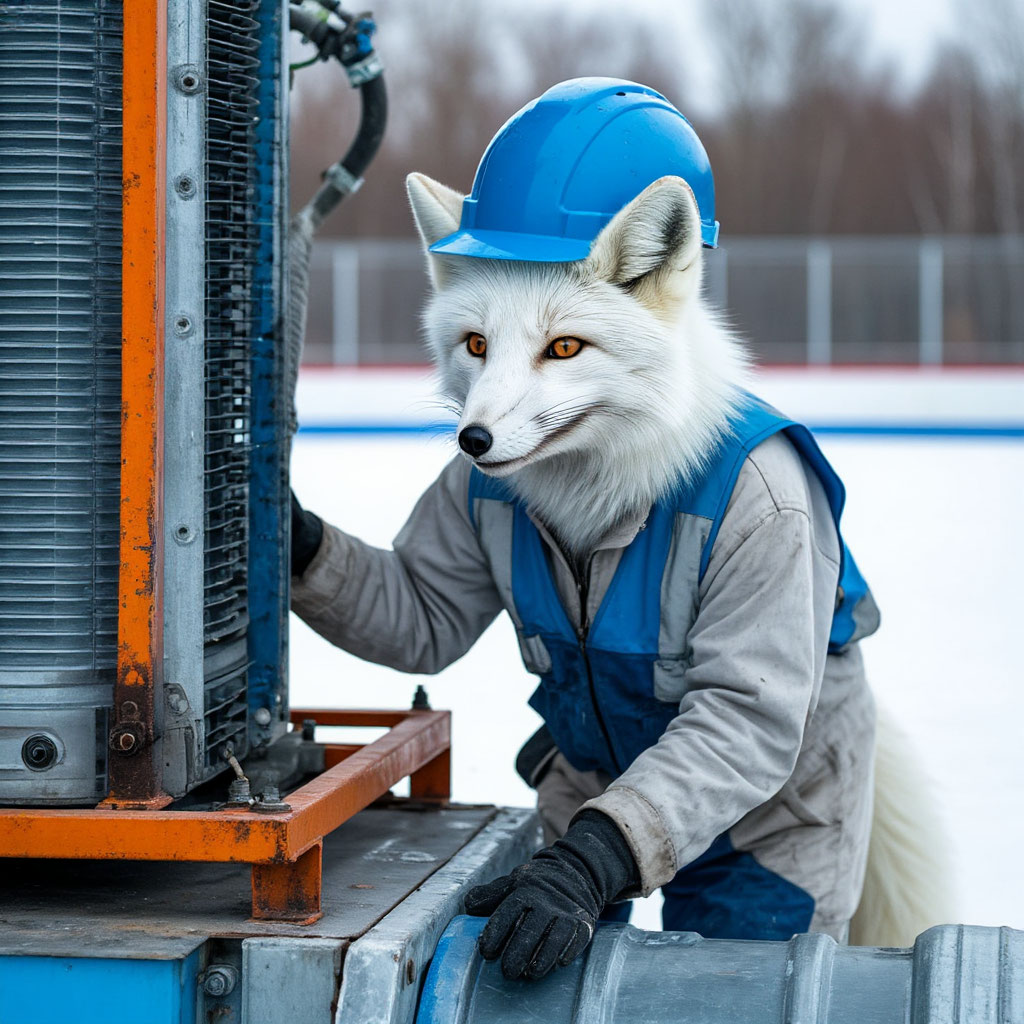
Industrial refrigeration equipment used in the construction of ice rinks:
There are several key elements of a refrigeration system, each of which performs an important function:
Refrigeration unit (chiller): The heart of the system, designed to cool the coolant (most commonly a glycol solution) to the required temperature (typically between -8°C and -12°C). Refrigeration units for ice arenas are characterized by high performance and reliability. Freons (R404A, R507A, R134a) or ammonia (NH3) are often used as refrigerants, depending on the scale of the project and environmental requirements. Modern chillers are equipped with automatic control systems that allow you to accurately maintain the set temperature and optimize energy consumption.
Pipeline system: It is used to circulate cooled coolant from the chiller to the cooling plates located under the ice field. The pipelines are made of materials that are resistant to low temperatures and corrosion, such as high-density polyethylene (HDPE). Proper insulation of the pipelines is important to minimize heat loss and improve the efficiency of the system.
Cooling plates (ice plate): These are a system of pipes filled with concrete or other heat-conducting material, above which an ice surface is formed. The cooled heat carrier circulates through the pipes, removing heat from the concrete and freezing the water on top. Modern ice plates ensure uniform temperature distribution across the entire ice rink surface, improving ice quality and safety.
Ventilation and air conditioning system: Maintaining the optimal temperature and humidity levels in the ice rink is crucial. The ventilation system ensures a constant supply of fresh air, removing excess moisture and heat generated by spectators and lighting equipment. It also prevents condensation on walls and ceilings. The air conditioning system not only maintains a comfortable temperature but also controls the humidity levels, which directly affects the quality of the ice surface.
Control and automation system: Modern ice rinks are equipped with sophisticated control systems that allow for automatic regulation of the coolant temperature, ventilation and lighting control, monitoring of equipment status, and prompt response to any deviations from the set parameters. Automation systems significantly reduce energy consumption and operating costs, as well as improve the safety of ice rink operation.
In conclusion, the construction of an ice rink in Feodosia will stimulate the development of the industrial refrigeration industry in the region. This project will require the involvement of qualified specialists and the use of advanced refrigeration technologies. The ice rink will not only serve as a hub for winter sports enthusiasts, but also as a platform for implementing innovative solutions in the field of cooling and energy efficiency.




In December 2025, Copeland—a global leader in compressor manufacturing—unveiled a new development: a CO₂ scroll compressor featuring Dynamic Vapor Injection (DVI) technology. This milestone marked a significant step in the evolution of industrial refrigeration equipment, as the combination of the natural refrigerant CO₂ and an advanced vapor injection system opens up new possibilities for enhancing energy efficiency, reducing operating costs, and meeting environmental regulations.
 Выберите размер контейнера: Температурный режим: Новый или Б/У: | Прайс-лист на рефрижераторные контейнеры Вы выбрали: 40 футовые, низкотемпературные, новые 
| ||||||||||||||||||||||||||||||||||||||||||||||||||||




 Telegram

