
A working meeting between the Governor of the Voronezh Region, Alexander Gusev, and the Head of the Anninsky District, Vasily Avdeev, outlined specific prospects for the territory. In addition to the renovation of social facilities, the focus was on an ambitious project: the construction of a modern ice arena. This initiative, which has already passed state expertise and has been proposed for inclusion in the regional investment program for 2026-2027, aims to complement the existing sports infrastructure, which already includes sports centers and a stadium. The implementation of this idea will not only open up new opportunities for mass and professional sports, but will also be a significant event for related industrial sectors, particularly for companies specializing in the production and installation of industrial refrigeration equipment.
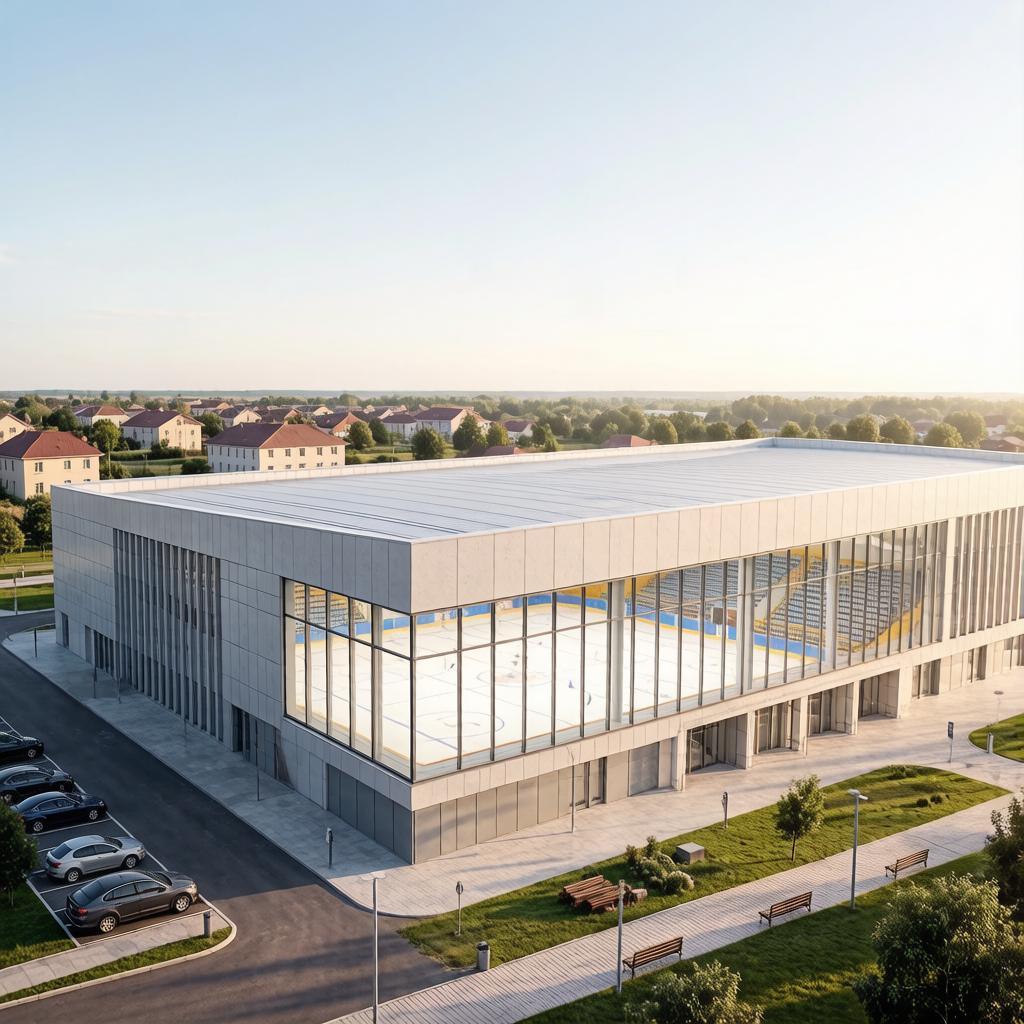
The construction of an ice complex is a complex engineering challenge, where the creation and constant maintenance of an ice field plays a key role. This task falls on the shoulders of suppliers of high-tech industrial refrigeration equipment. For the region and the country as a whole, such a project means a revival in the B2B segment, an increase in demand for specialized equipment and services for its maintenance. Integrator companies, manufacturers of refrigerants, compressor and pump equipment will receive a large-scale order that requires comprehensive solutions. This stimulates technological development, creates new jobs in the field of installation and service, and strengthens the competencies of local contractors potentially involved in the project.
The operation of any ice arena is based on a complex system that provides freezing and maintaining ice at a specified temperature and quality. The heart of this system is the chiller (refrigeration machine), which is designed to cool the refrigerant (most commonly an ethylene glycol or calcium chloride solution). For such facilities, powerful chillers with screw or scroll compressors are used, which can handle a wide range of loads. Their key features include refrigeration capacity (ranging from a few hundred kW for small arenas to several MW for large arenas), energy efficiency (COP ratio), and the ability to smoothly adjust power output to adapt to changing heat loads from lighting, spectators, and the external environment.
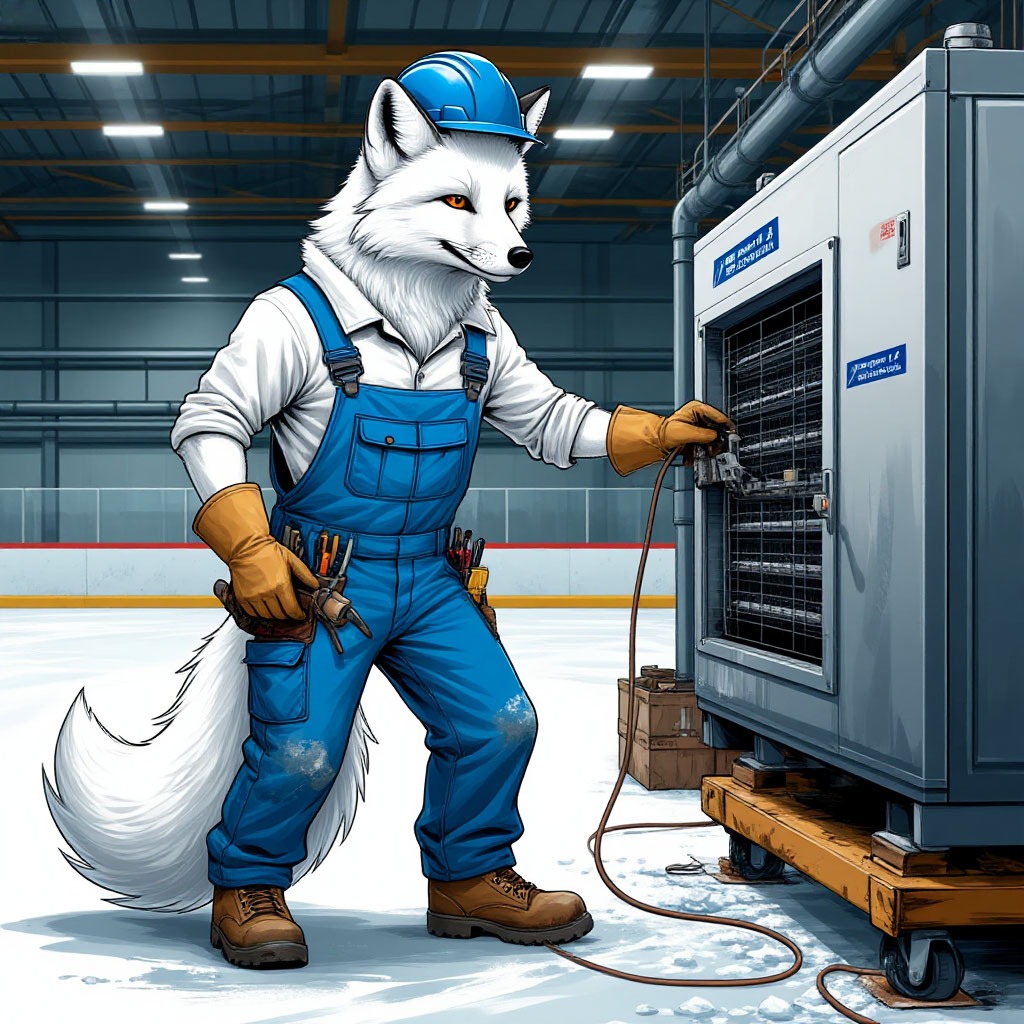
The cooled coolant is circulated through a system of pipes laid in a concrete base ("cold floor"). Circulation is provided by high-capacity and high-pressure pump units designed to work with low-temperature liquids. To evenly distribute the cold and prevent the formation of "thermal bridges," the pipes are laid with precise spacing and then covered with a "sandwich" of concrete layers.
Equally important is the condensation and air drying system. When warm air comes into contact with the ice surface, it causes condensation and "heavy" fog, which can degrade the quality of the ice and reduce visibility. To combat this, industrial air dryers of the condensation or adsorption type are installed to maintain optimal humidity levels throughout the facility.
A special mention should be made of the heat recovery system. Modern energy-efficient arenas almost never "discard" the heat generated by the chillers. Instead, it is utilized through the use of heat exchangers and heat pumps to heat water for showers, heat the rooms, or heat the slab beneath the ice floor (for melting during the off-season or for quickly preparing the ice surface). This significantly reduces operating costs.
Thus, the ice arena project in the Anninsky district is not only a social and sports breakthrough, but also a locomotive for high-tech industries. It will boost the industrial refrigeration market by promoting the implementation of energy-efficient solutions and strengthening the value chain in the region, from design to long-term service support for a complex engineering complex.




In December 2025, Copeland—a global leader in compressor manufacturing—unveiled a new development: a CO₂ scroll compressor featuring Dynamic Vapor Injection (DVI) technology. This milestone marked a significant step in the evolution of industrial refrigeration equipment, as the combination of the natural refrigerant CO₂ and an advanced vapor injection system opens up new possibilities for enhancing energy efficiency, reducing operating costs, and meeting environmental regulations.
 Выберите размер контейнера: Температурный режим: Новый или Б/У: | Прайс-лист на рефрижераторные контейнеры Вы выбрали: 40 футовые, низкотемпературные, новые 
| ||||||||||||||||||||||||||||||||||||||||||||||||||||




 Telegram

