
The working meeting in Smolny on October 28, at which Governor Alexander Beglov approved the agreement on the construction of a modern refrigerated warehouse on Salova Street, was a significant event not only for the Frunzensky District, but also for the entire logistics and food infrastructure of the Northern Capital. The implementation of this project by 2028 promises to create a high-tech facility with an area of 1,500 square meters, designed for responsible storage of products at low temperatures. This step is a logical response to the growing demand for high-quality storage facilities in the metropolis and will have a significant impact on related markets, particularly the industrial refrigeration equipment sector.
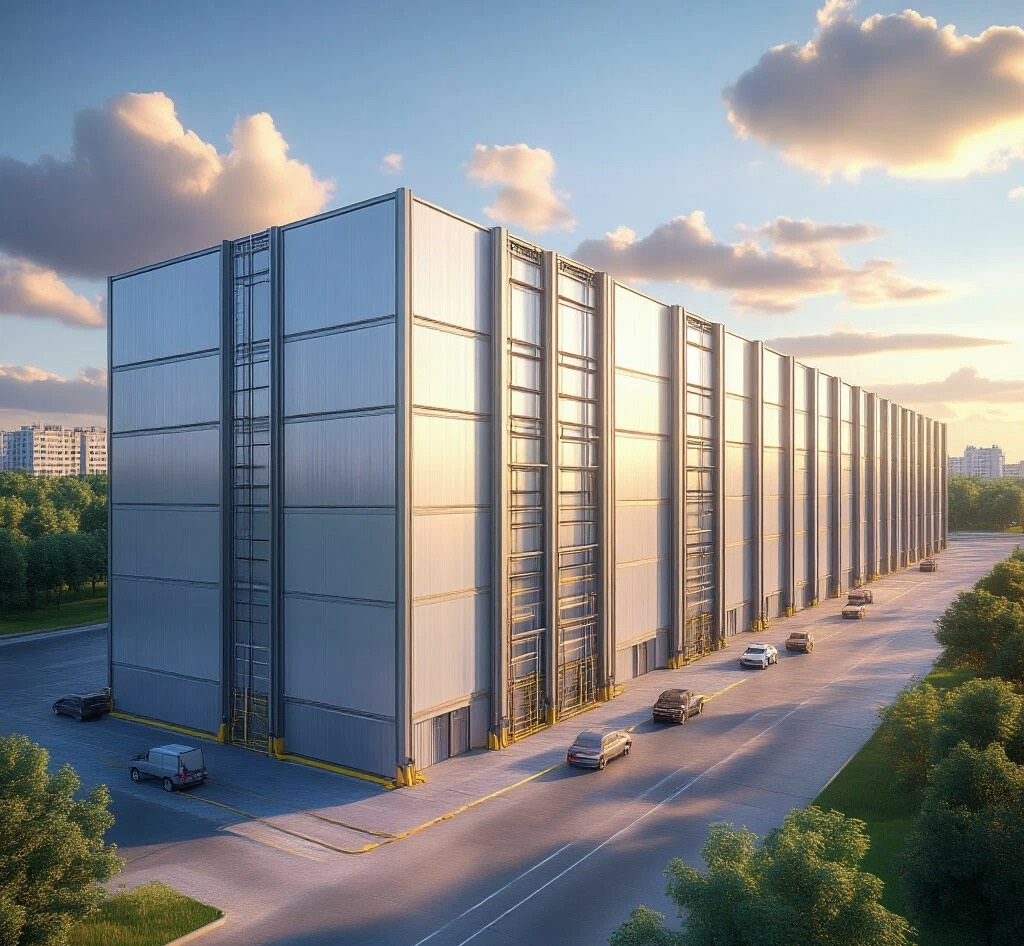
Growth Stimulus: Implications for the Refrigeration Industry
The construction of such an object will become a powerful catalyst for companies specializing in industrial refrigeration. Firstly, it is a direct order for the supply, installation, and launch of complex turnkey engineering systems. Major Russian and international players will have the opportunity to demonstrate their advanced technologies in a large-scale project. Secondly, the facility will serve as a reference point and demonstration platform for potential customers from the retail chain, logistics operators, and agricultural holdings. The successful operation of the warehouse will be a clear advertisement of the effectiveness of the technologies used.
Thirdly, there will be a steady demand for related services, such as service maintenance, monitoring, and equipment upgrades. This will create new job opportunities for engineers and technicians. Finally, the project will set a new standard for the region, raising the bar for energy efficiency, automation, and environmental sustainability. Manufacturers and integrators will need to meet these increasing expectations, driving innovation and investment in R&D.

The technological heart of a warehouse: key equipment and its functions
The heart of any modern refrigerated warehouse is a complex of interconnected systems. The following types of industrial refrigeration equipment are likely to be used in the project on Salova Street:
Refrigeration machines (chillers) and compressor-condenser units (CCU).
Air distribution systems: evaporators and air coolers.
Refrigeration chambers (sandwich panels) and docking devices.
Automated Control System (ACS).
Backup power supply systems.
Thus, the construction of a refrigerated warehouse on Salova Street is not just about building another logistics facility. It is about introducing a high-tech complex into the city's infrastructure, which will serve as a driver for the development of an entire industry. This project will raise the standard of quality for the storage of perishable goods in the region, establish new technological standards, and strengthen St. Petersburg's position as a key logistics hub in the country. It will provide an opportunity for companies operating in the industrial refrigeration sector to demonstrate their expertise and lay the foundation for future, even more ambitious projects.




In December 2025, Copeland—a global leader in compressor manufacturing—unveiled a new development: a CO₂ scroll compressor featuring Dynamic Vapor Injection (DVI) technology. This milestone marked a significant step in the evolution of industrial refrigeration equipment, as the combination of the natural refrigerant CO₂ and an advanced vapor injection system opens up new possibilities for enhancing energy efficiency, reducing operating costs, and meeting environmental regulations.
 Выберите размер контейнера: Температурный режим: Новый или Б/У: | Прайс-лист на рефрижераторные контейнеры Вы выбрали: 40 футовые, низкотемпературные, новые 
| ||||||||||||||||||||||||||||||||||||||||||||||||||||




 Telegram

