
The inclusion of CenterInvest LLC in the register of residents of the Blagoveshchensk priority development area and the launch of a project to build a data center with an investment portfolio of 370 million rubles is an event that goes beyond a single infrastructure enterprise. It is a purposeful integration of the Republic of Bashkortostan into the digital framework of the country, a signal to the market, and a starting point for a chain of technological transformations in related industries. Among the key beneficiaries of this process is the industrial refrigeration equipment sector, for which such projects are not just an order, but a driver of qualitative evolution.
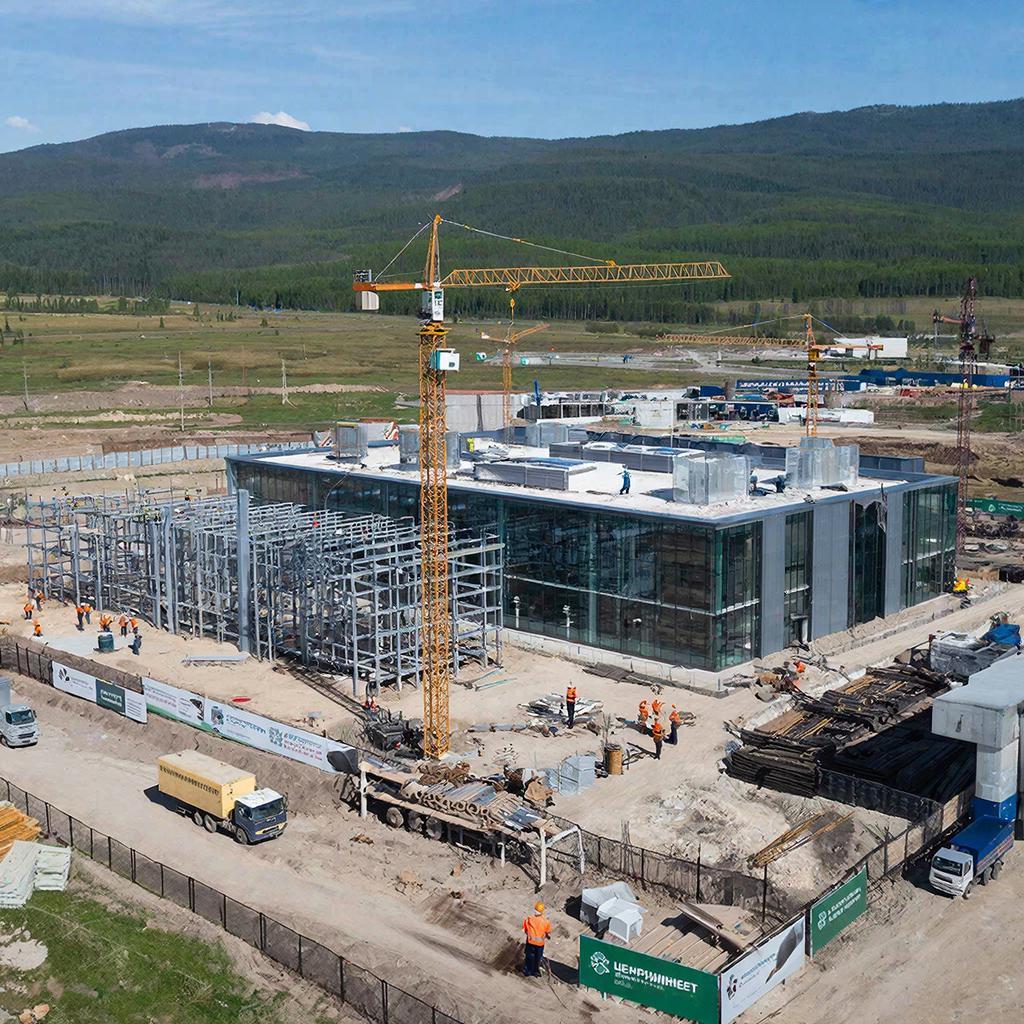
The construction of a modern data center creates a stable and demanding demand for the refrigeration industry. This is not a one-time supply of air conditioners, but rather a need to create a highly reliable, energy-efficient, and often individually designed climate ecosystem. For the supplier companies, this means transitioning into the category of technology partners responsible for the uninterrupted operation of the entire enterprise. The project, which is scheduled to last until 2031, provides a long-term perspective for service support, upgrades, and potential future expansions. Moreover, the successful implementation of the project in Blagoveshchensk becomes a working case that opens up access to similar tenders in other regions, where digital infrastructure is also being developed. Thus, the effect is multiplied, stimulating the industry to increase its competencies, develop its engineering departments, and invest in new, more "smart" technologies.
The Engineering Blood of a Data Center: Refrigeration Equipment as the Foundation of Life Support
The function of the refrigeration complex in a data center is fundamental — it is the continuous and precise removal of the huge heat capacities generated by the server equipment. The slightest failure in this system leads to catastrophic consequences, so the solutions used are of exceptional reliability, redundancy and automation. The system is built on a hierarchical principle.

Chillers (central liquid coolers). This is the heart of the system, especially in large data centers. They produce cold by diverting heat to water or a non-freezing liquid. Key characteristics: cooling capacity (from hundreds of kW to several MW), the type of condenser (air or water) and a critical parameter-the possibility of free - cooling . In the Bashkir climate, with its pronounced seasonality, free-cooling chillers allow the liquid to be cooled for most of the year using cold outside air, bypassing the compressor, which results in significant energy savings.
Precision air conditioners. If chillers are the heart, then precision air conditioners are the lungs and circulatory system of the machine room. They are installed directly in the server rooms and provide precise temperature (with an error of up to ±0.5°C) and humidity control. Unlike household systems, they are designed to operate 24/7 for years. Their features include: high reliability (mean time between failures of 40,000 hours or more), built-in redundancy (of compressors, fans, and controllers), a wide range of cooling capacity (usually from 5 to 150 kW), and various designs, such as cabinet units, ceiling units, and units with different types of refrigerant.
Cabinet-level cooling systems. For high-density racks (more than 15-20 kW per rack), spot cooling is used. These include:
Recirculating water supply systems: cooling towers and dry coolers. A closed cooling loop requires heat dissipation into the atmosphere. This is achieved using:
Engineering infrastructure. Equally important are high-reliability pump groups with redundancy, a complex corrosion-resistant piping system, expansion tanks, and an intelligent control system (BMS, DCIM) that coordinates the entire refrigeration system in real time, with a focus on IT equipment.
The construction of the center in Blagoveshchensk is not just about building a new building. It is about creating a high-tech organism where industrial refrigeration is no longer an auxiliary function, but rather a fundamental aspect of the region's digital infrastructure's competitiveness and sustainability.




In December 2025, Copeland—a global leader in compressor manufacturing—unveiled a new development: a CO₂ scroll compressor featuring Dynamic Vapor Injection (DVI) technology. This milestone marked a significant step in the evolution of industrial refrigeration equipment, as the combination of the natural refrigerant CO₂ and an advanced vapor injection system opens up new possibilities for enhancing energy efficiency, reducing operating costs, and meeting environmental regulations.
 Выберите размер контейнера: Температурный режим: Новый или Б/У: | Прайс-лист на рефрижераторные контейнеры Вы выбрали: 40 футовые, низкотемпературные, новые 
| ||||||||||||||||||||||||||||||||||||||||||||||||||||




 Telegram

