
Announced by Governor Alexander Sokolov, the construction of a modern distribution center "Northern Latitude" with an investment of over a billion rubles is not only a breakthrough logistics and agricultural project, but also a powerful catalyst for an entire segment of the industry – manufacturers and suppliers of specialized refrigeration equipment. The scale of the future center, the planned capacity of 360 thousand tons of products annually and a wide commodity profile, including perishable fruits, vegetables and meat products, predetermine the critical dependence of the entire enterprise on reliable, high-tech storage systems.
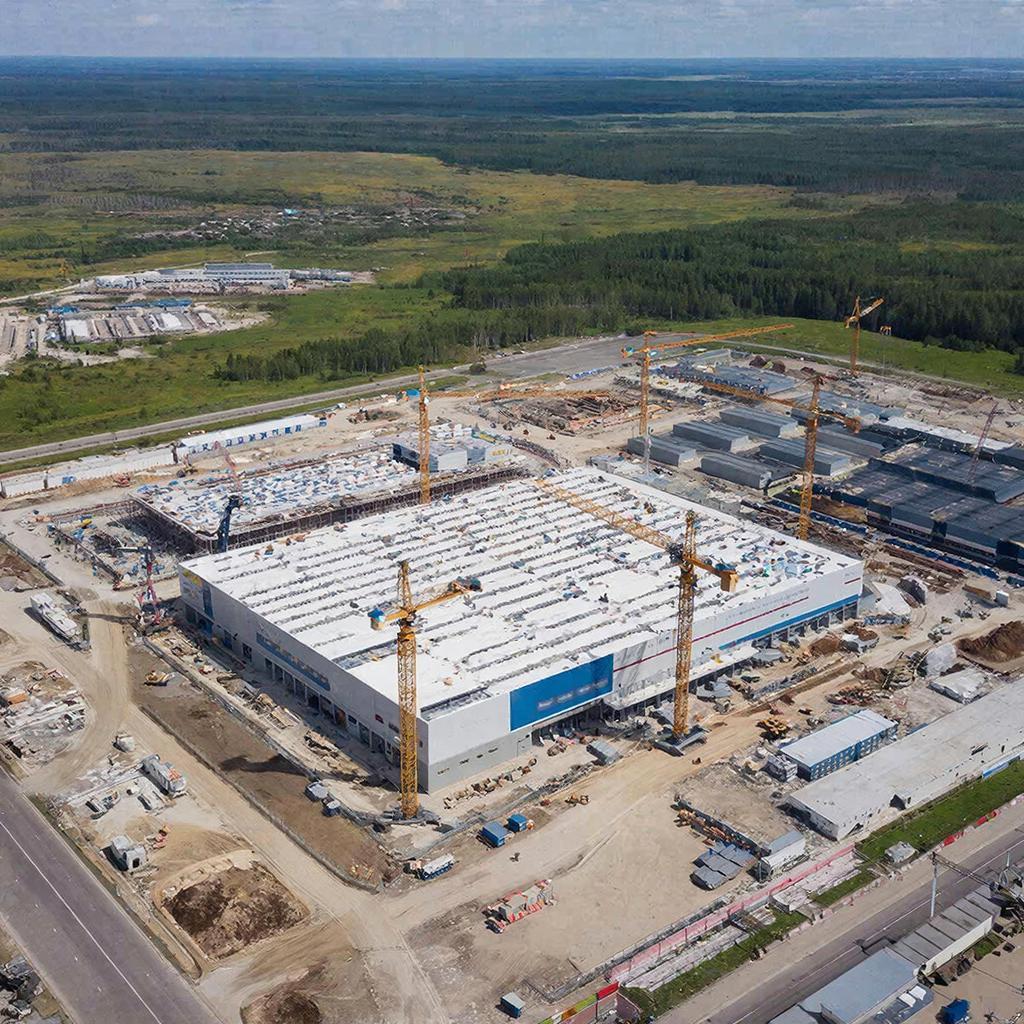
For companies engaged in industrial refrigeration equipment, this project opens up significant prospects. It is about the comprehensive equipment of the facility, which will require coordinated deliveries of various equipment, its installation, adjustment and subsequent service. This will create a volume order for the leading market players, stimulate regional distributors and contractors, and also intensify the demand for related services, such as the design of energy-efficient refrigeration solutions and the implementation of automated climate control systems. The successful implementation of such a flagship project can serve as a reference for similar projects in other regions of the North-West, forming a long-term trend towards modernizing logistics infrastructure.
Key industrial refrigeration equipment for a distribution center and its functions
The equipment of the Northern Latitude Center will include several types of high-tech equipment, each of which performs a critical function in the chain of preserving product quality.
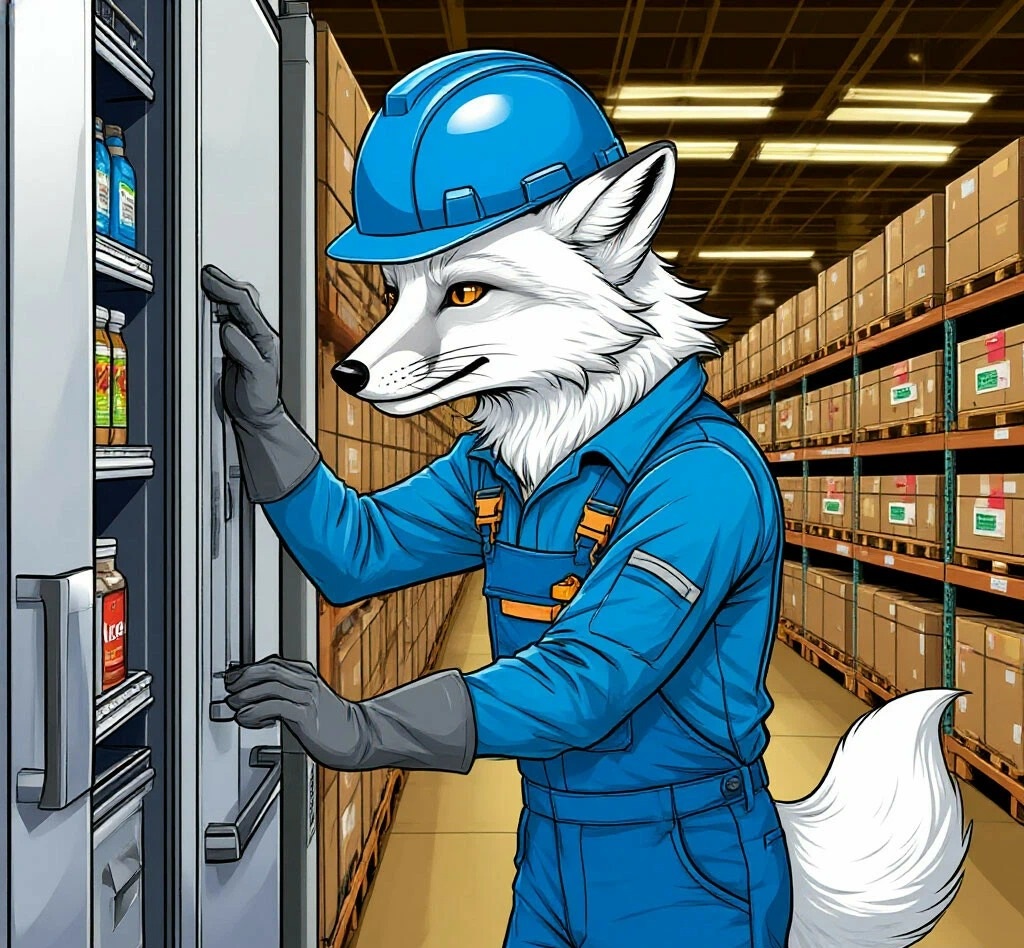
Industrial refrigeration chambers (low-temperature and medium-temperature). This is the basis of the entire complex. They are made of sandwich panels with a high thermal resistance coefficient. Low-temperature chambers (from -25°C to -18°C) are designed for long-term storage of frozen products, including meat and semi-finished products. Medium-temperature chambers (from 0°C to +4°C) are used for storing refrigerated meat, dairy products, and fruits and vegetables that are sensitive to freezing. Key features include precise temperature and humidity control, volumes measured in thousands of cubic meters, and reliable insulation.
Industrial-capacity refrigeration centers (units). The heart of the system that provides cold generation. These facilities typically use semi-hermetic or screw compressor units that operate on modern refrigerants (e.g., R448A, R449A). They are characterized by high energy efficiency (COP), modular design for flexible loadings, and the ability to cascade for ultra-low temperatures. Their function is to continuously supply refrigerant to the heat exchangers.
Air coolers (evaporators) and condensers. Air coolers are installed inside refrigerated chambers to forcefully circulate cooled air and evenly remove heat from the products. Such a center will require models with reinforced fans, frost-resistant heat exchangers, and an automatic defrosting system. Condensers (air or water-cooled), often installed on the roof, remove heat from the refrigerant into the external environment.
Shock-freezing refrigeration tunnels. An indispensable equipment for the primary processing of products. They allow you to quickly (within a few hours) pass through the critical crystallization zone, which preserves the cellular structure and taste of products (such as berries, mushrooms, and ready-to-eat meals). They are characterized by very high power and intense air circulation at temperatures of up to -35°C and below.
Monitoring and automatic control system (SCADA). This is the "nervous system" of the entire refrigeration system. It provides round-the-clock monitoring of temperature and humidity in each chamber, controls the operation of compressors, optimizes energy consumption, records any deviations, and generates reports to comply with sanitary standards. Its use ensures the safety of cargo and minimizes the human factor.
Thus, the Northern Latitude distribution center will become not only a hub for the region's food security, but also a high-tech complex whose efficiency directly depends on the quality and reliability of the industrial refrigeration equipment used. The project sets new standards for logistics and stimulates the development of related high-tech industries in the country.




In December 2025, Copeland—a global leader in compressor manufacturing—unveiled a new development: a CO₂ scroll compressor featuring Dynamic Vapor Injection (DVI) technology. This milestone marked a significant step in the evolution of industrial refrigeration equipment, as the combination of the natural refrigerant CO₂ and an advanced vapor injection system opens up new possibilities for enhancing energy efficiency, reducing operating costs, and meeting environmental regulations.
 Выберите размер контейнера: Температурный режим: Новый или Б/У: | Прайс-лист на рефрижераторные контейнеры Вы выбрали: 40 футовые, низкотемпературные, новые 
| ||||||||||||||||||||||||||||||||||||||||||||||||||||




 Telegram

