
Icon PreviewIcon PreviewTelegramIcon Preview

The implementation of a large-scale project to build a full-cycle plant for the production of vital medicines in Tomsk is not only a breakthrough for the regional pharmaceutical industry and economy, but also a significant order for an entire sector of the industry that provides critical engineering systems. Companies specializing in industrial refrigeration equipment are receiving a powerful boost for development, as modern pharmaceutical production is impossible without high-precision thermostating systems.
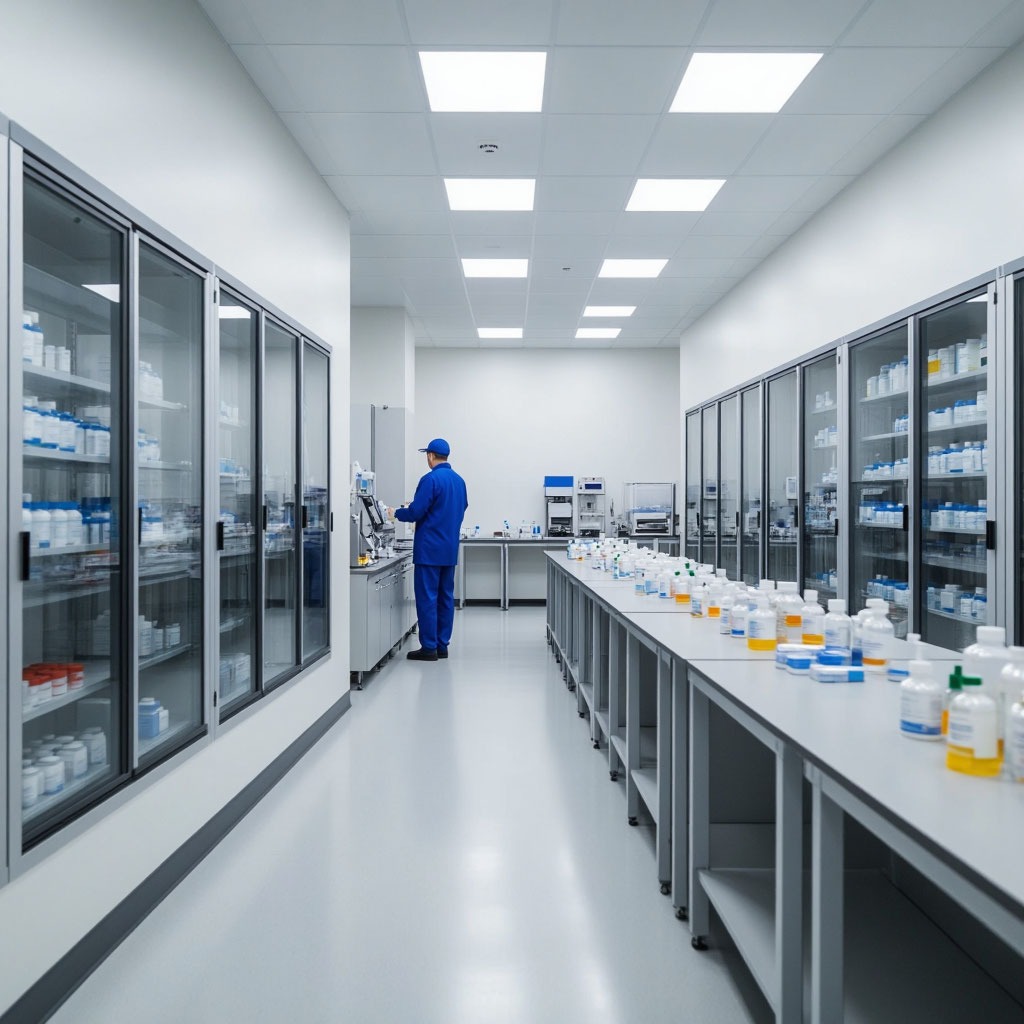
Impact on the refrigeration equipment market players

The construction of a GMP (Good Manufacturing Practice) compliant facility of this level places exceptionally high demands on the reliability, precision and automation of all systems, including refrigeration. For suppliers and engineering companies, this means:
  1. Increasing demand for comprehensive solutions. Instead of fragmented equipment deliveries, there is a need for the integration of full-scale turnkey systems, from design to service.
  2. Emphasis on qualification and validation. Equipment and systems must not only function, but also be documented as stable under strict GMP regulations, setting a high standard for performers.
  3. Stimulating localization and partnerships. Major federal and international manufacturers of holding equipment will actively engage local contractors for installation and maintenance, strengthening regional value chains.
  4. Raising industry standards. The project will become a reference point setting new technological standards for the entire Siberian region, encouraging other companies to modernize their facilities.

Key refrigeration equipment for pharmaceutical production and its functions

In such a facility, refrigeration systems permeate the entire process, from the synthesis of substances to the production of finished dosage forms.

1. Chillers (liquid coolers) for centralized air conditioning and ventilation systems (ACV).

  • Function and application: Providing accurate climate parameters (temperature, humidity) in clean production areas, laboratories, packaging areas and warehouses. Microclimate stability is a basic GMP requirement for product quality assurance.
  • Specifications: Powerful chillers (from several hundred kW) with microprocessor control, key components redundancy, high energy efficiency (often with free cooling — free-cooling). The design is available with both water-cooled and air-cooled condensers.

2. Industrial refrigeration machines for process cooling.

  • Function and application: Cooling of reactors, crystallizers, drying units, and other equipment in the synthesis of active pharmaceutical substances (APS). Many chemical reactions require precise maintenance of low temperatures at certain stages.
  • Specifications: A wide range of capacities, often in an explosion-proof design. Operating temperatures can range from positive (e.g., +5°C) to negative (down to -40°C or lower for deep cooling). The key requirement is temperature stability of ±1°C or higher.

3. Refrigerated rooms and warehouses with adjustable conditions.

  • Function and application: Storage of raw materials, intermediate products, and finished products at required temperatures (+2…+8°C, +15…+25°C, -20°C, etc.). This is one of the most common applications of cold in an enterprise.
  • Specifications: Modular chambers or capital warehouses with an automated temperature and humidity control system. Air-conditioned rack systems are widely used, and a 24/7 temperature monitoring system with emergency alerts is provided. Refrigeration units with backup compressor racks are used.

4. Lyophilization units (freeze-drying machines).

  • Function and application: The process of removing moisture from thermolabile substances (such as certain vaccines and antibiotics) in a frozen state under vacuum. This is a critical step in preserving the properties of pharmaceutical products.
  • Specifications: Complex systems that include powerful refrigeration equipment for deep freezing of the product (up to -50°C and below), vacuum pumps, and control systems. The highest accuracy is required for controlling all process parameters.

5. Laboratory equipment cooling systems.

  • Function and application: Ensuring the operation of spectrometers, chromatographs, synthesizers, and calorimeters in the scientific and analytical, and QC/QA (quality control) units.
  • Specifications: Precision recirculators (thermostats) and chillers that provide temperature accuracy of up to ±0.1°C, often with the ability to program temperature profiles. Compact but technologically sophisticated units.

Thus, the Tomsk pharmaceutical cluster will receive not just a factory, but a high-tech organism whose vital activity will depend directly on the uninterrupted operation of complex refrigeration systems. This project serves as a catalyst for the local industrial refrigeration market to reach a new level of quality that meets global pharmaceutical standards. For contractors, this is a challenge that requires in-depth expertise, but it is also a long-term opportunity to establish a presence in a highly profitable and socially significant segment.


ADVANTAGES
OF WORKING
WITH US
YOU COOPERATE
WITH ONE
COMPANY
You do not need to spend your time on engagement and negotiations with different contractors and suppliers.
EVERYTHING HAPPENS
IN TIME AND EXACTLY
ACCORDING TO THE PLAN
A long-term operational experience and collaborations guarantee delivery to the customer and installation right on time.
WE SAVE YOUR MONEY
IN A CRISIS WITHOUT
SACRIFICING QUALITY
We have reasonable prices, and we produce some types of equipment by ourselves, offering you the best prices.
Over 10 years of activity, hundreds of Russian companies, from large corporations to small cafes, have become clients of the company.
Copeland launches CO₂ compressor with DVI technology

In December 2025, Copeland—a global leader in compressor manufacturing—unveiled a new development: a CO₂ scroll compressor featuring Dynamic Vapor Injection (DVI) technology. This milestone marked a significant step in the evolution of industrial refrigeration equipment, as the combination of the natural refrigerant CO₂ and an advanced vapor injection system opens up new possibilities for enhancing energy efficiency, reducing operating costs, and meeting environmental regulations.

16
sep 2026






