
The planned construction of a new wholesale distribution center, worth 2.34 billion rubles, in the suburbs of Ufa, is a significant infrastructure project that goes far beyond simple construction. The designation of this project as a priority investment project highlights its strategic importance for the region. The implementation of such a large-scale logistics complex, with an area of 26,000 square meters, focused on storage and distribution of products, will inevitably create a significant ripple effect in related industries, particularly for companies specializing in industrial refrigeration equipment.
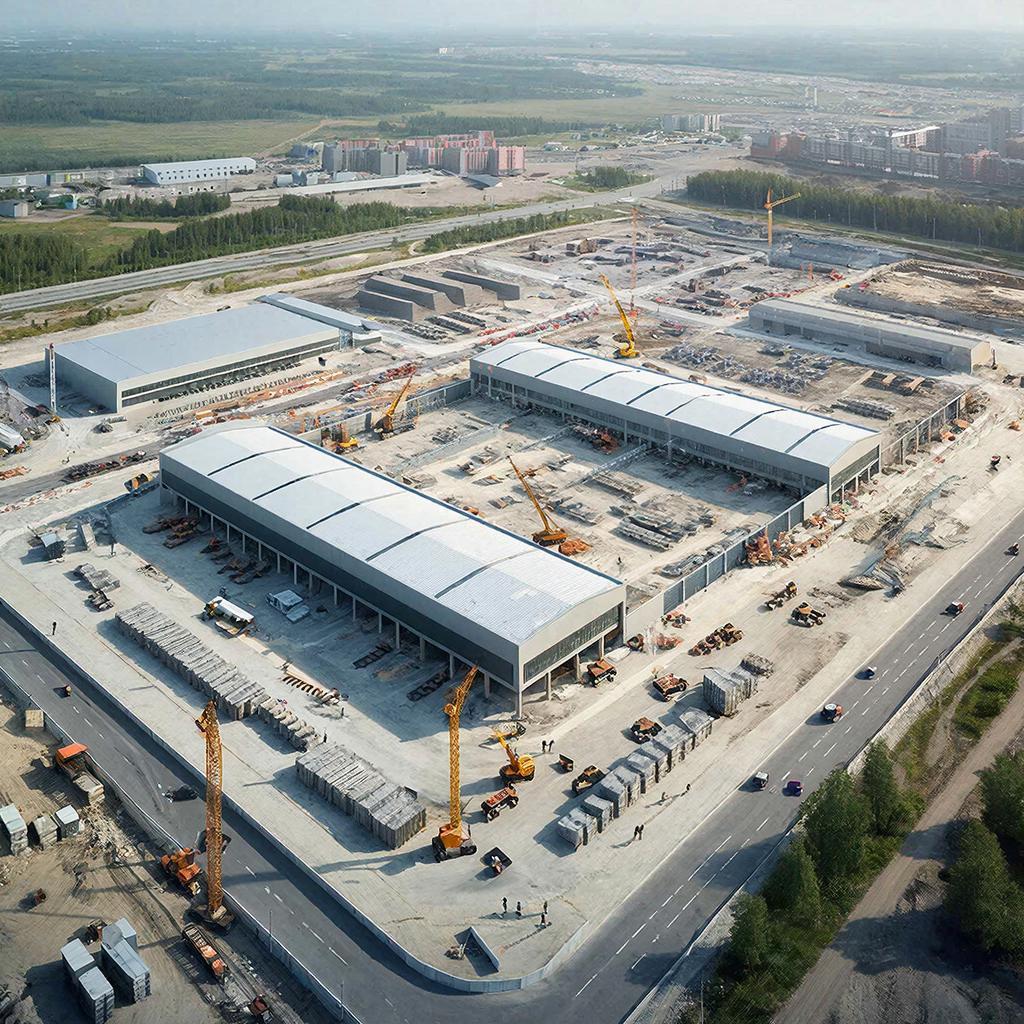
For refrigeration market players, from manufacturers to installation and service organizations, this project will be a significant growth driver. Firstly, it is a direct order for the design, supply, and commissioning of an entire complex of refrigeration systems. Secondly, the creation of a modern distribution center will increase the requirements for the logistics chains of local food and other perishable product manufacturers, which may trigger a second wave of orders for the modernization of their own warehouses. Finally, the successful implementation of such a facility often serves as a reference point for contractors to replicate solutions for other projects in the region.
The functionality of a modern wholesale distribution center directly depends on the reliability and technological sophistication of its cold storage equipment. The key application here is the organization of temperature-controlled storage areas, ranging from deep freezing to positive temperatures for refrigerated goods.

The main types of industrial refrigeration equipment for such facilities and their functions:
Prefabricated refrigeration chambers (sandwich panels). They are the main building material for creating insulated rooms. The panels are made of galvanized steel with a high-density polyurethane (PU) filler that has low thermal conductivity. Specifications: thickness from 60 to 200 mm, thermal conductivity coefficient λ ≈ 0.022–0.025 W/m·K, standard panel width (usually 1.0-1.2 m), and length up to 12-16 m. Function: creating sealed thermal circuits of a specified volume.
Industrial refrigeration units (chiller) and central refrigeration stations (CRS). This is the "heart" of the system that generates cold. For large facilities, powerful chillers with screw or scroll compressors are used, which are designed for R-134a, R-404A, R-507, or more modern R-513A, R-449A refrigerants. Characteristics: refrigeration capacity – from tens to hundreds of kW, possibility of cascade connection for different temperature circuits, built-in automatic control and monitoring system. Function: ensuring the specified temperature regime in all chambers of the complex.
Air cooling systems (evaporators, air coolers). Installed inside refrigerated chambers. They can be ceiling-mounted (for positive-temperature chambers) and wall-mounted (for low-temperature chambers). They are equipped with efficient finned heat exchangers and fans that ensure intensive air circulation and uniform temperature distribution. Specifications: heat exchange area, air capacity (m³/h), evaporator material (copper+aluminum), defrosting type (electric, hot gas, water).
Refrigerator doors and dock shelters. A critical element for maintaining temperature and energy efficiency. Doors for industrial facilities are high-speed roll-up or sliding models with electric drive and thermal barriers. A dockshelter is a sealed insulated transition between the car body and the loading dock. Door Specifications: opening/closing speed, heat transfer resistance (R-factor), dust and moisture protection class (IP). Function: minimization of cold losses in heavy loading and unloading areas.
Monitoring and automatic control systems (ATC). A modern logistics complex is unthinkable without an integrated digital system that monitors the temperature in each chamber, humidity, unit operation, and energy consumption around the clock, and alerts you to any deviations. Function: ensuring uninterrupted operation, predicting malfunctions, documenting compliance with temperature conditions (including for regulatory authorities), and optimizing energy consumption.
Thus, the construction of a new center near Ufa will not only become a growth point for the local refrigeration equipment market, but also a factor that stimulates the introduction of advanced, energy-efficient, and “smart” storage technologies. This, in turn, will raise the overall standards of logistics infrastructure in the republic.




In December 2025, Copeland—a global leader in compressor manufacturing—unveiled a new development: a CO₂ scroll compressor featuring Dynamic Vapor Injection (DVI) technology. This milestone marked a significant step in the evolution of industrial refrigeration equipment, as the combination of the natural refrigerant CO₂ and an advanced vapor injection system opens up new possibilities for enhancing energy efficiency, reducing operating costs, and meeting environmental regulations.
 Выберите размер контейнера: Температурный режим: Новый или Б/У: | Прайс-лист на рефрижераторные контейнеры Вы выбрали: 40 футовые, низкотемпературные, новые 
| ||||||||||||||||||||||||||||||||||||||||||||||||||||




 Telegram

