
The signing of an agreement on the construction of a data center in the Magadan Region with a colossal capacity of up to 150 MW, powered by the Ust-Srednekanskaya HPP, marks more than just the emergence of a new digital infrastructure hub. This project, one of the largest in the country, will trigger a chain of transformations in related industries, with the industrial refrigeration equipment sector playing a key role. For companies specializing in this market, the opening of such a facility in the harsh climate of Magadan will present both a significant challenge and an unprecedented opportunity for growth and demonstration of technological expertise.
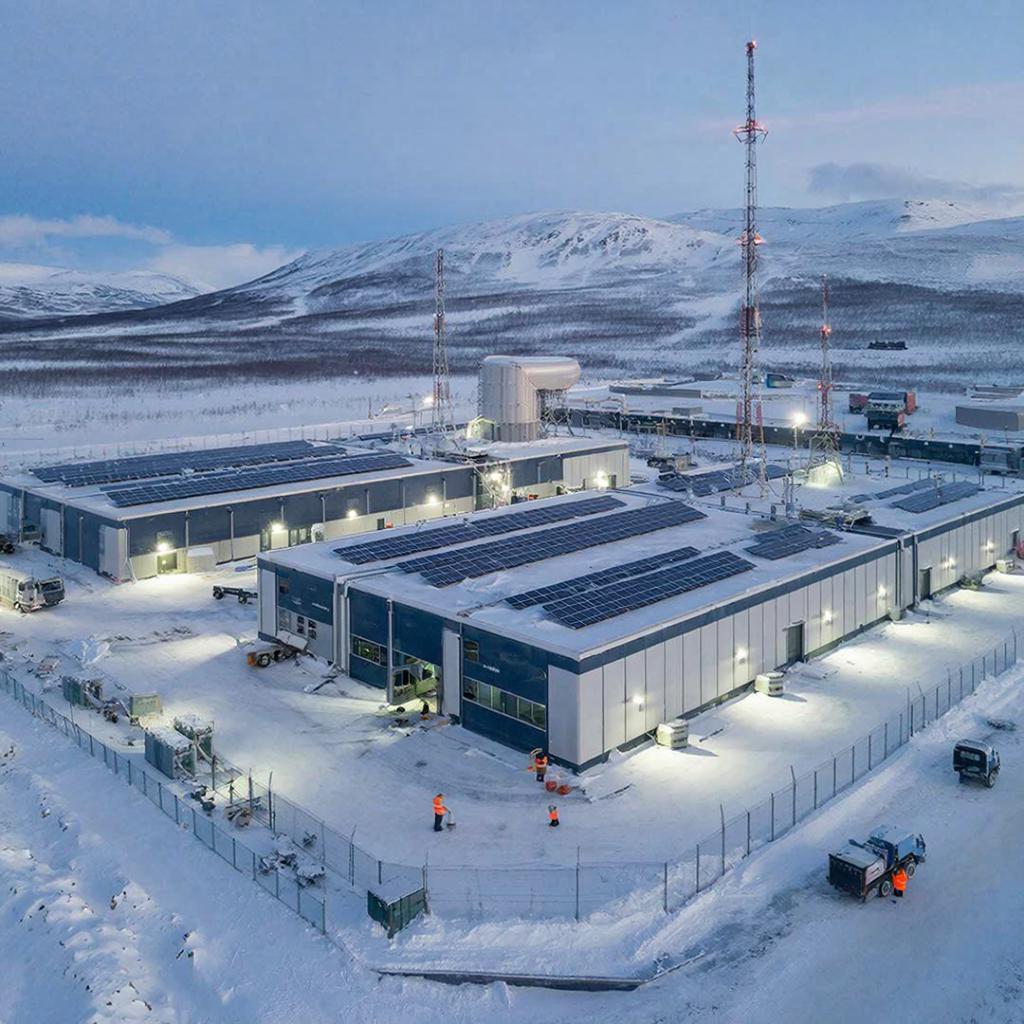
The construction of a data center of this scale will have a direct impact on Russian and potentially international manufacturers and suppliers of industrial refrigeration systems. Firstly, there will be a significant demand for comprehensive turnkey engineering solutions. Integrator companies will not only need to provide the necessary equipment, but also design a system that is suitable for the specific conditions of the region, including low temperatures that can be partially utilized for free cooling, as well as complex logistics. Secondly, the project will stimulate innovation in energy efficiency, as cooling costs can account for up to 40% of a data center's energy consumption. Local manufacturers who can offer customized solutions will receive a strong incentive to develop and can create new, in-demand competencies. Thirdly, a stable market for service and post-warranty maintenance will be created, providing long-term orders for specialized companies in the region.
Industrial Refrigeration Equipment for Data Centers: Functions and Applications
The main function of refrigeration equipment in a data center is to remove the large amount of heat generated by server racks and maintain a strictly defined temperature and humidity level (usually 18-27°C and 40-60%, respectively) 24/7. Failure to maintain these parameters can lead to overheating and damage to expensive IT equipment. To achieve this, a multi-level cooling system is used.

Chillers (water cooling machines). These are the central elements of the system. They produce cooled water, which is then circulated through the heat exchange circuits.
Fan coils (internal fan units) and precision air conditioners. They are installed directly in the machine rooms and provide precise heat dissipation from the racks.
Cooling towers (dry or evaporative). Used in water-cooled systems to remove heat from the condensers of chillers into the atmosphere.
Liquid Cooling systems. These are advanced solutions where heat is removed directly from processors or server racks using a liquid (water, special dielectric solutions).
Cold and hot corridor systems (containment). This is not equipment, but an architectural and engineering solution, but it is inextricably linked to refrigeration units.
Thus, the construction of a data center in Magadan will create a large order for manufacturers of the entire range of this equipment, from powerful free cooling chillers adapted to arctic conditions to precision microclimate control systems in the halls. This is a project that will not only build a digital bridge, but also serve as a catalyst for a technological breakthrough in the related industry of industrial refrigeration, which is critical for the modern economy.




In December 2025, Copeland—a global leader in compressor manufacturing—unveiled a new development: a CO₂ scroll compressor featuring Dynamic Vapor Injection (DVI) technology. This milestone marked a significant step in the evolution of industrial refrigeration equipment, as the combination of the natural refrigerant CO₂ and an advanced vapor injection system opens up new possibilities for enhancing energy efficiency, reducing operating costs, and meeting environmental regulations.
 Выберите размер контейнера: Температурный режим: Новый или Б/У: | Прайс-лист на рефрижераторные контейнеры Вы выбрали: 40 футовые, низкотемпературные, новые 
| ||||||||||||||||||||||||||||||||||||||||||||||||||||




 Telegram

