
The Commonwealth Group of Companies, one of Russia's largest agro-industrial holdings, has announced its intention to build a modern port and logistics complex (PLC) in the Ulyanovsk region. The project is estimated to cost 20 billion rubles. The construction of such a large-scale facility will have a significant impact on a number of related industries, including the market for industrial refrigeration equipment. What opportunities are opening up for refrigeration equipment manufacturers and suppliers as a result of this ambitious project? How will the construction of the PLC affect the development of the region's refrigeration infrastructure and the demand for specialized equipment?
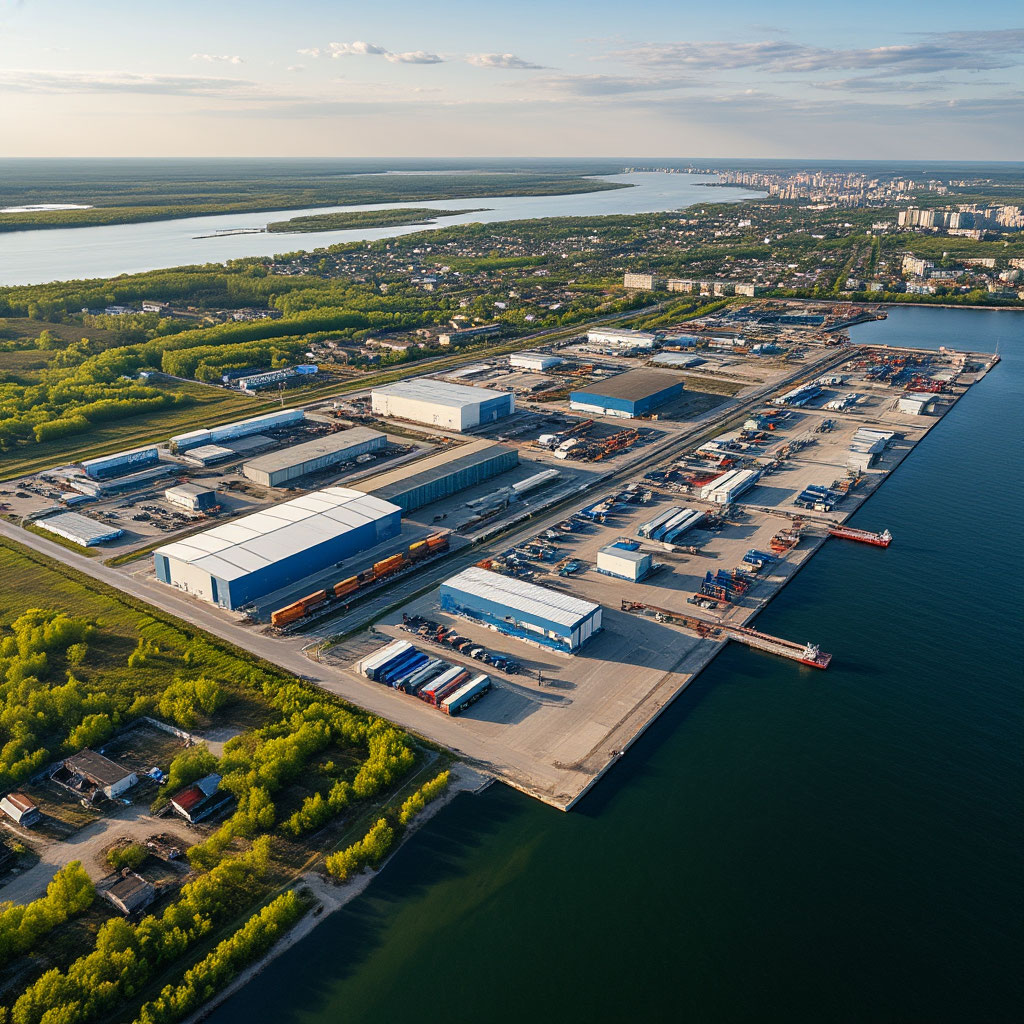
The scale and prospects of the project: the Commonwealth Port Logistics Complex
The planned PLC will occupy a strategically important position in the region, providing transshipment and storage of agricultural products, grain crops, and other cargo. The complex will include modern storage facilities, berths for ship handling, access railways, and road interchanges. Special attention will be paid to creating optimal conditions for product storage, which implies the use of advanced technologies and, consequently, an increase in demand for high-quality refrigeration equipment. The construction of such a large facility will stimulate the development of the region's transport and logistics infrastructure, create new jobs, and, of course, provide a powerful impetus for the development of businesses related to the storage and processing of agricultural products.
The impact of PLC construction on the industrial refrigeration equipment market
The construction of the Commonwealth port logistics complex will have a significant impact on the market for industrial refrigeration equipment in the Ulyanovsk region and neighboring areas. This is due to the need to create facilities for cooling and maintaining the temperature of various types of products. There will be an increase in demand for both large refrigeration units for warehouses and processing facilities, as well as specialized equipment for storing specific types of products, such as fruits, vegetables, or meat products. The introduction of the new PLC will create favorable conditions for the development of companies engaged in the design, production, supply, and maintenance of industrial refrigeration equipment. The Ulyanovsk Region will become an attractive market for manufacturers offering innovative and energy-efficient solutions in the field of refrigeration equipment.

Industrial Refrigeration Equipment for Port Logistics Complexes: Functions and Applications
A port logistics complex requires a wide range of refrigeration equipment to ensure the safety of various types of cargo. The main types of equipment used in a PLC are:
Refrigerated rooms and warehouses: Designed for storing products in frozen, refrigerated, or adjustable temperature conditions.
Shock-freezing freezers: These are used for rapid freezing of products, which helps to preserve their quality and consumer properties.
Cooling systems for product processing and refining: These systems are used to maintain an optimal temperature in processing and refining facilities, ensuring compliance with sanitary standards and preventing the growth of bacteria.
Equipment for controlled gas environment (CGE): Used for storing fruits and vegetables in an atmosphere with controlled oxygen, carbon dioxide, and nitrogen content.
Refrigeration units and compressor stations: They are the "heart" of the refrigeration system, providing cold production and distribution to consumers.
Trends and Prospects for the Refrigeration Equipment Market for PLCs
The construction of a port logistics complex in the Ulyanovsk region will be an important step in the development of the region's agro-industrial complex and will open up new opportunities for companies operating in the field of industrial refrigeration. There is expected to be an increase in demand for energy-efficient, environmentally friendly, and automated refrigeration equipment that can provide optimal storage conditions for various types of products. The PLC market will be in demand for innovative solutions that can reduce operating costs, improve reliability, and extend the lifespan of equipment. The development of telemetry and remote monitoring will allow for the prompt monitoring of refrigeration system parameters and the prevention of accidents. Given the increasing requirements for the quality and safety of food products, companies that supply refrigeration equipment for port logistics complexes must pay special attention to ensuring that their products meet international standards and regulations. Ultimately, the development of the PLC market will serve as a catalyst for the growth of the industrial refrigeration equipment market, stimulating the adoption of new technologies and increasing the competitiveness of Russian manufacturers.




In December 2025, Copeland—a global leader in compressor manufacturing—unveiled a new development: a CO₂ scroll compressor featuring Dynamic Vapor Injection (DVI) technology. This milestone marked a significant step in the evolution of industrial refrigeration equipment, as the combination of the natural refrigerant CO₂ and an advanced vapor injection system opens up new possibilities for enhancing energy efficiency, reducing operating costs, and meeting environmental regulations.
 Выберите размер контейнера: Температурный режим: Новый или Б/У: | Прайс-лист на рефрижераторные контейнеры Вы выбрали: 40 футовые, низкотемпературные, новые 
| ||||||||||||||||||||||||||||||||||||||||||||||||||||




 Telegram

