
As part of the business visit of the Lipetsk delegation to China, a strategic agreement was signed between the regional government and the Angel Yeast Corporation. The Chinese yeast manufacturer, which already has facilities in the Dankovsky District, has announced the construction of a third production line. The investment will exceed 11 billion rubles. The project aims to significantly expand the company's product range and strengthen its position in the Russian market.
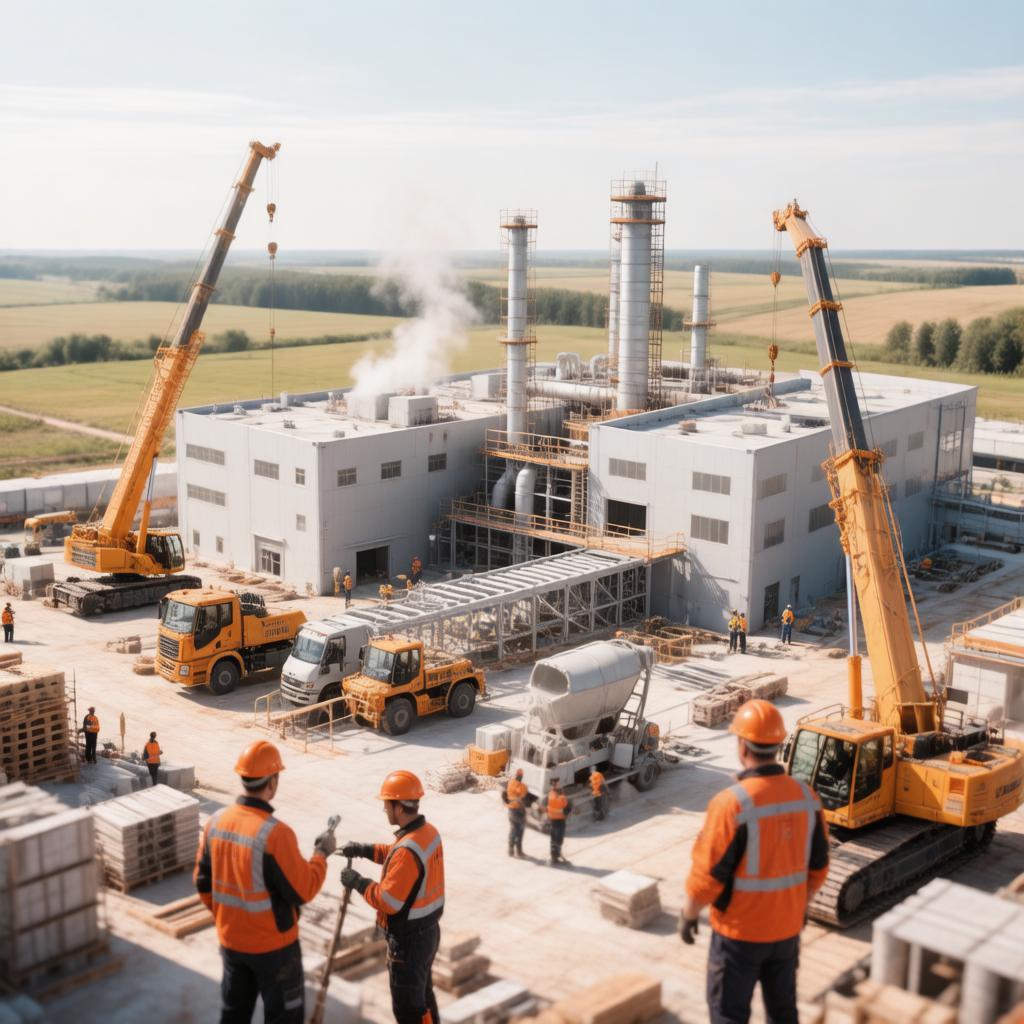
According to the signed documents, the new line is scheduled to reach full capacity by the end of 2027. Once completed, the facility will have a total capacity of 55,000 tons of dry yeast, 3,000 tons of food ingredients, and 92,000 tons of liquid organic fertilizers or animal feed annually. The new line will add an additional 22,000 tons of yeast per year to the existing capacity.
Such large-scale production, especially in the segment of microbiological synthesis and fermentation, imposes the highest requirements on industrial refrigeration systems. Without reliable refrigeration equipment, it is impossible to comply with strict biochemical regimes, maintain sterility, and store finished products safely. Let's consider the key types of industrial refrigeration equipment used in projects of this level and their functions.

1. Industrial chillers (systems for cooling process fluids)
This is the heart of the cooling system for bioreactors and fermenters. Angel Yeast uses medium and high-capacity compression chillers (from 500 kW to several MW) in its production.
2. Ammonia refrigeration units (for large-scale production facilities)
In factories with such volumes (55,000 tons of yeast), ammonia systems are often chosen due to their high energy efficiency and low refrigerant cost.
3. Plate heat exchangers (for fast cooling)
They are used during the pasteurization and sterilization of liquid media (molasses, nutrient solutions).
4. Drying units with a refrigeration section (spray and roller dryers)
Although the yeast bread is dried with hot air, the product must be cooled at the end.
5. Chiller-fan coil systems and central air conditioners (for providing a microclimate)
Working with food ingredients and yeast requires strict moisture control.
Application in the project context:
For the third Angel Yeast line, which will produce an additional 22,000 tons of yeast, the following will be required:
The choice of specific brands (for example, Carrier, York, Bitzer, or Chinese equivalents) will depend on the tender conditions, but Angel Yeast prefers proven solutions with high efficiency and automation capabilities. Thus, the investment of 11 billion rubles includes not only construction work, but also the purchase of sophisticated refrigeration equipment, which is essential for modern biotechnology production.




In December 2025, Copeland—a global leader in compressor manufacturing—unveiled a new development: a CO₂ scroll compressor featuring Dynamic Vapor Injection (DVI) technology. This milestone marked a significant step in the evolution of industrial refrigeration equipment, as the combination of the natural refrigerant CO₂ and an advanced vapor injection system opens up new possibilities for enhancing energy efficiency, reducing operating costs, and meeting environmental regulations.
 Выберите размер контейнера: Температурный режим: Новый или Б/У: | Прайс-лист на рефрижераторные контейнеры Вы выбрали: 40 футовые, низкотемпературные, новые 
| ||||||||||||||||||||||||||||||||||||||||||||||||||||




 Telegram

