
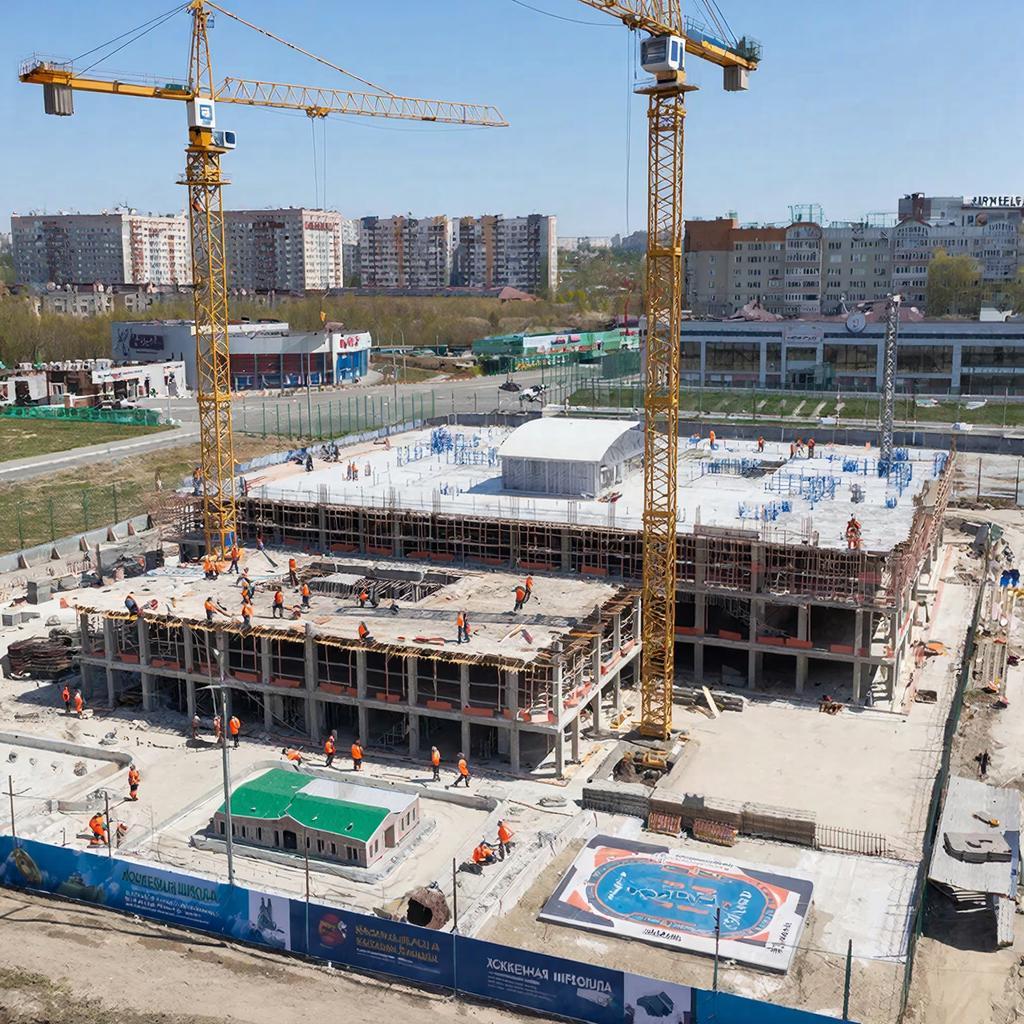
Ufa intends to create a center for initial hockey training, with an estimated investment of 101 million rubles. This event, which is significant primarily for the region's sports infrastructure, also has a notable impact on related industrial sectors, particularly those specializing in the production of industrial refrigeration equipment.
The impact of construction on refrigeration equipment manufacturers
The implementation of such a project directly stimulates the demand for high-tech refrigeration equipment. Companies involved in its production and supply receive a specific large order that requires not just the sale of equipment units, but a comprehensive project approach: from calculations and the development of technical solutions to installation, commissioning, and service. This involves the entire cycle of their activities, including engineering, production, logistics, and service. For local or regional suppliers, such a contract can be a significant project of the year, strengthening their financial performance and portfolio of completed work. In addition, the successful implementation of equipment in such a public and socially significant facility serves as a significant reference point that strengthens the company's reputation and opens up opportunities for participation in future similar projects, not only in sports facilities but also in other public and commercial facilities that require artificial ice.
Industrial Refrigeration Equipment for Ice Arenas: Functions, Types, and Characteristics
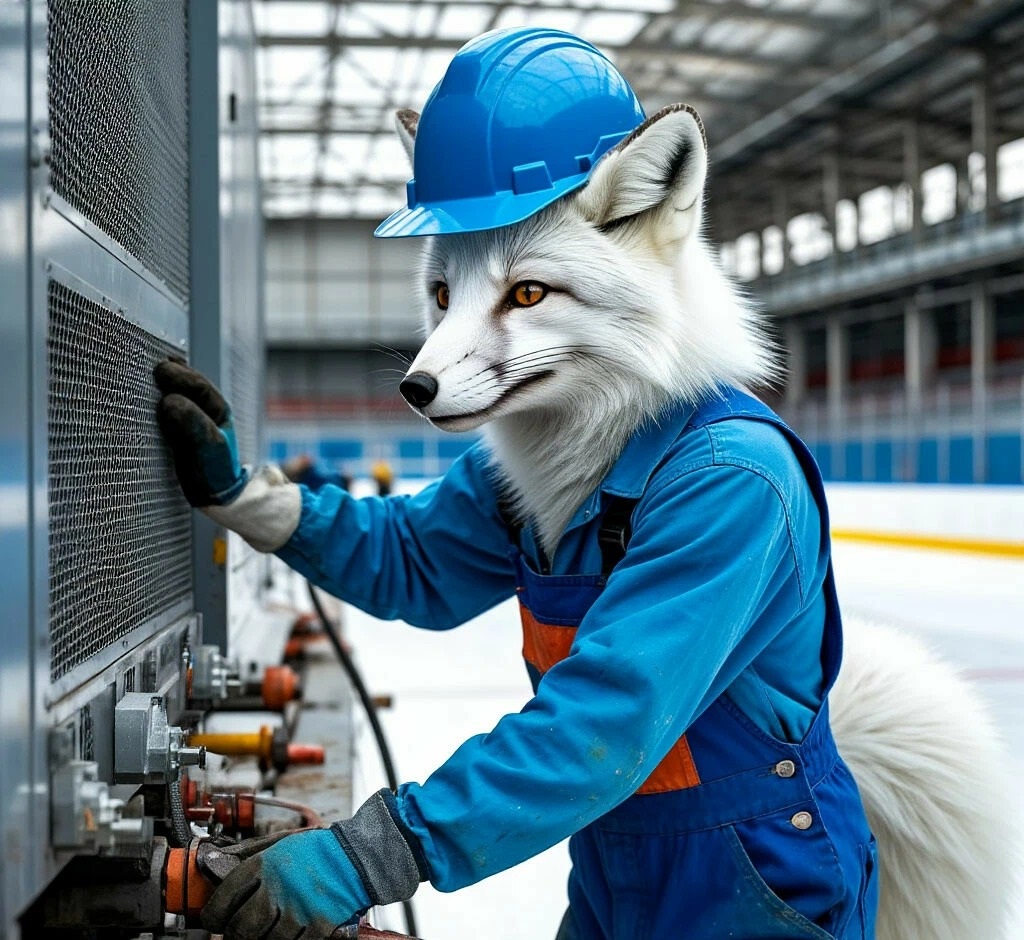
The main function of refrigeration equipment in a hockey school is to create and maintain a high-quality ice surface at a specified temperature and thickness. This is achieved through a complex system, the key components of which are:
Refrigeration units (chiller units) or compressor-condenser units (CCU). These are the "heart" of the system. They produce cold by removing heat from the brine circulating in the system (most commonly an ethylene glycol or calcium salt solution). For medium-sized ice rinks typical of training centers, units with a capacity of 100 to 400 kW are used. They must ensure stable operation in a wide range of external temperatures, have a high energy efficiency coefficient (COP) to reduce operating costs, and be reliable, as stopping the system can cause rapid ice degradation.
The piping system under the ice surface. This is the "circulatory system" of the arena. Chilled brine is circulated through the pipes, which are laid in the concrete base (a layer of concrete). The pipes (usually made of high-density polyethylene, or HDPE) must be chemically resistant to the brine, durable, and evenly distributed throughout the area. The piping configuration is designed to ensure that the ice surface remains at the same temperature.
Pump stations. They ensure the circulation of brine throughout the system. The pumps must be powerful enough to overcome the hydraulic resistance of the extensive pipe network, as well as energy-efficient and low-noise.
Control and automation systems. Modern ice arenas are controlled through comprehensive automatic systems. These include ice and brine temperature sensors, indoor air temperature sensors, controllers that regulate the operation of compressors and pumps, and software that allows the operator to set and maintain precise temperature levels, monitor energy consumption, and diagnose potential issues. The accuracy of ice temperature maintenance is typically ±0.5°C.
Use of equipment in the project
In the center under construction, the equipment will be integrated into a single technological cycle. After the first layer of water is poured, the cold generated by the pipelines will freeze it. Then, the process is repeated to create a standard-thickness layer of ice (typically around 25-30 mm). The system operates continuously, compensating for the heat generated by the surrounding air, lighting, and even the players' contact with the ice. In addition to maintaining the playing surface, the refrigeration system is often interconnected with the building's air conditioning systems, requiring additional design coordination.
Thus, the construction of a hockey school in Ufa is not only an investment in the sports future of young people, but also a specific project that activates the industrial sector associated with the production of complex engineering equipment and demonstrates intersectoral cooperation in the development of the city's infrastructure.




In December 2025, Copeland—a global leader in compressor manufacturing—unveiled a new development: a CO₂ scroll compressor featuring Dynamic Vapor Injection (DVI) technology. This milestone marked a significant step in the evolution of industrial refrigeration equipment, as the combination of the natural refrigerant CO₂ and an advanced vapor injection system opens up new possibilities for enhancing energy efficiency, reducing operating costs, and meeting environmental regulations.
 Выберите размер контейнера: Температурный режим: Новый или Б/У: | Прайс-лист на рефрижераторные контейнеры Вы выбрали: 40 футовые, низкотемпературные, новые 
| ||||||||||||||||||||||||||||||||||||||||||||||||||||




 Telegram

