
In the Kirovsky District of St. Petersburg, on Soldata Korzuna Street, a modern indoor ice arena will soon be built. The developer's approval of the construction permit in early September marked the start of this important infrastructure project. The arena is designed for training athletes over the age of 18, as well as for hosting amateur hockey competitions. The one-story building with an ice rink will be complemented by a four-story building that will accommodate administrative offices, coaching rooms, sanitary facilities, and necessary infrastructure. The project also includes the landscaping of the surrounding area and the creation of a guest parking lot. The facility is planned to be operated year-round, which makes it significant not only for the sports community, but also for related industries.
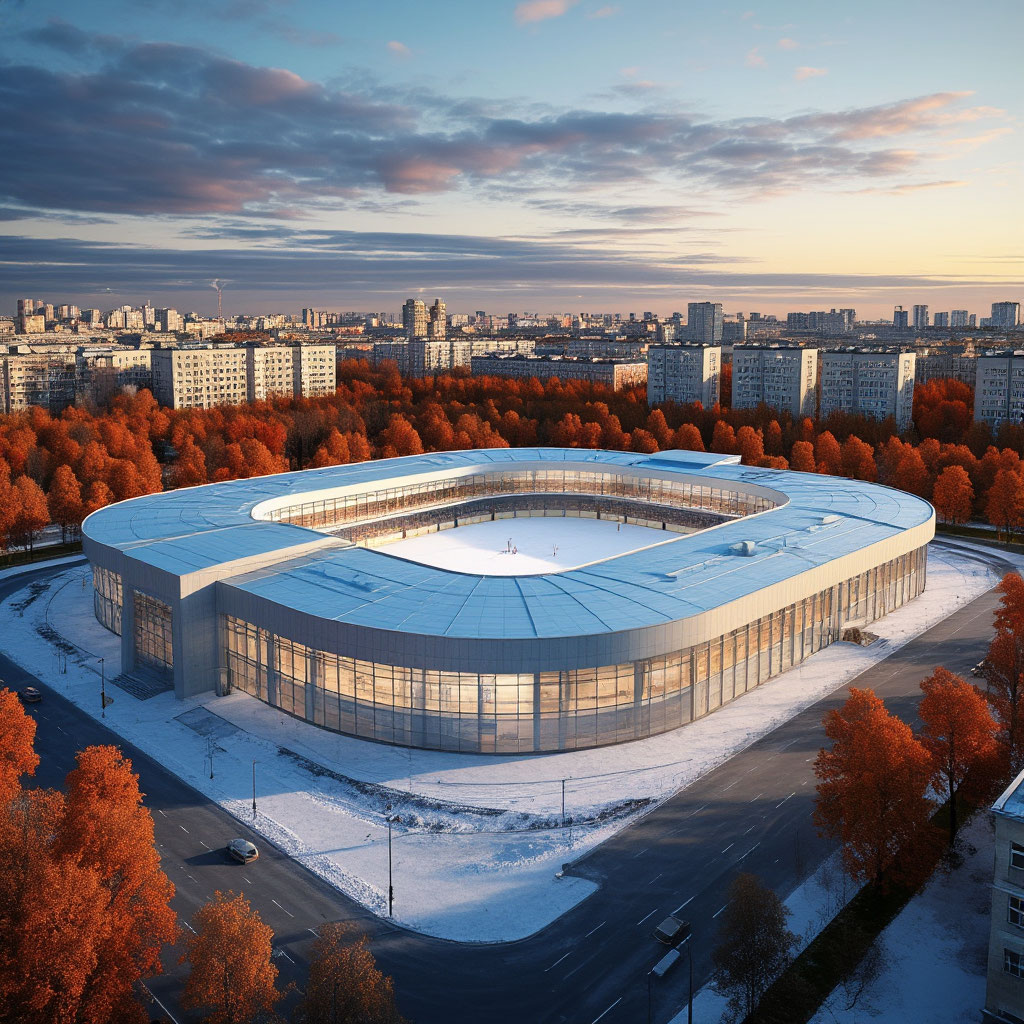
The construction of an ice arena in the Kirovsky District will have a significant impact on companies specializing in the design, supply, and maintenance of industrial refrigeration equipment. Such a sports facility is a consumer of high-tech solutions that ensure the optimal temperature of the ice surface throughout the year. The commissioning of the new arena will create demand for the supply, installation, and further maintenance of complex refrigeration equipment, and may also stimulate the introduction of new, energy-efficient technologies.

The operation of an indoor ice arena is impossible without a reliable and efficient cooling system. Maintaining the required temperature and quality of ice requires the use of specialized industrial equipment. Let's explore the main components of such a system and their characteristics:
Chillers (water cooling units): This is the main equipment responsible for cooling the coolant (most often an aqueous solution of glycol or propylene glycol), which is circulated in a system of pipelines located directly under the ice surface.
Pump stations: They ensure the circulation of cooled coolant in a closed loop: from the chiller to the under-ice piping system and back.
Under-ice cooling piping system: This is a network of pipes laid under a layer of sand or concrete, on which an ice cover is formed.
Automation and control systems: They control and regulate the operation of all refrigeration equipment, maintaining the specified temperature and humidity parameters.
Air ventilation and dehumidification systems: They control the humidity and temperature of the arena's air, preventing condensation on the ice surface and maintaining its quality.
The new ice arena in the Kirovsky district will undoubtedly become a growth point for companies specializing in industrial refrigeration. In addition to the supply and installation of equipment, regular maintenance and repair will be required to ensure the stable operation of the arena for many years. In the long term, the facility may become a platform for the introduction of new technologies in the field of energy conservation and environmental improvement of refrigeration systems.




In December 2025, Copeland—a global leader in compressor manufacturing—unveiled a new development: a CO₂ scroll compressor featuring Dynamic Vapor Injection (DVI) technology. This milestone marked a significant step in the evolution of industrial refrigeration equipment, as the combination of the natural refrigerant CO₂ and an advanced vapor injection system opens up new possibilities for enhancing energy efficiency, reducing operating costs, and meeting environmental regulations.
 Выберите размер контейнера: Температурный режим: Новый или Б/У: | Прайс-лист на рефрижераторные контейнеры Вы выбрали: 40 футовые, низкотемпературные, новые 
| ||||||||||||||||||||||||||||||||||||||||||||||||||||




 Telegram

