
In the heart of the Moscow region, in the Kashira urban district, where the expanses of the fields intertwine with the rhythm of modern agro-industry, the company "Belyanka" - a key player in the "Leto" Group of Companies - is preparing to launch an ambitious investment project. Having received permission from the Ministry of Agriculture of the Moscow Region, the enterprise is starting to build a modern complex for the production of chicken eggs in the village of Pyatnitsa. This project, estimated at 6 billion rubles, will not only strengthen the position of domestic poultry farming, but also serve as a vivid example of how innovation and investment can transform the regional economy. With the complex's commissioning scheduled for 2027, Belianka's production capacity will increase to an impressive 1.2 billion eggs per year, equivalent to providing millions of households with fresh eggs every day.
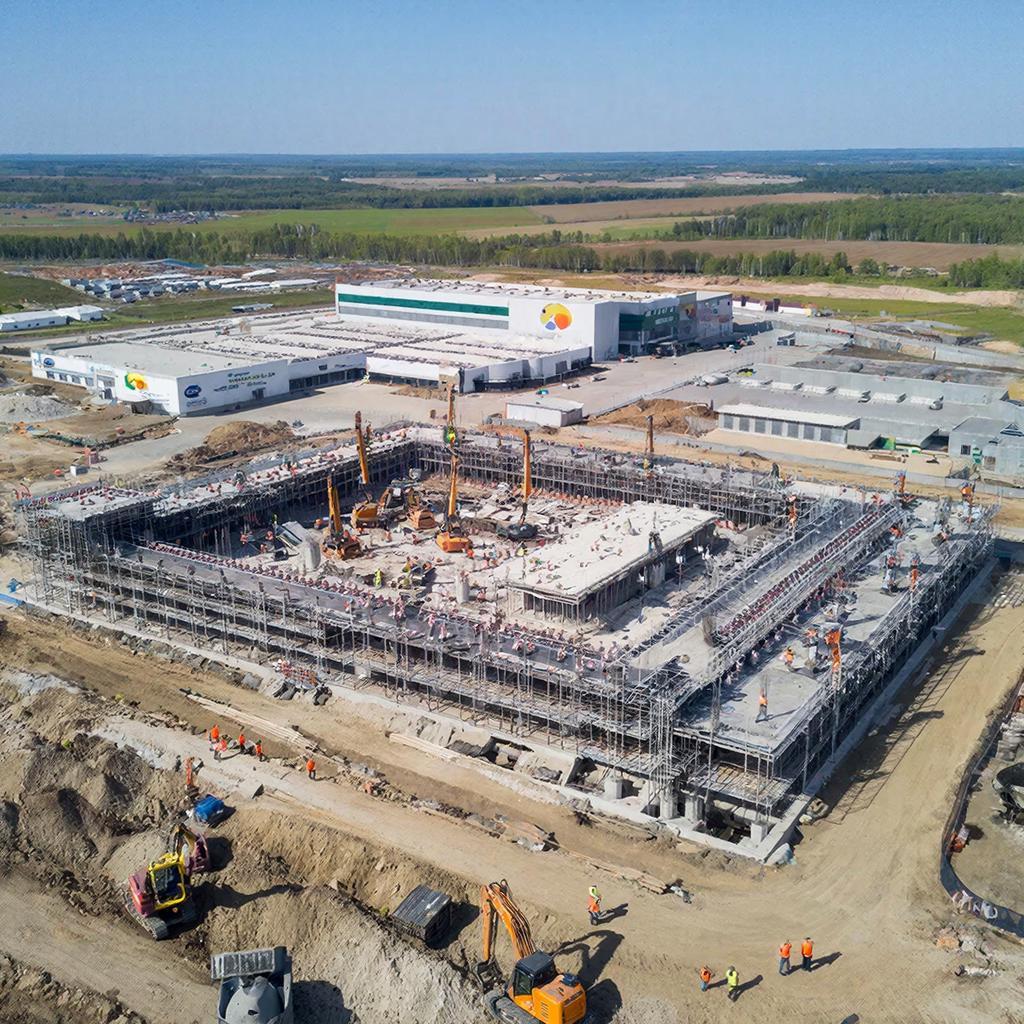
The construction will cover a vast area, where a comprehensive infrastructure will be developed to support the full production cycle. Six buildings will be dedicated to the rearing of replacement hens, future laying hens, whose growth and development require strict control of conditions. Eight massive buildings for laying hens, each accommodating 270,000 birds, will serve as the heart of the facility. These buildings are designed to meet the highest standards of biosecurity and animal welfare, maximizing egg production and minimizing disease risks. The distribution center will be complemented by sanitary checkpoints, which are barriers that prevent the entry of pathogens, as well as an administrative building and auxiliary facilities, including warehouses and water supply systems. The total area of the complex will exceed dozens of hectares, and its implementation will create approximately 300 new jobs, which is particularly important for the local population of Kashira, where agriculture remains a significant source of employment.
This project is not just about construction; it is a strategic step towards the country's food security. With the growing demand for domestic food products due to geopolitical challenges and the need for import substitution, such initiatives are particularly relevant. Belianka, already established as a reliable supplier of eggs and poultry meat, is investing in technologies that will not only increase production volumes but also improve the quality of its products. The eggs from Kashira will be available on the shelves of supermarkets in Moscow and neighboring regions, providing fresh products without intermediaries. Moreover, the complex will be integrated into the Leto Group's ecosystem, which focuses on sustainable development, including waste recycling systems, energy-efficient solutions, and even elements of green energy to minimize the carbon footprint.
A construction of this scale will inevitably affect related industries, primarily manufacturers and suppliers of industrial refrigeration equipment. For chicken egg production complexes, where temperature control is a matter of survival and quality, the demand for specialized systems will increase dramatically. Companies such as Refrigerator, Refrigerator-Pro, or international giants like Carrier and Trane will see an influx of orders: the Belianka project will require at least a dozen large installations, stimulating local production and logistics. In the Moscow region, where an agro-industrial technology cluster is already being formed, this could lead to increased investment in R&D, the creation of new service providers, and even the localization of imported components.
The economic effect will be multifaceted. First, the direct supply of equipment worth 100-200 million rubles (from the total project budget) will revive the market, especially in the segment of medium- and large-capacity refrigeration systems. Second, supplier companies will be able to use this case study for marketing purposes: the successful implementation in Kashira will serve as a benchmark for attracting similar projects in other regions of Russia. Finally, the indirect impact will extend to the supply chains, from compressor manufacturers to service firms, where an additional 50-100 jobs are expected to be created. However, competition will intensify, with smaller players at risk of falling behind the larger ones that are integrating IoT and automation. Overall, this project accelerates the digitalization of the industry, encouraging all participants to innovate in order to meet strict veterinary and environmental regulations.
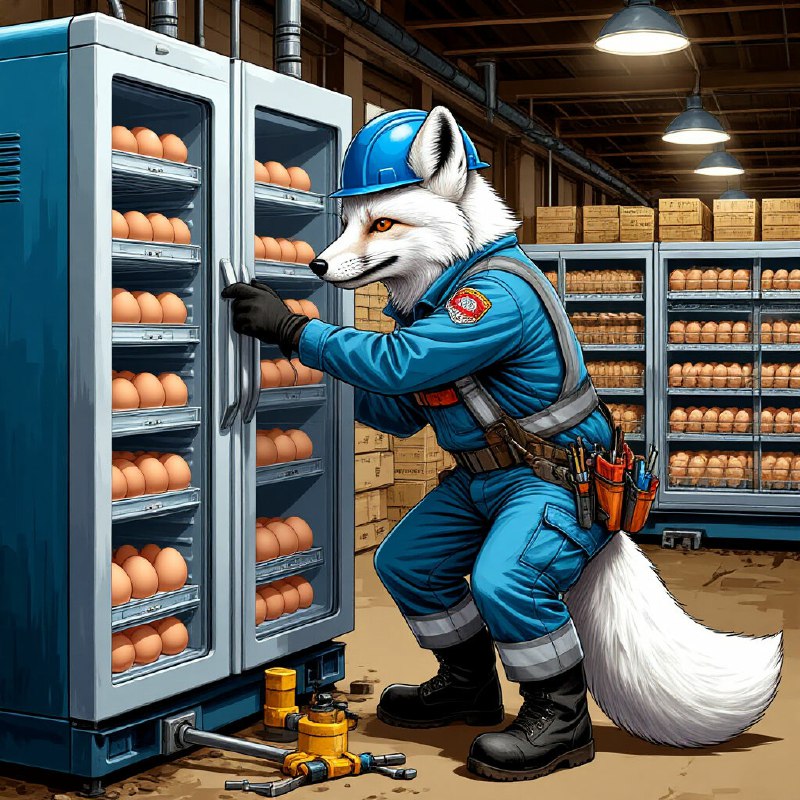
In a modern chicken egg production facility, refrigeration equipment plays a critical role in maintaining the cold chain from feed to finished products. It prevents spoilage, controls the microclimate, and minimizes energy consumption. Below are the main types of equipment used in such projects, along with their characteristics, functions, and applications. The choice depends on the production stage, but in the case of Belianka, the focus is on energy-efficient, modular systems for a scale of 2+ million birds.
Monoblock refrigeration units (air-cooled condensers)
Characteristics: Power from 10 to 50 kW, cooling temperature 0–4°C, performance factor (COP) 2.5–3.5, scroll or screw compressors, eco-friendly refrigerants (R404A or CO2).
Functions: Cooling of air in the buildings for young and laying hens, maintaining humidity of 60–70% to prevent overheating and diseases.
Application: In six buildings for rearing chicks, the temperature is stabilized at 20-25°C to accelerate the growth of chicks without stress. It provides ventilation and filtration, reducing the risk of salmonellosis.
Blast freezers and cold storage facilities
Specifications: Volume 500–2000 m³, temperature from -18°C to -25°C, freezing speed 5–10°C/min, insulation of polyurethane panels 100–150 mm thick, automated control via PLC.
Functions: Fast freezing of feed additives and waste, storage of eggs before packaging to preserve freshness.
Application: In the distribution center of the complex, eggs are cooled to 5–8°C for transportation, preventing condensation and bacterial growth. In the Belyanki project, such cameras are integrated with sanitary checkpoints for hygiene purposes.
Centralized chiller systems (water-cooled chillers)
Specifications: Power 100-500 kW, coolant water or glycol, COP up to 4.0, inverter compressors for energy saving, noise <70 dB.
Functions: Central cooling of ventilation and water supply systems, heat recovery for heating in winter.
Application: Throughout the territory of eight layers’ houses – maintains the temperature of 18-22C in the heat, integrating with automation for monitoring CO2 and ammonia. The introduction in 2027 will highlight their role in reducing energy consumption by 20-30%.
Energy-saving air coolers (evaporative coolers with refrigeration)
Characteristics: Performance 50-200 m³/min, air temperature 15-25°C, low consumption (0,5-1 kW/1000 m³), modular design for easy installation.
Functions: Combined cooling and humidification in large volumes, filtration of dust and pathogens.
Application: In administrative and household buildings and auxiliary areas — provides comfort for personnel (300 workplaces), and also cools egg-collecting conveyors, minimizing cracks from thermal fluctuations.
Cold monitoring and automation systems (IoT-integrated refrigeration controls)
Characteristics: Sensors of accuracy ±0,5°C, wireless communication (Wi-Fi/LoRa), integration with SCADA systems, power consumption <1% of total power.
Functions: Real time monitoring, predictive maintenance, load optimization to reduce downtime.
Application: Throughout the complex, from buildings to warehouses, synchronizing work with veterinary control. In Belianka, this will allow to automate 80% of processes, increasing efficiency by 15%.
The introduction of such equipment not only guarantees compliance with GOSTs and veterinary standards, but also makes production sustainable. The project in Kashira will become a benchmark for the industry, demonstrating how refrigeration technologies turn challenges into opportunities. With the growth of such initiatives, the Russian agricultural sector is confidently moving towards self-sufficiency, while equipment suppliers are moving towards a new level of innovation.




In December 2025, Copeland—a global leader in compressor manufacturing—unveiled a new development: a CO₂ scroll compressor featuring Dynamic Vapor Injection (DVI) technology. This milestone marked a significant step in the evolution of industrial refrigeration equipment, as the combination of the natural refrigerant CO₂ and an advanced vapor injection system opens up new possibilities for enhancing energy efficiency, reducing operating costs, and meeting environmental regulations.
 Выберите размер контейнера: Температурный режим: Новый или Б/У: | Прайс-лист на рефрижераторные контейнеры Вы выбрали: 40 футовые, низкотемпературные, новые 
| ||||||||||||||||||||||||||||||||||||||||||||||||||||




 Telegram

