
Sibstar Group, a well-known supplier of energy coal, is implementing an ambitious project to build a high-tech data center in the Arctic zone of the Russian Federation. The initiative has received support from the Ministry for the Development of the Russian Far East and the Arctic, highlighting its strategic importance for the region and the country as a whole.
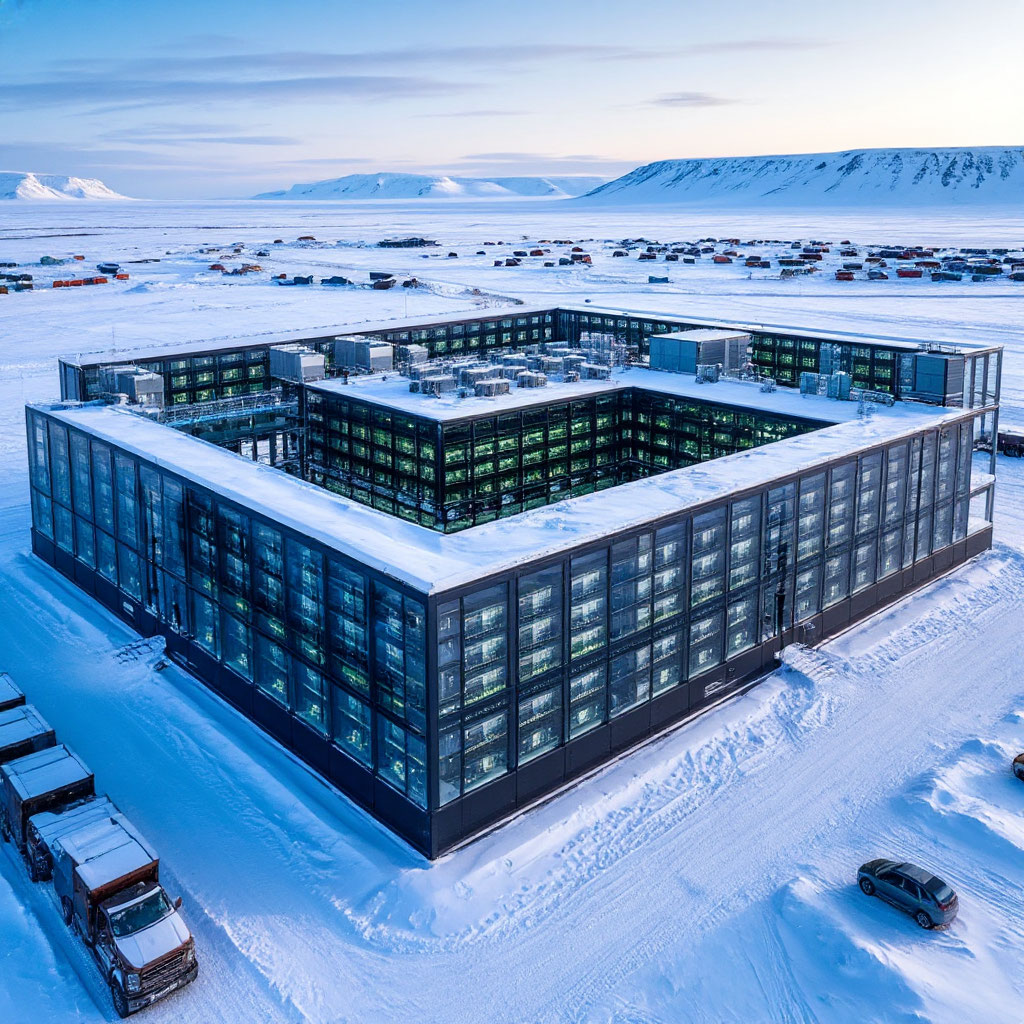
The 20 MW data center, which can accommodate over 500 pieces of computing equipment, will become one of the largest data processing centers in Russia. The project will require an investment of 1 billion rubles. The implementation of such a large-scale project in the harsh Arctic climate opens up new horizons for the development of digital infrastructure, but it also places increased demands on the reliability and efficiency of the equipment used, particularly the industrial refrigeration systems.
The construction of an Arctic data center will have a significant impact on companies specializing in the production and maintenance of industrial refrigeration equipment. Maintaining a stable temperature and humidity inside the data center is a critical task that ensures the smooth operation of servers and prevents overheating, which can lead to failures and data loss. The Arctic climate, with its extreme temperatures and high humidity, presents additional challenges for cooling systems, requiring specialized and highly efficient solutions.
What types of industrial refrigeration equipment are most commonly used in data centers, particularly in the Arctic?
Air-cooled chillers: This is the most common type of data center cooling equipment, which uses air to dissipate heat. In arctic conditions, it is important to provide protection against icing and corrosion. Characteristics: cooling capacity ranging from 50 kW to several MW, ability to operate at low ambient temperatures (up to -40°C), and high energy efficiency (COP up to 4.5).
Water-cooled chillers: More efficient than air-cooled chillers, but require a water source. In the Arctic, they can be used with a closed cooling loop and a cooling tower or a dry adiabatic cooling system. Characteristics: cooling capacity from 100 kW to tens of MW, the ability to use free cooling (cooling using low ambient temperatures), and a COP of up to 6.
Direct Evaporative Cooling Systems (DEC): Use water evaporation to cool the air. Very effective in dry climates, but require large amounts of water. Applicable in the Arctic during the summer if water is available. Features: reduces cooling energy consumption by up to 80%, uses natural sources of cold, and produces high humidity output.
Free Cooling Systems: Use a low ambient temperature for cooling without the use of compressors. In the Arctic, freecooling can be very effective in winter. Characteristics: significantly reduced energy consumption for cooling, simple design, the need to monitor the temperature and humidity of the environment.
Precision air conditioners: Provide precise temperature and humidity control in server rooms. They are used for local cooling of the most heat-loaded areas. Features: High accuracy of temperature (±1°C) and humidity (±5%) control, monitoring and parameter management capabilities, and reliability and redundancy.
Climate monitoring and control systems: Provide automatic control of all cooling system components, optimizing energy consumption and preventing accidents. Features: collection and analysis of data from temperature and humidity sensors, automatic adjustment of cooling parameters, and fault detection.

The functions of industrial refrigeration equipment in a data center include:
The construction of a data center in the Arctic zone will stimulate the development of innovative technologies in the field of industrial refrigeration. Solutions will be required that can effectively function in extreme conditions, ensuring reliability and energy efficiency. Companies that can offer such solutions will gain significant competitive advantages and opportunities to expand their business. Thus, the project will not only strengthen Russia's digital infrastructure but also provide an impetus for the development of the domestic industrial refrigeration industry.




In December 2025, Copeland—a global leader in compressor manufacturing—unveiled a new development: a CO₂ scroll compressor featuring Dynamic Vapor Injection (DVI) technology. This milestone marked a significant step in the evolution of industrial refrigeration equipment, as the combination of the natural refrigerant CO₂ and an advanced vapor injection system opens up new possibilities for enhancing energy efficiency, reducing operating costs, and meeting environmental regulations.
 Выберите размер контейнера: Температурный режим: Новый или Б/У: | Прайс-лист на рефрижераторные контейнеры Вы выбрали: 40 футовые, низкотемпературные, новые 
| ||||||||||||||||||||||||||||||||||||||||||||||||||||




 Telegram

