The signing of an agreement between Rosmorport and Chernomorsk LNG on the construction of a modern marine terminal for the transshipment of liquefied hydrocarbons in Novorossiysk is an event that goes far beyond the scope of transport infrastructure. This project, which is estimated to cost tens of billions of rubles, will serve as a catalyst for a range of related industries. One of the key, yet often overlooked, industries is the industrial refrigeration equipment industry. Without it, the safe transshipment, storage, and transportation of liquefied gas, which requires ultra-low temperatures, would be impossible.
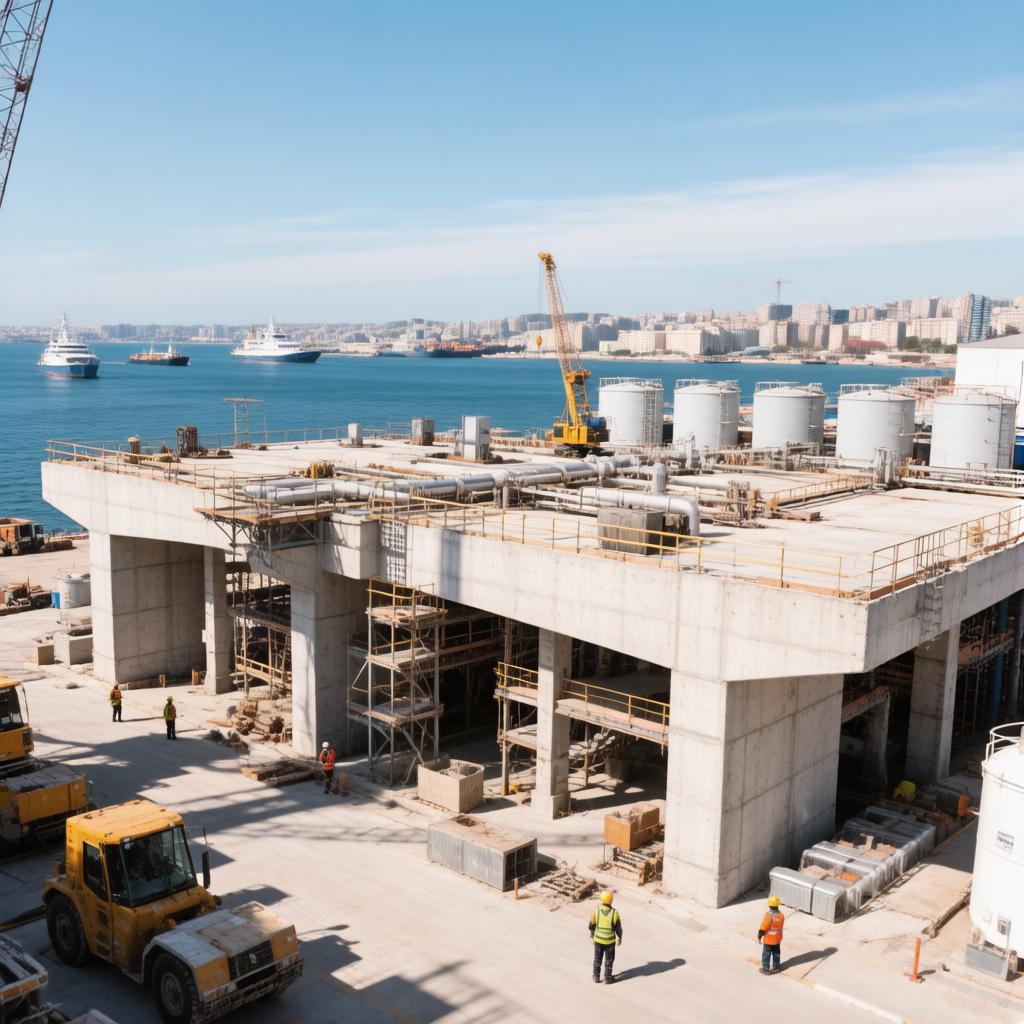
Impact on companies that produce industrial refrigeration equipment
For companies specializing in refrigeration equipment, the terminal in Novorossiysk means a direct increase in their order book. During the construction and commissioning phase, demand is expected to grow for:
- Large-scale cryogenic plants. Companies that are capable of producing equipment for working with temperatures of -160°C and below will receive contracts for the supply of systems for liquefaction and re-cooling of vapors (BOG — boil-off gas). These are complex, expensive units that require high precision in manufacturing.
- Refrigeration process automation systems. Manufacturers of controllers, temperature, level, and pressure sensors for cryogenic environments will see an increase in orders. A modern terminal requires full automation, as even a brief deviation from the normal temperature range can lead to an accident.
- Heat exchange equipment. The demand for plate and shell-and-tube evaporators, condensers, and specialized cryogenic heat exchangers will increase. These components ensure efficient heat transfer with minimal losses.
- Cryogenic pumps and valves. Manufacturers of pumps for pumping liquefied gases (such as submersible pumps for LNG), as well as shut-off and control valves that operate at extremely low temperatures, will be in demand.
- Gas fractionation systems. To separate methane, ethane, propane, and butane, you will need rectification columns that are equipped with powerful refrigeration circuits.
In addition, companies will receive an incentive to develop repair facilities and service services in the region. Novorossiysk will become not only a transshipment point, but also a center of expertise in the operation of cryogenic equipment in southern Russia.
Industrial Refrigeration Equipment: Functions and Applications in Terminals
The project of the marine terminal for the transshipment of liquefied hydrocarbons uses a wide range of specialized equipment. The main categories of equipment with the following characteristics:
1. Cryogenic tanks (storage tanks)
- Type: Double-walled, vacuum-powder-insulated, spherical, or cylindrical.
- Specifications: Capacity: 10,000 to 160,000 m³. Supported temperature: -162°C for methane, -42°C for propane, and -0.5°C for butane.
- Function: Providing long-term storage of liquefied gas with minimal evaporation (no more than 0.05% of the volume per day).
- Application: Storage facilities on the terminal grounds, from which gas is supplied to pumps for shipment to tankers.
2. Cryogenic pumps
- Type: Submersible centrifugal (for LNG) or piston (for ethane).
- Specifications: Performance — up to 2000 m³/h. Working temperature — from -160°C to -40°C. Output pressure — up to 15 MPa.
- Function: Transfer of liquefied gas from storage facilities to pipelines and then to loading risers for tankers, as well as filling of tank trucks.
- Application: Main pumping station of the terminal, filling points for road and rail tankers.
3. Heat exchangers (evaporators and condensers)
- Type: Shell-and-tube with finned tubes, plate-and-shell, and spiral-wound.
- Specifications: Heat exchange area — up to 5000 m². Material — aluminum, stainless steel (cryogenic grades). Temperature difference — up to 150°C.
- Function: Evaporators convert liquefied gas back into the gas phase (for supply to the main gas pipeline). Condensers are used to liquefy vapors generated during storage (BOG).
- Application: Regasification plants (chemical plants near the terminal), and vapor recovery systems.
4. Gas Liquefaction Plants (BOG Limits)
- Type: Helium or nitrogen refrigeration cycles, cascaded with a propane-ethane circuit.
- Specifications: Liquefaction capacity — from 5 to 50 tons per hour. Electric drive power — up to 10 MW. Energy efficiency (specific energy consumption) — 0.3-0.5 kWh/kg.
- Function: Re-liquefaction of gas vapors generated during evaporation in tanks and pipelines to return them to the liquid phase, thus preventing product losses and atmospheric pollution.
- Application: Cryogenic units at the storage site, as part of BOG processing systems.
5. Cryogenic pipelines and fittings
- Type: Double-walled pipes with vacuum-powder insulation and cold polyurethane insulation.
- Specifications: Diameter: 100 to 1000 mm. Cold loss: no more than 10 W/m. Fittings: ball valves with extended stem, certified for low temperatures (up to -196°C).
- Function: Transportation of liquefied gases between tanks, pumps, and the dock without heating.
- Application: Process connections, overpasses, underwater pipelines from the shore to the tanker (mooring risers).
6. Gas analysis and temperature control systems
- Type: Cryogenic temperature sensors (Pt100, thermocouples), methane, propane, and butane gas analyzers.
- Specifications: Temperature measurement range -200°C to +50°C. Response time - less than 1 second. Ex d/Ex ia rating.
- Function: Real-time monitoring of product and equipment status, and alarm notification when pressure or temperature exceeds the limit.
- Application: All technological units, from tanks to loading devices.
Thus, the construction of the terminal in Novorossiysk creates a stable long-term demand for the products of refrigeration equipment manufacturers. Companies that can offer energy-efficient, reliable, and safety-certified (GOST, TR CU) cryogenic systems will not only receive one-time contracts, but also have the opportunity to become permanent suppliers for the oil and gas infrastructure in southern Russia. The Black Sea LNG project creates the preconditions for a technological breakthrough in domestic cryogenic engineering.











 Telegram

